Qatar's emir says Gulf security and sovereignty cannot be compromised
Qatar's Emir Sheikh Tamim Al Thani affirmed that Gulf security and sovereignty are non-negotiable, while also highlighting the economic repercussions of the regional conflict on Qatar's exports and revenue.
Intelligence analysis by Gemini 2.5 Flash
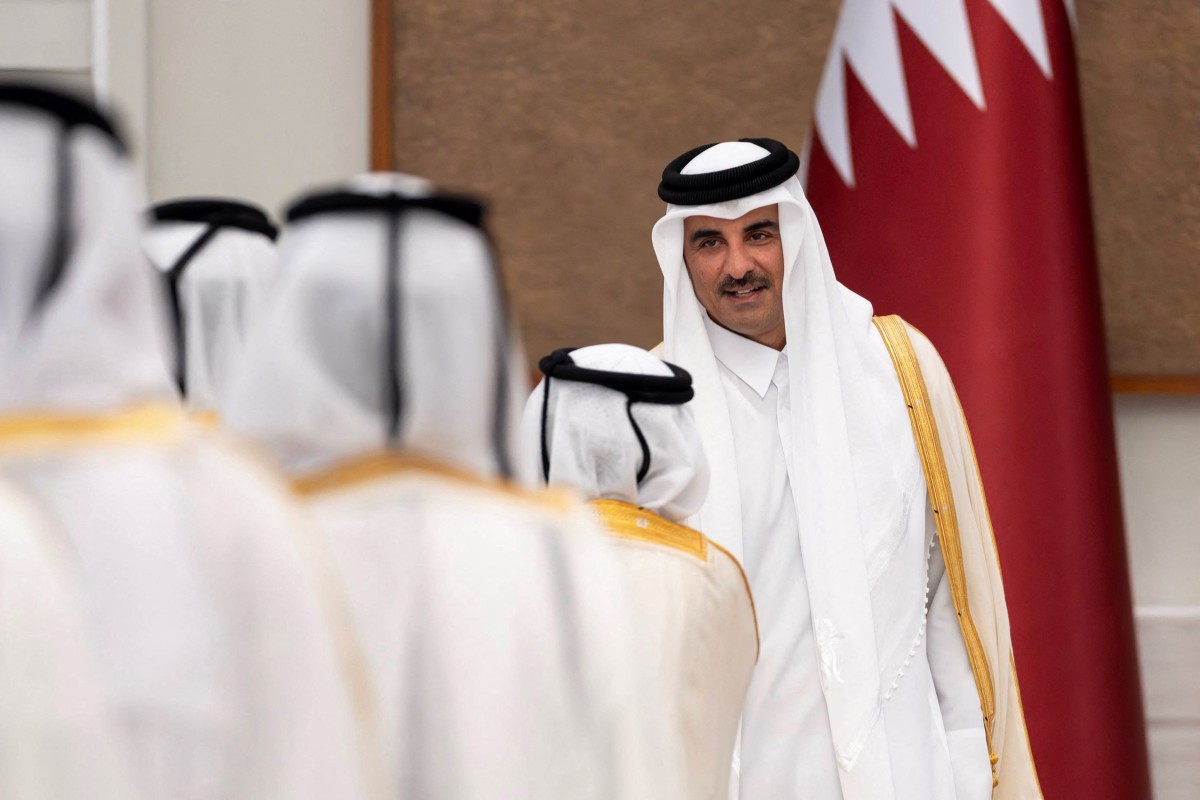
Qatar's Emir Sheikh Tamim Al Thani has declared that the security and sovereignty of Gulf Cooperation Council states are paramount and non-negotiable. He also detailed the significant economic fallout Qatar has experienced due to the ongoing regional conflict, specifically citing disruptions to energy exports and a substantial decline in government revenue.
Imagine Qatar is a big lemonade stand that sells a lot of lemonade (which is like natural gas) to the whole world. The leader of Qatar says it's super important that their stand and their neighbors' stands are safe and no one messes with them. But there's a big fight happening nearby, like a huge noisy construction site, which is making it hard for their delivery trucks to get out and has even broken some of their lemonade machines. This means they can't sell as much, and they're making less money, even though they tried to prepare for tough times.
Analysis
The statement from Qatar's Emir Sheikh Tamim Al Thani emphasizes a critical principle for the Gulf region: the inviolability of state security and sovereignty. This declaration comes at a time of heightened instability, with a war involving Iran casting a long shadow over the Middle East. Qatar, a significant player in global energy markets, is not immune to these geopolitical tremors, despite its proactive policies designed to absorb such shocks.
Gulf Cooperation Council states
Sheikh Tamim's assertion that the security and sovereignty of Gulf Cooperation Council (GCC) states are non-negotiable highlights a collective concern among the regional bloc. This principle is foundational to maintaining stability and preventing external interference or internal fragmentation. The Emir's remarks serve as a clear message regarding the red lines for Qatar and, by extension, potentially other GCC members, in the face of ongoing regional conflicts.
This emphasis on sovereignty is particularly pertinent given the complex web of alliances and rivalries in the Middle East. It suggests a unified front, at least in principle, against actions that could undermine the independence or territorial integrity of these nations. Such statements are crucial for diplomatic signaling and for setting expectations for international actors operating within or near the Gulf.
Strait of Hormuz
The article specifically points to the closure of the Strait of Hormuz as a major disruption to Qatar's exports. This vital maritime chokepoint is critical for global oil and liquefied natural gas (LNG) shipments, with a significant portion of the world's energy supply passing through it daily. Any threat or actual disruption to shipping in the Strait has immediate and far-reaching consequences for international energy markets and global trade.
Qatar's reliance on this route for its substantial LNG exports means that its closure directly impacts the nation's economic health and its ability to fulfill international energy commitments. The Emir's mention of this disruption underscores the vulnerability of even well-prepared economies to geopolitical events affecting key trade arteries. It also highlights the broader global economic risks associated with instability in the Gulf.
Ras Laffan energy complex
Further compounding Qatar's economic challenges is the reported damage to the Ras Laffan energy complex. This complex is a cornerstone of Qatar's energy infrastructure, housing facilities for LNG production, processing, and export. Damage to such a critical asset directly impairs Qatar's production capacity and its ability to supply global markets.
Given that Qatar accounts for approximately one-fifth of global LNG trade, any operational setback at Ras Laffan has significant implications for international energy security and pricing. The combination of a disrupted shipping route and damage to a key production facility presents a dual challenge for Qatar, impacting both its ability to produce and to transport its valuable energy resources to the world.
Key points
- Qatar's Emir Sheikh Tamim Al Thani stated that the security and sovereignty of Gulf Cooperation Council states are non-negotiable.
- The Emir warned of economic fallout from the war involving Iran, which has triggered a global energy crisis.
- Qatar's exports have been disrupted by the closure of the Strait of Hormuz and damage to the Ras Laffan energy complex.
- Government revenue in Qatar fell by 42% in the first half of the year due to regional instability.
- Qatar accounts for approximately one-fifth of global liquefied natural gas (LNG) trade, making disruptions significant for international markets.
Despite the regional instability and economic fallout, Qatar's prior policies have enabled it to absorb some consequences, and spending reductions have not impacted essential services or development priorities. This suggests a degree of resilience and strategic planning that could help the nation navigate ongoing challenges.
The ongoing regional conflict has led to significant economic fallout for Qatar, including disrupted exports, the closure of the Strait of Hormuz, damage to the Ras Laffan energy complex, and a substantial 42% decline in government revenue in the first half of the year.
Market signals
- OIL Disruptions to shipping through the Strait of Hormuz and regional instability, as mentioned in the article, typically drive crude oil prices higher due to supply concerns.
- Liquefied Natural Gas Damage to the Ras Laffan energy complex and disruptions to Qatar's exports, a major global LNG supplier, would likely lead to higher LNG prices due to reduced supply.
AI-generated analysis of potential market relevance. Not financial advice.