Remaking the biscuit: from Doritos to digestives, why the UK’s snacks are being ‘reformulated’
Healthy eating rules forcing brands to reformulate their recipes, changing the taste and nutritional content of popular snacks.
Intelligence analysis by Qwen 2.5 (3B)
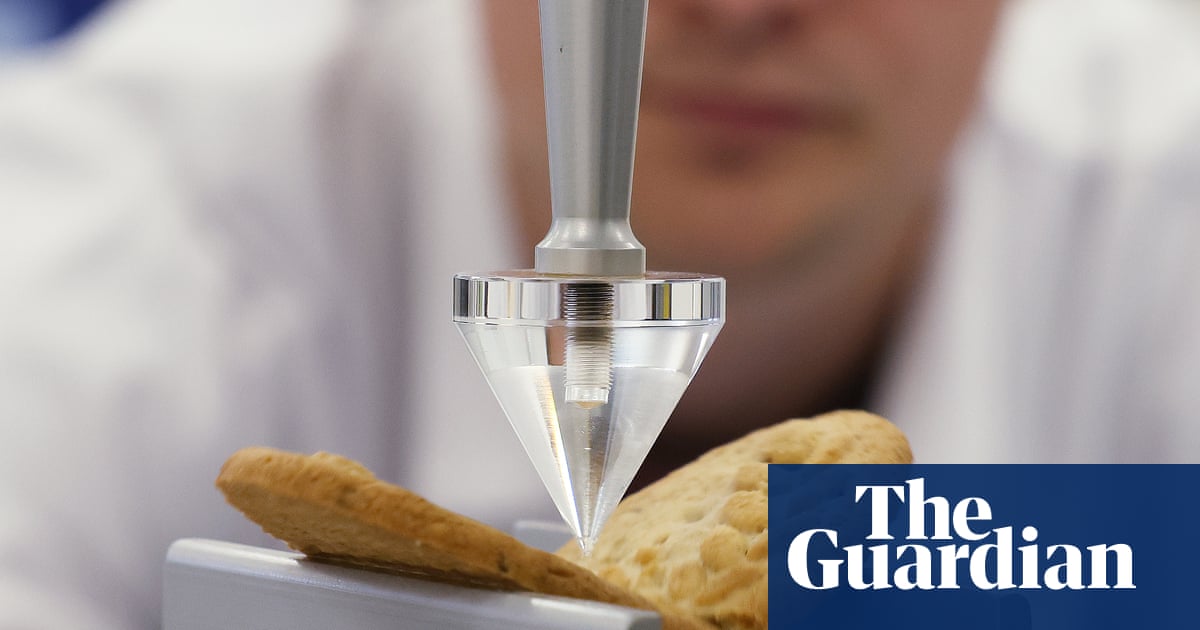
Britain's best-loved snacks are being re-engineered to meet stricter government rules on foods high in fat, sugar, and salt, with potential implications for advertising and promotion.
The government is making rules about what foods are considered unhealthy. To meet these rules, food companies are changing the ingredients in their snacks. This means the snacks might taste different or have different amounts of sugar, but they should still look and feel the same.
Analysis
The Nutrient Profiling Model (NPM) Changes Proposed by the Government
The government is proposing a tougher Nutrient Profiling Model (NPM), including stricter thresholds for free sugars and greater weighting for fiber. This could mean some products that manufacturers have already changed to reduce sugar are classified as 'less healthy', potentially bringing them within advertising and promotion restrictions. The current NPM model, drawn up in 2018, counts 'free sugars' against a product's score but there's no settled definition of what that term actually means. There is also no standardised laboratory method for distinguishing between intrinsic and free sugars.
The Challenges of Reformulation
Manufacturers are facing significant challenges in reformulating their products. For example, swapping out sugar isn't as simple as removing it, as sugar does more than sweeten – it provides texture, bulk, and preservation. Sweeteners provide sweetness but not these other qualities, meaning additional bulking agents or functional ingredients may be needed. This can increase processing, and potentially conflict with consumer demand for simpler formulations.
The Role of RSSL and Other Laboratories
The RSSL lab in Reading, where many of Britain’s snack foods are tested, is at the forefront of this reformulation process. Mondelēz International, the global food and beverage giant behind Oreo and Ritz, has invested £40m since 2020 in reformulation work. The UK is now the company’s largest research and development hub anywhere in the world, with more than 750 scientists and engineers working across nutrition and product innovation at Bournville consumer research centre and RSSL.
The Impact on BelVita
BelVita’s soft bakes range, including its bestselling choc chip and choc hazelnut flavors, has been reformulated to fall outside the “less healthy” category, with sodium cut by 56%. This reformulation process involves several disciplines in sequence, including ingredients, texture, and stability testing. The team frequently turns to 3D printing to build physical models of a product’s internal structure, allowing them to take it apart and reassemble it to study how it holds together. Downstairs, an industrial CT scanner takes that analysis further, firing X-rays through a sample; denser materials absorb more energy, and thousands of rotating scans are stitched together into a full 3D dataset of the product’s internal structure.
Key points
- The government is proposing stricter rules for foods high in fat, sugar, and salt.
- Manufacturers are reformulating their products to meet these new rules.
- This process involves testing and changing the ingredients and texture of the products.
- Some products that have already been reformulated to reduce sugar could be classified as 'less healthy' under the new model.
- The RSSL lab in Reading is at the forefront of this reformulation process.
If the new rules work well, it could lead to healthier snacks that are easier for people to understand and choose.
If the new rules are too strict, it could make it harder for food companies to change their snacks to meet the new standards, which could hurt their business.