Reopening of Hormuz needs US cessation of its violations
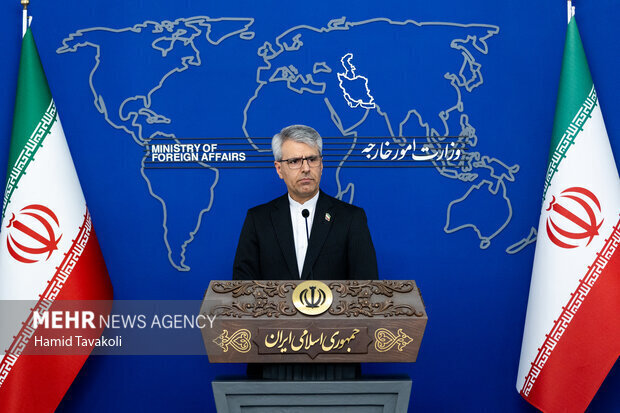
Iranian Deputy Foreign Minister Kazem Gharibabadi says that the Iranian-Omani agreement will not reopen the Hormuz Strait, stressing that reopening of the waterway requires the United States to meet certain conditions.
Intelligence analysis by Llama

Iranian Deputy Foreign Minister Kazem Gharibabadi emphasizes that the Iranian-Omani agreement will not reopen the Hormuz Strait without the United States meeting specific conditions. He highlights the US's past violations of the Islamabad Memorandum of Understanding, including imposing new sanctions on Iran and reinstating restrictions on the oil sector.
Imagine a busy highway that connects two important places. The Hormuz Strait is like that highway, but for ships. Iran and Oman are trying to agree on how to use this highway, but the United States is making it hard for them to do so. Iran's Deputy Foreign Minister Kazem Gharibabadi is saying that the US needs to stop doing things that are making it hard for them to agree.
Analysis
A Strategic Waterway Under Scrutiny
The Hormuz Strait, a vital waterway connecting the Persian Gulf to the Gulf of Oman, has been a focal point of regional tensions. Iran's Deputy Foreign Minister Kazem Gharibabadi recently emphasized that the Iranian-Omani agreement will not reopen the Hormuz Strait without the United States meeting specific conditions. This statement highlights the complex dynamics at play in the region.
The US's Role in the Crisis
Gharibabadi's comments also shed light on the US's past actions that have contributed to the crisis. He mentioned that the US had violated its commitments under the Islamabad Memorandum of Understanding, restored an illegal naval blockade on Iranian ports, resumed hostilities, and failed to help establish stability in Lebanon. These actions have created an environment of mistrust and hostility, making it challenging for the Iranian-Omani agreement to succeed.
The Road Ahead
The reopening of the Hormuz Strait is a complex issue that requires careful consideration of the regional dynamics. Iran's Deputy Foreign Minister Kazem Gharibabadi's comments provide a nuanced understanding of the situation. The US's actions have created a challenging environment, and it remains to be seen whether the US will meet the conditions necessary for the waterway to reopen.
Key points
- Iran's Deputy Foreign Minister Kazem Gharibabadi emphasizes that the Iranian-Omani agreement will not reopen the Hormuz Strait without the US meeting specific conditions.
- The US has violated its commitments under the Islamabad Memorandum of Understanding, restored an illegal naval blockade on Iranian ports, and resumed hostilities.
- The reopening of the Hormuz Strait is a complex issue that requires careful consideration of the regional dynamics.
- Iran's Deputy Foreign Minister Kazem Gharibabadi's comments provide a nuanced understanding of the situation.
If the US meets the conditions set by Iran, the Hormuz Strait could reopen, and trade through the waterway could resume. This would be a positive development for the global economy and would help to reduce tensions in the region.
If the US fails to meet the conditions set by Iran, the Hormuz Strait may remain closed, and trade through the waterway could be severely impacted. This would have negative consequences for the global economy and could lead to increased tensions in the region.