Restoration work resumes at Persepolis after funding allocated
Restoration workshops have resumed operations at the UNESCO-listed Persepolis complex after funds were allocated for conservation work. The site's director, Mohammad-Javad Jafari, announced that three restoration workshops are currently active at the Persepolis complex, l…
Intelligence analysis by Llama
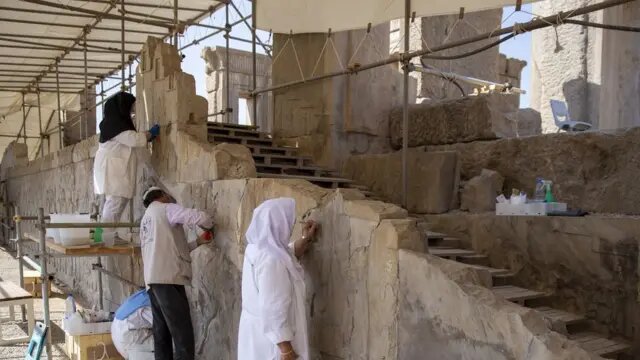
Restoration work has resumed at Persepolis after funding was allocated for conservation. The site's director, Mohammad-Javad Jafari, announced that three restoration workshops are currently active at the complex, located at Naqsh-e Rostam, the Tachara Palace, and the museum storage facility. The allocated funds are not sufficient to carry out all the measures, but they are enough to a…
Persepolis is an ancient city in Iran that was once the capital of the Achaemenid Empire. It's a very important place because it shows how people lived and built things a long time ago. Right now, people are working to fix the city so it doesn't get damaged. They need more money to do the job, but they're doing what they can with what they have.
Analysis
A $60B Vote of Confidence
The allocation of funds for the restoration of Persepolis is a significant development for the preservation of Iran's cultural heritage. The UNESCO-listed site is considered one of the most significant architectural achievements of the ancient world, and its restoration is crucial for preserving the cultural and historical significance of the site. The allocated funds are not sufficient to carry out all the measures, but they are enough to address the most urgent restoration needs.
The project to change the tourist route through the Persepolis archaeological site has not yet been completed. The project was delayed last year due to the outbreak of war, which interrupted its implementation. The delay has raised concerns about the impact of the war on the site's preservation and the potential consequences for the tourism industry.
Persepolis was the ceremonial capital of the Achaemenid Empire and is considered one of the most significant architectural achievements of the ancient world. Built about 2,500 years ago, the site contains palatial complexes, stone columns, and bas-reliefs that demonstrate advanced stone-carving techniques. The site was inscribed on the UNESCO World Heritage List in 1979 and includes major structures such as the Apadana Palace and the Throne Hall, which reflect the political and artistic achievements of the Achaemenid period.
The restoration of Persepolis is not only crucial for preserving the site's cultural and historical significance but also has significant economic implications for the tourism industry. The site attracts millions of tourists every year, and its restoration is essential for maintaining the site's appeal and attracting visitors. The delay in the project has raised concerns about the impact of the war on the site's preservation and the potential consequences for the tourism industry.
Key points
- Restoration workshops have resumed operations at the UNESCO-listed Persepolis complex after funds were allocated for conservation work.
- The site's director, Mohammad-Javad Jafari, announced that three restoration workshops are currently active at the Persepolis complex, located at Naqsh-e Rostam, the Tachara Palace, and the museum storage facility.
- The allocated funds are not sufficient to carry out all the measures, but they are enough to address the most urgent restoration needs.
If the restoration work at Persepolis is successful, it could lead to an increase in tourism and economic growth for the region. The site's director, Mohammad-Javad Jafari, has announced that restoration workshops have resumed operations after funds were allocated for conservation work. This development is a positive step towards preserving the cultural heritage of Iran and the ancient world.
The delay in the project to change the tourist route through the Persepolis archaeological site has raised concerns about the impact of the war on the site's preservation and the potential consequences for the tourism industry. The allocated funds are not sufficient to carry out all the measures, but they are enough to address the most urgent restoration needs. This could lead to a decrease in tourism and economic growth for the region if the project is not completed on time.