Rubio calls on Cubans seeking change to form 'discrete partnership' with CIA
US Secretary of State Marco Rubio has urged Cubans seeking political change to form a "discrete partnership" with the CIA, emphasizing that "now is the time" to act.
Intelligence analysis by Gemini 2.5 Flash
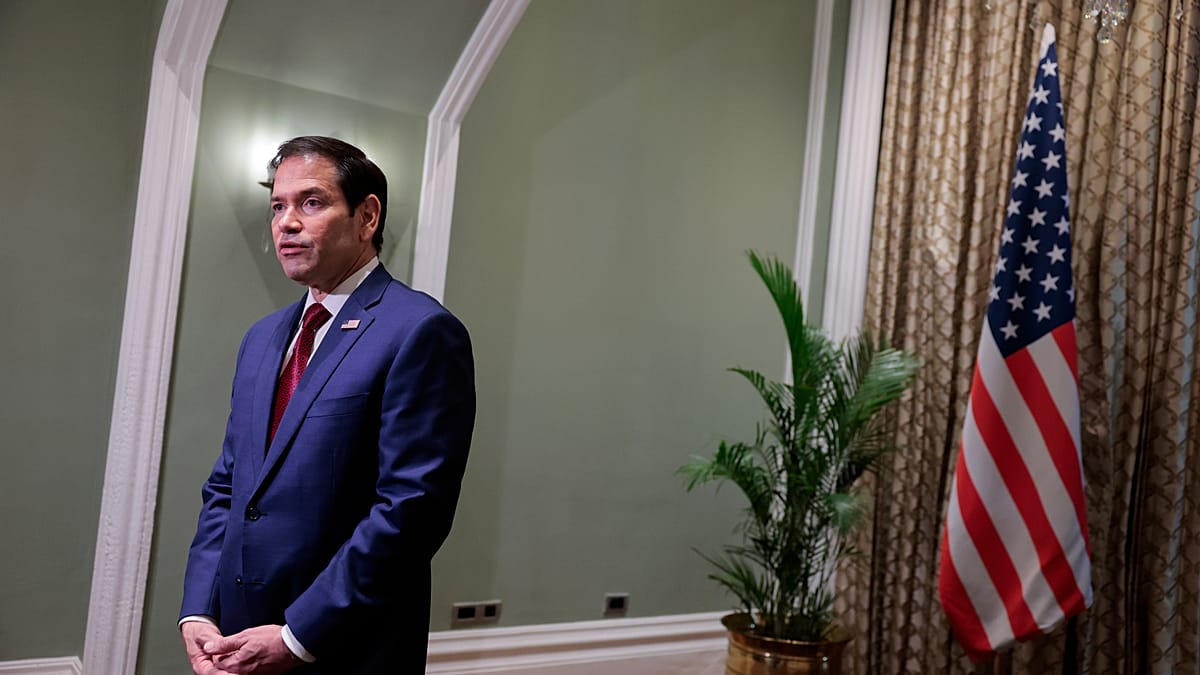
The Trump administration, through Secretary of State Marco Rubio, is openly encouraging Cubans to collaborate with the CIA to instigate leadership change in Havana. This call comes amidst increased US pressure on Cuba, including an oil blockade, with President Trump expressing confidence in a forthcoming deal.
Imagine there's a country where some people aren't happy with their leaders. A big official from the United States, Marco Rubio, is telling these unhappy people to secretly team up with the US's spy agency, the CIA. It's like telling kids who don't like the school rules to secretly talk to a grown-up who wants to help change the rules, but they have to be very careful not to get caught.
Analysis
The call by US Secretary of State Marco Rubio for Cubans to engage in a "discrete partnership" with the CIA marks a notable escalation in the Trump administration's strategy to effect regime change in Havana. This public appeal, disseminated via social media, moves beyond traditional diplomatic pressure or sanctions, directly encouraging internal dissent and collaboration with a foreign intelligence agency.
Marco Rubio
Rubio's statement explicitly targets Cubans disillusioned with "failed promises, corruption, and the privileged lives of only a few," urging them to "seize this opportunity to create the change you desire." This direct address suggests a belief within the US administration that conditions on the ground in Cuba are ripe for internal upheaval, requiring only external facilitation. The emphasis on a 'discrete' partnership underscores the clandestine nature of the proposed collaboration, aiming to empower opposition elements while maintaining deniability or minimizing overt US involvement.
Such a public call from a high-ranking US official is unusual and could be interpreted as a strategic move to both galvanize internal opposition and signal to the Cuban government the seriousness of US intent. It also places a spotlight on the role of intelligence agencies in foreign policy, moving their operations from the shadows into public discourse, albeit with a call for secrecy from the participants. The implications for international law and sovereignty are significant, potentially setting a precedent for how nations might openly encourage internal subversion in other states.
Trump Administration
The Trump administration's stance on Cuba has been consistently aggressive, with President Donald Trump repeatedly asserting that his goal is to change Havana's leadership and claiming the country is "ready to fall." This rhetoric has been backed by concrete actions, such as the oil blockade announced after a US military operation targeting former Venezuelan leader Nicolás Maduro, which aimed to cut off a vital economic lifeline for Cuba.
Trump's confidence in securing a "deal" with Cuba, even while simultaneously advocating for covert action, suggests a multi-pronged approach. On one hand, there's an expectation of a negotiated settlement, possibly under duress from economic sanctions and internal pressure. On the other, the administration is actively fostering conditions for internal collapse or revolution, indicating a lack of patience for a purely diplomatic resolution. This dual strategy reflects a hardline approach, seeking to maximize leverage through both overt economic warfare and covert political destabilization.
CIA
The Central Intelligence Agency has, in parallel with Rubio's call, provided specific guidance for individuals looking to work with the agency. These tips focus on operational security, advising potential partners to avoid using devices or internet connections linked to their identity or workplace and to remove all non-essential software from contact devices. This practical advice highlights the inherent risks involved in such clandestine activities and the agency's efforts to mitigate them.
The CIA's request for information such as base location, job title, and "type or level of access you have to information of interest to our organisation" clearly indicates a focus on intelligence gathering and leveraging individuals with access to sensitive information. This suggests that the "partnership" is not merely about facilitating general dissent but specifically about acquiring actionable intelligence that could aid in destabilizing the current Cuban leadership. The agency's public sharing of these tips, while seemingly contradictory to the need for discretion, serves to lower the barrier for potential recruits and signal the seriousness of the US commitment to supporting internal change.
Key points
- US Secretary of State Marco Rubio urged Cubans seeking change to form a "discrete partnership" with the CIA.
- Rubio's call was made on social media, stating "now is the time" for action against "failed promises" and "corruption."
- The Trump administration's stated goal is to bring about a change in Havana's leadership, with President Trump claiming Cuba is "ready to fall."
- Trump previously ramped up pressure with an oil blockade on Cuba following a US military operation targeting Nicolás Maduro.
- The CIA has shared tips for Cubans on how to securely contact the agency, advising against using identifiable devices and requesting details on access to information.
If Cubans successfully form partnerships with the CIA, it could potentially lead to a peaceful transition of power, fulfilling the US administration's goal of leadership change and potentially improving human rights and economic conditions for the Cuban people.
Such a call for covert action could lead to increased instability and repression within Cuba, potentially resulting in a failed intervention that worsens the lives of ordinary Cubans and further strains international relations.