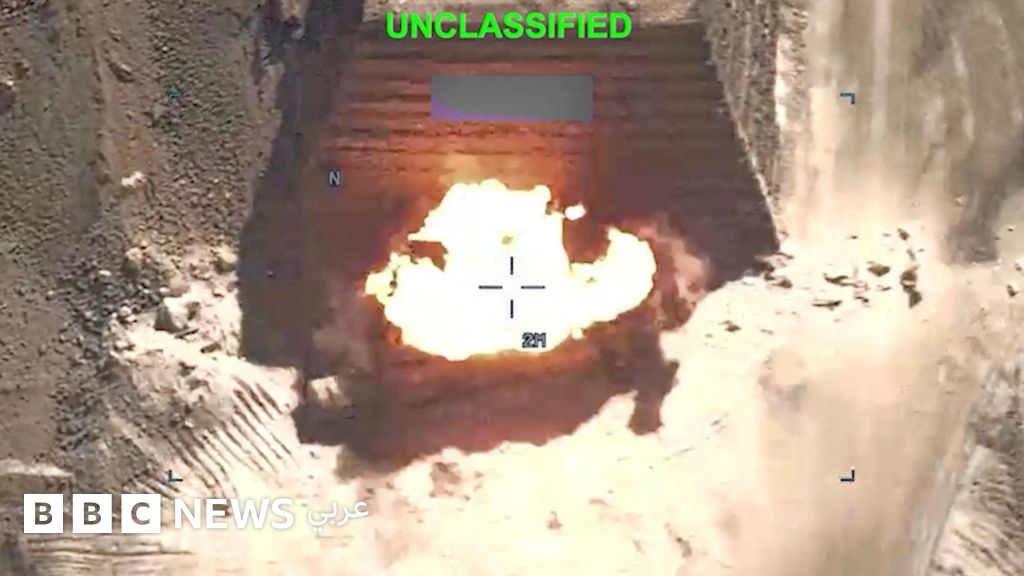
Rubio says US still willing to negotiate over Iran crisis
US Secretary of State Marco Rubio said Washington remains open to diplomacy with Iran but accused Tehran of not being serious about talks, as Houthi threats and Iranian attacks disrupt Gulf and Red Sea shipping.
Intelligence analysis by Llama
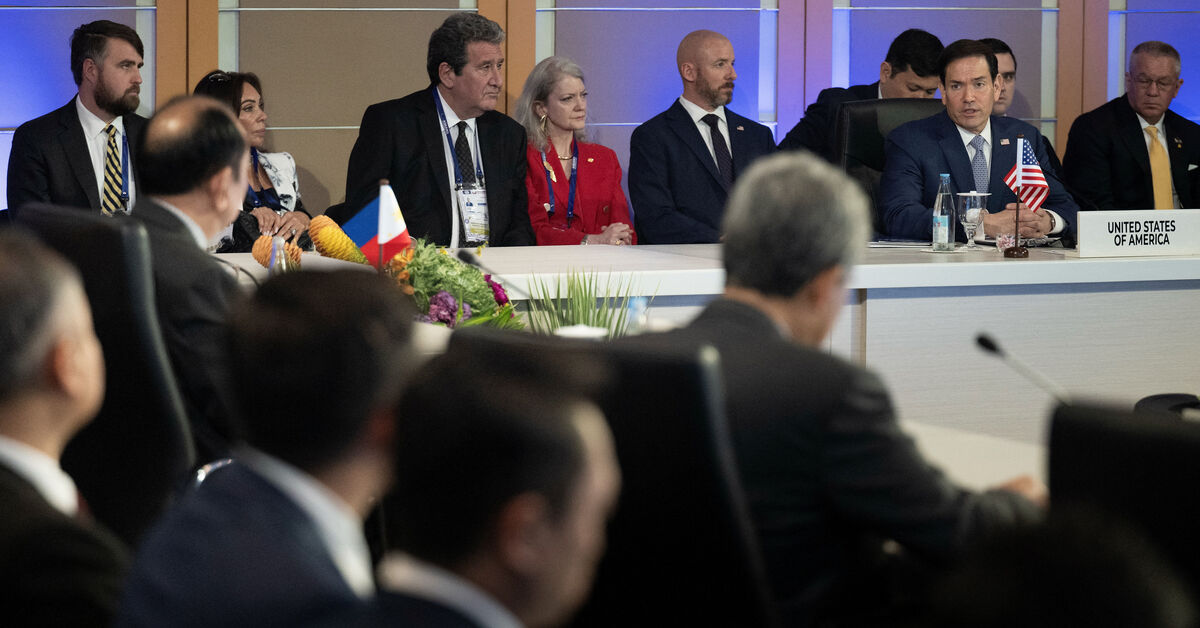
Speaking in Manila, Rubio held open the door to negotiations while blaming Iran for the diplomatic impasse. The war that began in February continues to escalate, with the Red Sea and Strait of Hormuz under threat and oil prices climbing past $91 per barrel.
Two big shipping roads for oil, the Red Sea and the Strait of Hormuz, are in danger because of a war between the US and Iran, plus attacks by a group in Yemen called the Houthis. The US says it wants to talk, but doesn't think Iran is being honest, and ships carrying oil are turning around. Oil prices are going up because everyone is worried less fuel will get to where it needs to go.
Analysis
Diplomacy on a Knife's Edge in Manila
Rubio's remarks at the ASEAN Post-Ministerial Conference carry a deliberately mixed message: the diplomatic channel is technically alive, but Washington's patience is running thin. He framed Tehran as the obstacle, declaring that "if they're serious, we're serious," while reserving the right to act unilaterally to protect US and allied interests. The context matters. Just one day earlier, a senior Iranian official told Reuters that Tehran had received a 10-day ceasefire proposal from mediators, and Iran's interior minister had travelled to Pakistan to press Islamabad to keep brokering. Rubio's tone suggests Washington wants to keep that paperwork circulating while continuing to strike. The simultaneous military campaign, now in its eleventh consecutive night of US bombing, makes the diplomatic posture hard to read.
Two Chokepoints, One Energy Crisis
The most market-relevant development is the convergence of threats on both of the Gulf's main export arteries. Yemen's Houthi movement announced a naval blockade on Saudi Arabia and threatened any ship loading or discharging Saudi crude, prompting at least three tankers bound for China and India to reverse course in the Red Sea. With the Strait of Hormuz already under Iranian threat, the Red Sea has been the alternate route moving millions of barrels of Saudi oil per day. If the Houthis fully close the Bab el-Mandeb strait, most Saudi exports lose their escape valve, even accounting for partial rerouting through Yanbu via pipeline. Brent has already pushed above $91 a barrel, and US gasoline is back over $4 a gallon. The risk premium is no longer theoretical.
The War Widens, the Toll Climbs
The human and strategic costs are mounting on multiple fronts. President Trump confirmed 18 US service members have now been killed, including four in recent Iranian strikes on bases in Jordan and Iraq. Iran has hit US military sites in Bahrain, Kuwait, and Jordan, and claims to have struck Amazon infrastructure in Bahrain, a claim Reuters could not independently verify. Iranian cities including Tehran, Chabahar, Konarak, and Bushehr, home to the country's sole nuclear power plant, have all been struck, with health authorities reporting 50 civilians killed and 500 wounded in recent US raids. Trump has renewed threats to again attack Natanz, which he claimed was "totally obliterated" in 2025. Iran has promised retaliation. With no diplomatic breakthrough visible, the trajectory points toward escalation rather than de-escalation, even as both sides keep the language of negotiation in play.
Key points
- Rubio says US remains open to negotiations but accuses Iran of not being serious, as a 10-day ceasefire proposal circulates via mediators.
- Three Saudi oil tankers reversed course in the Red Sea after Houthi threats, with a Houthi naval blockade on Saudi Arabia announced this week.
- Iran continues to threaten the Strait of Hormuz, leaving both of the Gulf's main export routes under simultaneous pressure.
- The US has bombed Iran for an eleventh straight night; Trump confirmed 18 US service members killed and renewed threats to strike Natanz again.
- Brent crude has risen above $91 a barrel and US gasoline is back over $4 a gallon on the supply disruption fears.
If both sides return to the interim ceasefire framework signed in June, a 10-day truce could be extended and de-escalation talks through Pakistani mediators could gain traction. A credible US-Iran framework would also relieve pressure on both the Strait of Hormuz and the Red Sea, allowing Saudi crude to resume normal flows and easing the oil price spike above $91 a barrel.
The dual chokepoint threats to the Strait of Hormuz and the Bab el-Mandeb strait could push Brent well past current levels and disrupt deliveries to China and India, Asia's biggest Saudi customers. Continued US bombing of Iranian infrastructure, including the possibility of renewed strikes on Natanz, raises the prospect of further Iranian retaliation against US bases across the Gulf and against commercial targets, deepening a war that has already killed thousands.
Market signals
- OIL The article reports Brent above $91 a barrel and rising as the Houthi Red Sea threats and Strait of Hormuz risks threaten two of the world's main oil export routes simultaneously.
- XAU An escalating US-Iran war with 18 US service members killed and 11 straight nights of bombing supports safe-haven demand for gold.
- RB The article explicitly notes US gasoline has climbed back above $4 a gallon alongside the broader crude rally driven by Middle East shipping risk.
AI-generated analysis of potential market relevance. Not financial advice.