Russia: Huge flames and smoke rise over St Petersburg after drone strikes
St Petersburg, Russia's second-largest city, experienced a large-scale Ukrainian drone attack, causing fires at industrial and logistics facilities, including an Ozon warehouse and oil infrastructure.
Intelligence analysis by Gemini 2.5 Flash
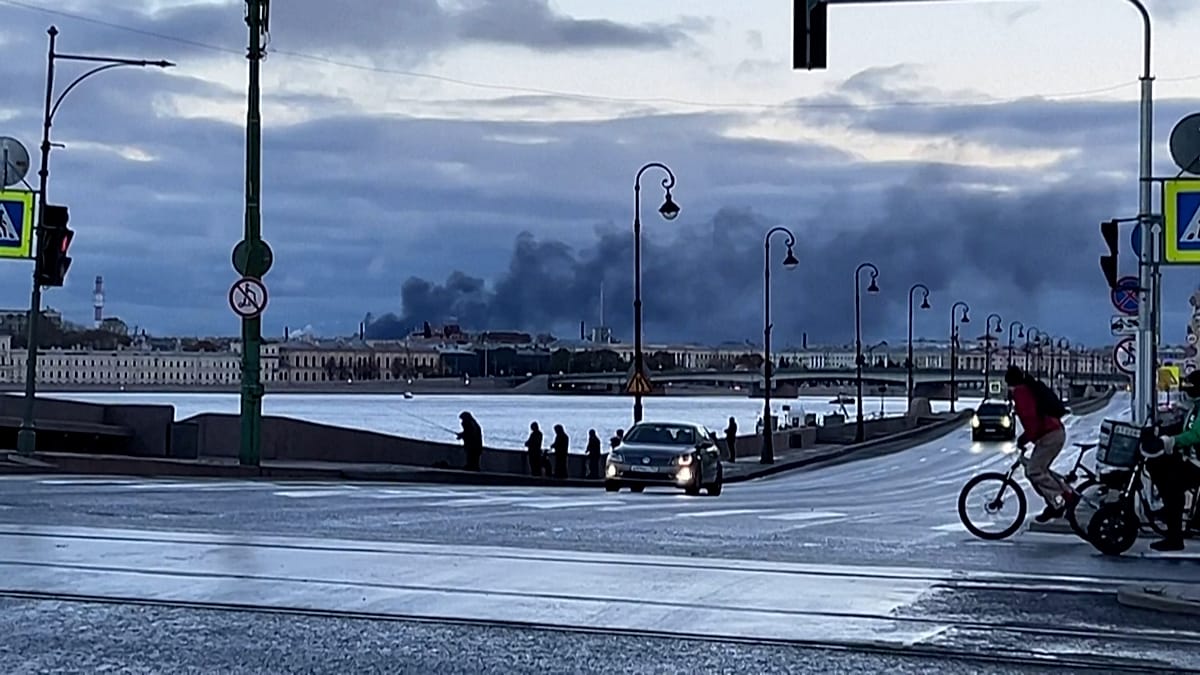
A significant Ukrainian drone assault targeted St Petersburg, resulting in massive fires and smoke plumes over the city. Russian officials reported intercepting numerous drones, but the strikes still hit key facilities, leading to casualties and temporary airport restrictions, signaling an escalation in the ongoing conflict over energy infrastructure.
Imagine two big teams playing a very serious game, and one team starts sending little flying robots, called drones, far behind the other team's lines. These drones hit big buildings where things are stored or where oil is kept, causing huge fires and lots of smoke. It's like hitting the other team's snack stand and gas station, making it harder for them to keep playing. Sadly, some people got hurt, and planes couldn't fly for a bit.
Analysis
The recent drone attacks on St Petersburg represent a significant development in the ongoing conflict, demonstrating Ukraine's capability to strike deep within Russian territory. The scale of the assault, with Russian officials claiming to have intercepted over 100 drones, underscores the intensity of the aerial campaign. The targeting of industrial and logistics facilities, particularly those related to oil, highlights a strategic focus on disrupting Russia's economic and military capabilities.
St Petersburg
The city of St Petersburg, Russia's second-largest, was directly impacted by the drone strikes, marking a notable expansion of the conflict's geographical reach. The attacks caused substantial fires, with footage showing huge plumes of black smoke rising over the city. This direct targeting of a major urban center, far from the front lines, carries significant psychological and strategic implications, challenging Russia's perceived security.
Governor Alexander Beglov confirmed the activation of air-defence systems and reported one fatality and five injuries, alongside temporary restrictions at Pulkovo Airport. The disruption to civilian life and infrastructure in such a prominent city signals a new phase in the conflict, where urban centers previously considered relatively safe are now vulnerable to direct assault. The damage to the Petersburg Oil Terminal and Ruchyi oil depot specifically targets critical energy infrastructure.
Ozon
Among the facilities hit was a warehouse operated by Ozon, Russia's second-largest online retailer. The company confirmed that its logistics center had been struck, indicating the broad impact of the drone attacks beyond purely military or energy targets. This suggests an intent to disrupt civilian economic activity and supply chains, adding another layer to the strategic objectives of the strikes.
The targeting of a major retailer's logistics hub could have ripple effects on consumer goods distribution and the broader Russian economy. Such attacks aim to create economic pressure and demonstrate the vulnerability of various sectors to the ongoing conflict. It also highlights the increasing integration of civilian infrastructure into the broader strategic landscape of modern warfare.
Volodymyr Zelensky
The timing of these strikes aligns with President Volodymyr Zelensky's announcement that Ukraine would resume attacks on Russian oil refineries. This declaration followed a brief, unconfirmed 'energy ceasefire' period, which Zelensky accused Russia of violating with its own attacks on Ukrainian energy infrastructure. The latest exchange of strikes underscores a tit-for-tat dynamic in targeting energy assets.
Zelensky's decision to resume these attacks, citing Russia's alleged 76 strikes on Ukraine's energy infrastructure, indicates a clear strategic rationale. Both sides are increasingly treating refineries, terminals, and power grids as central targets, reflecting a broader strategy to degrade the opponent's capacity to sustain the war effort. This focus on energy infrastructure suggests a prolonged and intensified struggle, with significant implications for both nations' economies and the civilian populations reliant on these systems.
Key points
- St Petersburg experienced a large-scale Ukrainian drone attack on October 18, 2026.
- Fires erupted at industrial and logistics facilities, including an Ozon warehouse and oil infrastructure like the St Petersburg Oil Terminal and Ruchyi oil depot.
- Russian officials reported intercepting over 100 drones in the surrounding Leningrad region.
- One person was killed and five injured, and Pulkovo Airport operations were temporarily restricted.
- The strikes followed President Zelensky's announcement that Ukraine would resume attacks on Russian oil refineries after a brief 'energy ceasefire'.
The drone strikes on St Petersburg signal a dangerous escalation in the conflict, potentially leading to increased civilian casualties and further damage to critical infrastructure on both sides. The tit-for-tat targeting of energy facilities suggests a prolonged and intensified war, with significant economic and humanitarian consequences for the region.
Market signals
- OIL Attacks on Russian oil infrastructure, including a terminal and refinery, raise concerns about supply disruptions and geopolitical risk, potentially pushing oil prices higher.
AI-generated analysis of potential market relevance. Not financial advice.
