Sam Bankman-Fried’s Lawyer Outlines Case for Supreme Court Review
Sam Bankman-Fried's lawyer is presenting arguments to the US Supreme Court for a review of his conviction. The appeal focuses on prosecutorial overreach and the constitutionality of his $11 billion forfeiture order.
Intelligence analysis by Gemini 2.5 Flash Lite
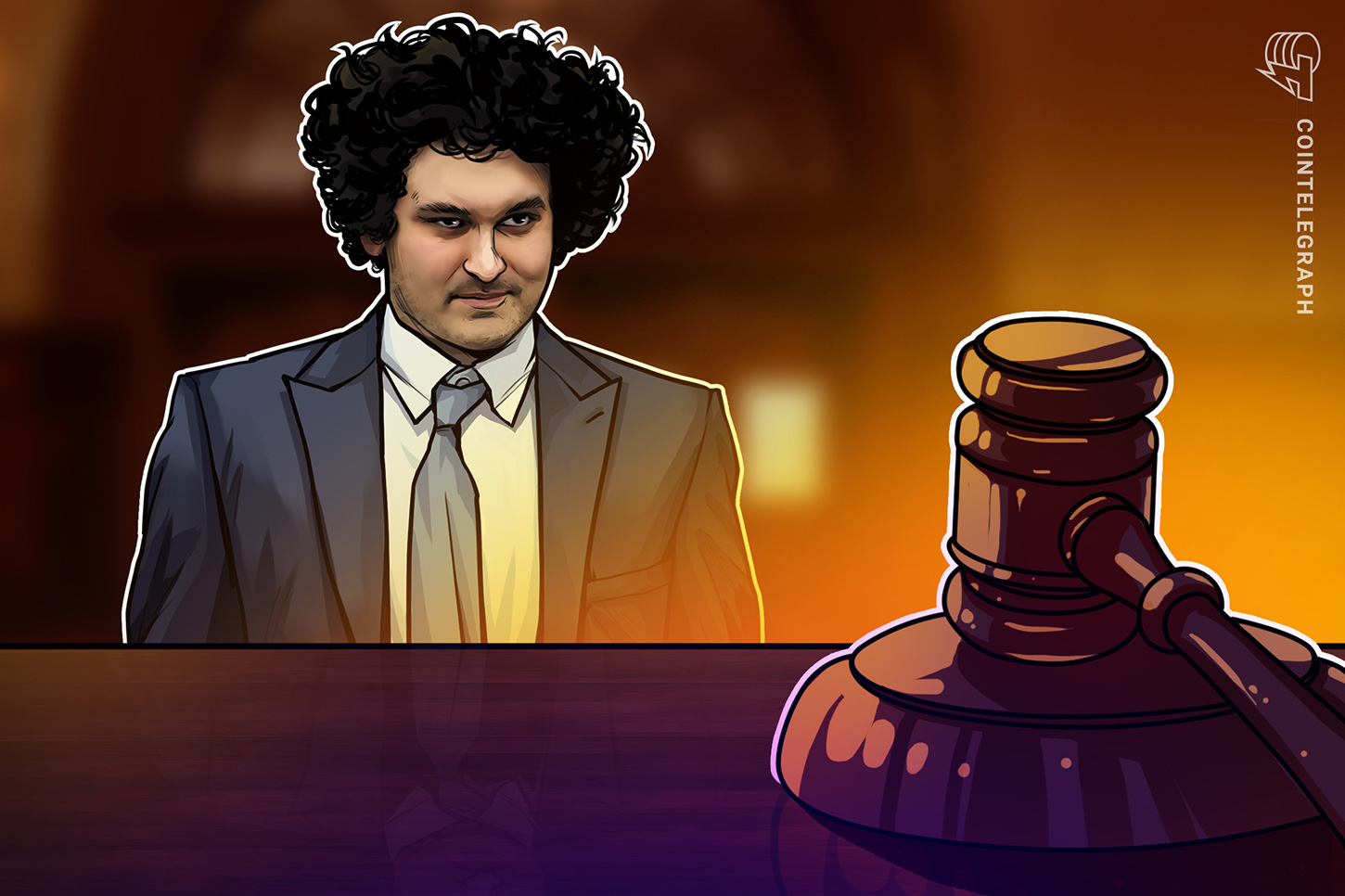
Former FTX CEO Sam Bankman-Fried's legal team is petitioning the US Supreme Court to review his conviction. His lawyer, Jeffrey Fisher, argues that the prosecution's theory of fraud, which deemed customer losses irrelevant, constitutes prosecutorial overreach and potentially violates the Eighth Amendment's prohibition against excessive fines due to the $11 billion forfeiture order.
Imagine someone is accused of taking cookies from a jar. Their lawyer is telling a higher court that the accuser didn't properly explain why taking the cookies was wrong, and also that the punishment (like having to give back all your future allowance for life) is way too big for taking cookies. They hope the highest court will listen and maybe give them a new chance to explain.
Analysis
Sam Bankman-Fried's Legal Strategy
Sam Bankman-Fried's legal team is mounting a significant challenge to his conviction by seeking review from the US Supreme Court. The core of their argument, as articulated by his counsel Jeffrey Fisher, centers on two primary points. Firstly, they contend that the prosecution's approach to proving fraud was flawed. The government's theory, accepted by lower courts, posited that FTX customers were defrauded the moment Bankman-Fried transferred their funds to Alameda Research, irrespective of his intent to repay them or whether they ultimately suffered financial losses. Fisher argues this theory deviates from typical fraud cases where personal enrichment or actual loss is central, suggesting it allows for prosecutorial overreach and potentially prejudices defendants.
Secondly, the defense is challenging the substantial $11 billion forfeiture order. They argue that such a massive financial penalty, particularly when the defendant may not have personally profited to that extent or when victims might eventually be made whole, could violate the Eighth Amendment's prohibition against excessive fines. This aspect of the appeal is seen by some legal observers as potentially more compelling than the fraud theory argument, given the sheer scale of the forfeiture and its implications for Bankman-Fried's future financial life, potentially seizing all future earnings.
Supreme Court's Role and Potential Timelines
The petition for a writ of certiorari requires the Supreme Court justices to decide whether to hear the case. According to SCOTUS rules, Bankman-Fried's petition was filed within the 90-day window following the appellate court's decision. The government was granted an extension to respond, pushing the decision on whether to grant review to late 2026 or early 2027. If the Court agrees to hear the case, a decision could be rendered by June 2027, potentially leading to a new trial or a modification of the sentence and forfeiture order. The Supreme Court has historically shown concern for prosecutorial overreach in fraud cases, which could lend some weight to Bankman-Fried's arguments.
Legal Precedents and Expert Opinions
Bankman-Fried's legal team is drawing parallels to past Supreme Court rulings, notably contrasting the government's reliance on cases like Kousisis v. United States with their preferred precedent of United States v. Carpenter. While Kousisis might support lengthy sentences based on misrepresentations even without direct financial harm, the defense points to Carpenter, where a defendant's intent to prevent customer losses was considered. Legal analysts, however, express skepticism about the likelihood of the Supreme Court accepting the case, with some calling the reliance on Carpenter an "uphill battle." The forfeiture argument, though, is acknowledged as "really interesting" due to its magnitude. The outcome, if the Court takes the case, could significantly influence how financial fraud is prosecuted and how forfeiture penalties are applied in complex, high-stakes cases involving digital assets and customer funds.
Key points
- Sam Bankman-Fried's lawyer is petitioning the US Supreme Court to review his conviction.
- The appeal focuses on prosecutorial overreach in the fraud theory and the constitutionality of the $11 billion forfeiture order.
- The defense argues the prosecution's theory made customer losses irrelevant, potentially violating due process.
- The $11 billion forfeiture is challenged as an excessive fine under the Eighth Amendment.
- Legal experts express skepticism about the Supreme Court accepting the case, but find the forfeiture argument noteworthy.
If the Supreme Court grants review and sides with Bankman-Fried, it could lead to a retrial or a significant reduction in his sentence and the $11 billion forfeiture. This would offer a chance for a more favorable legal outcome, potentially impacting how future fraud cases are prosecuted.
The Supreme Court may decline to hear the case, leaving the conviction and sentence intact. Legal experts suggest the arguments presented face an uphill battle, and the forfeiture order, while large, might be upheld, leaving Bankman-Fried with a substantial lifelong debt.