Sato Mama's 'Child-Rearing Through Books': Reading 10,000 Books by Age 3! Recommended Picture Books from a Tokyo University Triple-A Mom / How to Raise a Smart Child? / What to Do About Smartphones for Kids Who Don't Study? (Close-up with an Expert: How to Choose Books)
Ryoko Sato, known as 'Sato Mama' for raising four children who all entered Tokyo University's top science programs, shares her book selection strategies. She emphasizes reading 10,000 picture books by age three and discusses fostering intelligence and managing children's …
Intelligence analysis by Gemini 2.5 Flash Lite
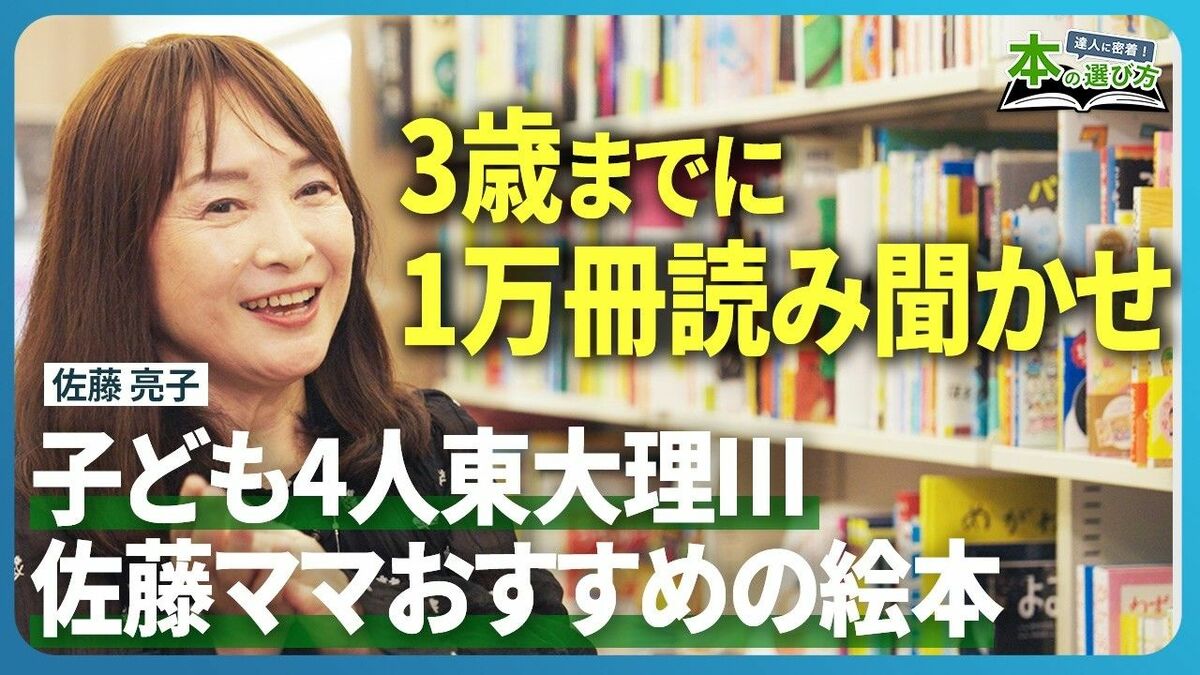
This piece features 'Sato Mama,' Ryoko Sato, renowned for her success in raising children who entered Tokyo University's prestigious science programs. She details her approach to child-rearing through books, advocating for extensive reading from a young age and offering advice on nurturing intelligence and addressing modern challenges like smartphone usage.
Imagine books are like super-food for your brain! A super-mom named Sato Mama read 10,000 picture books to her kids before they were three. She believes this helps kids become super smart, like getting into the best universities, and she also has ideas about how to help kids learn even when they want to play games on their phones.
Analysis
Sato Mama's Reading Philosophy
Ryoko Sato, affectionately known as 'Sato Mama,' has garnered significant attention for her remarkable achievement of having all four of her children gain admission to the highly competitive Tokyo University's Faculty of Science III. Her educational philosophy centers heavily on the power of books, particularly picture books, which she believes are foundational for early childhood development. Sato Mama advocates for an astonishing reading regimen, aiming to read 10,000 picture books to children by the time they turn three years old. This intensive exposure to literature, she posits, is not merely about entertainment but about building a robust foundation for language comprehension, critical thinking, and a lifelong love of learning. The sheer volume suggests a deliberate strategy to immerse children in diverse narratives, vocabulary, and concepts from the earliest stages of cognitive development, thereby cultivating a rich intellectual environment before formal schooling even begins.
Nurturing Intelligence and Addressing Modern Challenges
Beyond the sheer quantity of books, Sato Mama's approach extends to the quality and selection of reading material. She emphasizes that the 'target age' for picture books is fluid, suggesting that children can benefit from books beyond their immediate age group, fostering advanced comprehension and broader perspectives. This method is crucial for developing 'reading comprehension,' a skill she identifies as vital for academic success, particularly in navigating complex entrance examinations. Furthermore, Sato Mama addresses contemporary parenting dilemmas, such as managing children's smartphone usage. While the article doesn't detail her specific solutions for this, her overall emphasis on books as a primary source of knowledge and engagement implies a strategy that prioritizes intellectual stimulation and educational content over passive digital consumption. Her advice on selecting books for exams, including reading works that directly relate to entrance requirements, highlights a pragmatic and results-oriented aspect of her educational framework.
The Enduring Value of Classics and Practical Book Selection
Sato Mama's recommendations include a strong endorsement for classic literature, underscoring their timeless value in shaping a child's understanding of the world and human nature. She believes that these enduring stories provide essential cultural literacy and moral grounding. Her practical approach to book selection, demonstrated in a close-up segment at a bookstore, reveals a discerning eye for quality and relevance. While the specific titles chosen are highlighted, the underlying principle is about actively engaging with the selection process, understanding the purpose of each book, and aligning it with developmental goals. This hands-on method, combined with her extensive experience, positions her as a trusted authority on how parents can effectively leverage books to support their children's educational journey and overall intellectual growth, making her insights highly sought after by parents navigating the complexities of modern education in Japan.
Key points
- Ryoko Sato, 'Sato Mama,' successfully raised four children who entered Tokyo University's top science programs.
- She advocates reading 10,000 picture books to children by age three to foster early development.
- Sato Mama emphasizes the importance of reading comprehension for academic success, especially for exams.
- Her approach includes practical book selection strategies and addressing modern issues like smartphone use.
- Classic literature and books relevant to entrance exams are highlighted as key components of her strategy.
If parents adopt Sato Mama's extensive reading approach, children could develop stronger cognitive skills, a deeper love for learning, and improved academic performance. This could lead to a generation of more well-rounded and intellectually capable individuals prepared for future challenges.
An overemphasis on sheer volume without considering individual child development or other crucial aspects of well-being could lead to parental burnout or create undue pressure on children. Furthermore, the effectiveness of this method might vary significantly across different socioeconomic backgrounds and learning styles.