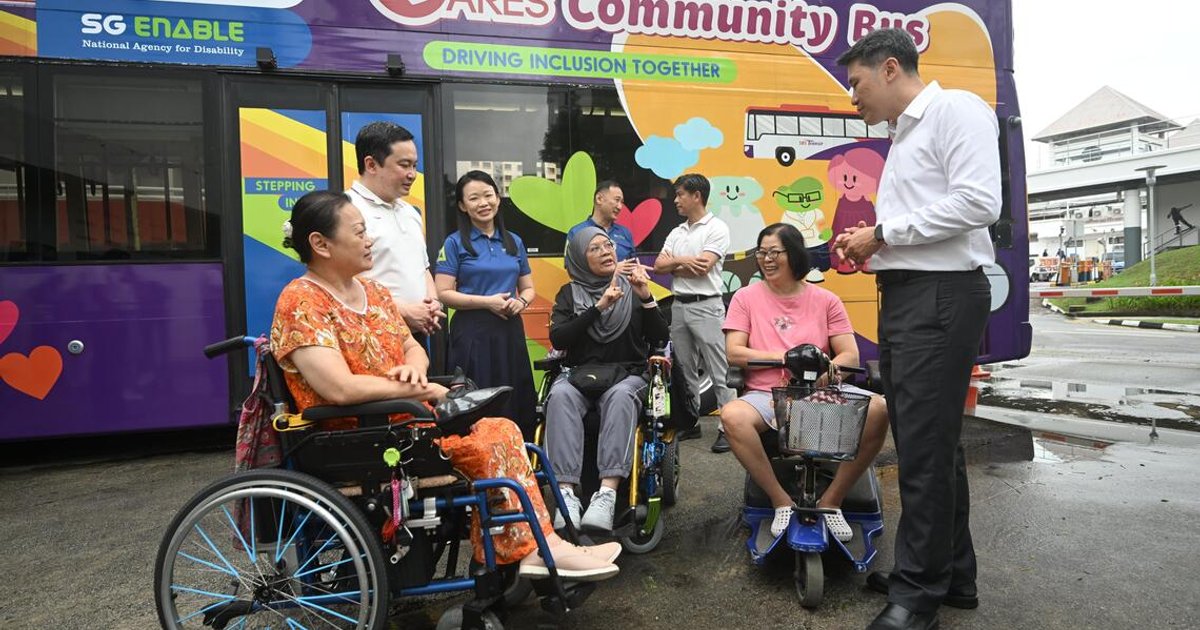
SBS Transit aims to train 70% of frontline staff to support commuters with disabilities by 2030
SBS Transit plans to train 70% of its frontline staff to assist commuters with disabilities by 2030. The company also aims to increase its workforce of employees with disabilities to 300.
Intelligence analysis by Gemini 2.5 Flash Lite
SBS Transit is partnering with SG Enable to enhance inclusivity in public transport for people with disabilities. This initiative includes training 70% of frontline staff by 2030 and increasing the number of employees with disabilities to 300, alongside expanding inclusive hiring and support programs.
Imagine buses and trains are like big school buses for everyone. SBS Transit wants to teach most of its helpers how to be extra kind and helpful to friends who might need a little more assistance, like those who can't see well or have trouble walking. They also want to hire more friends with disabilities to work on these buses and trains, making everyone feel welcome.
Analysis
SBS Transit
SBS Transit's commitment to enhancing support for commuters with disabilities is a significant undertaking that extends beyond mere compliance, aiming to foster a truly inclusive public transport environment. The ambitious target of training 70% of its frontline staff by 2030 underscores a strategic focus on equipping its workforce with the necessary skills and empathy to assist a diverse range of passengers, including those with less visible conditions. This proactive approach involves substantial investment in training infrastructure, such as the Public Transport Inclusivity Training Centre, and the development of tailored workshops. The operator's intention to explore job redesign and workplace accommodations for employees with disabilities further demonstrates a holistic view of inclusion, moving beyond basic accessibility to active integration and support within the company's operations.
SG Enable
The partnership with SG Enable, a key agency dedicated to empowering persons with disabilities, is central to the success of SBS Transit's inclusivity goals. SG Enable's expertise in disability support and employment services provides a crucial framework for SBS Transit's initiatives. By extending the Enabling Pathway Programme to polytechnic and university students, the collaboration aims to create a stronger pipeline of talent with disabilities entering the workforce, not just within SBS Transit but also its network of service providers through the Queen Bee programme. The integration of SG Enable's Enabling Services Hubs with SBS Transit's Travel Buddy Programme is another critical element, offering practical, community-based support to help individuals with disabilities navigate public transport independently and confidently, thereby bridging the gap between training and real-world application.
300 Employees
The objective to increase the number of employees with disabilities to 300 by 2030, from the current approximately 50, represents a tangible measure of progress in fostering an inclusive workplace. This target is not just about numbers but about creating meaningful employment opportunities across various roles, from customer service to technical positions. The success stories, like that of Mohammad Umran Mohammad Zakirom, a technician who benefited from the Enabling Pathway Programme, highlight the potential that can be unlocked when employers are willing to adapt roles and provide necessary support. This focus on inclusive hiring and workplace accommodations, supported by job coaches and adapted duties, aims to demonstrate that individuals with disabilities can be valuable and productive members of the workforce, contributing to the overall operational efficiency and diversity of SBS Transit and its partners.
Key points
- SBS Transit aims to train 70% of its frontline staff to support commuters with disabilities by 2030.
- The company plans to increase its workforce of employees with disabilities to 300 by 2030.
- A new partnership with SG Enable will focus on making public transport more inclusive.
- Initiatives include expanding hands-on training, inclusive hiring, and job support programs.
- The Travel Buddy Programme will assist persons with disabilities in using public transport more safely and independently.
If successful, this initiative could significantly improve the daily commutes for individuals with disabilities, fostering greater independence and social inclusion. It may also set a precedent for other public transport operators in Singapore and beyond to adopt similar inclusive practices, leading to a more accessible society overall.
Challenges may arise if staff training proves insufficient to address the diverse needs of commuters with disabilities, or if the expansion of inclusive hiring faces systemic barriers or a lack of suitable job redesign opportunities. Without sustained commitment and adaptation, the targets may not be fully met, leaving some commuters underserved.