Serbia wakes up to new reality after student-led movement ousts Vučić – Europe live
A student-led grassroots movement has successfully ousted Serbia's authoritarian president Aleksandar Vučić in a seismic election, raising hopes for improved relations with the EU.
Intelligence analysis by Gemini 2.5 Flash
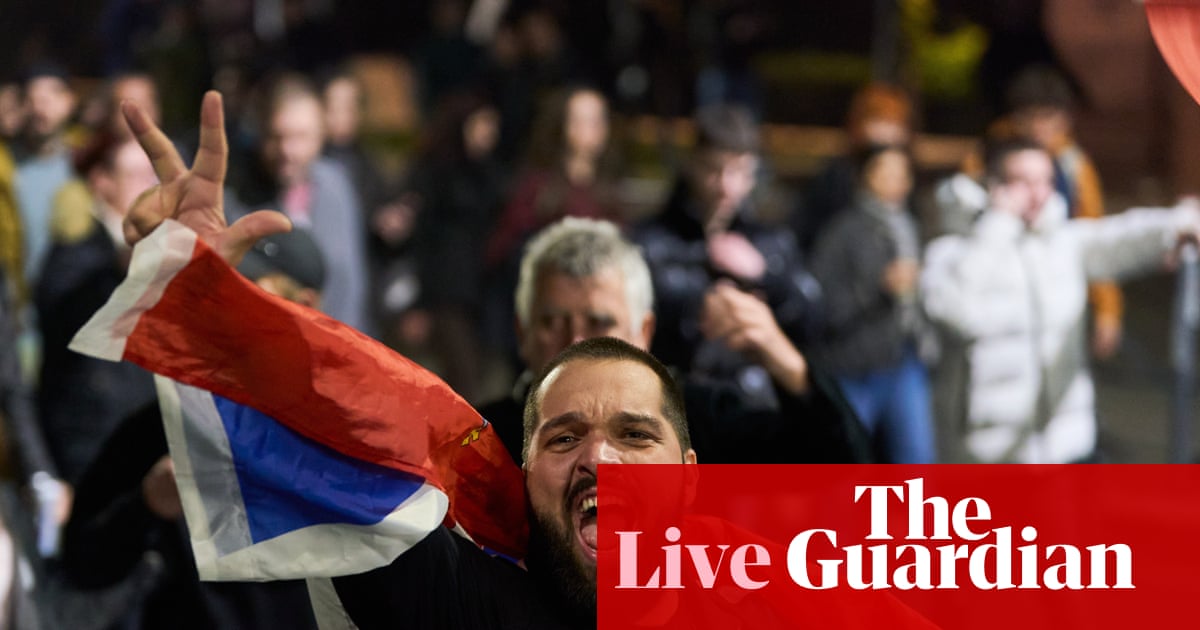
Serbia is experiencing a significant political shift as the 'Student List' opposition movement secured a decisive victory over President Aleksandar Vučić's bloc in parliamentary elections. This unexpected outcome, driven by youth activism, is seen as a democratic turning point that could reset Serbia's engagement with the European Union and other international partners.
Imagine a school where one big kid always made all the rules, and everyone had to listen. But then, a group of students got together, worked really hard, and convinced everyone to vote for them instead! Now, the big kid is out, and the students are in charge, making everyone hopeful that things will be fairer and more friendly, especially with other schools nearby.
Analysis
Student List
The 'Student List' has achieved a remarkable and decisive victory in Serbia's parliamentary elections, securing 52.6% of the votes with 96.9% of polling stations processed. This grassroots opposition movement, primarily led by students, has effectively unseated the long-standing authoritarian president, Aleksandar Vučić. The latest CeSID projection indicates that the student-led bloc will command 140 seats in the new parliament, comfortably exceeding the 126 required for a majority.
This electoral triumph represents a significant shift in Serbian politics, demonstrating the power of organized youth activism and popular discontent against established authoritarian rule. The movement's success has generated considerable optimism for a new era of political openness and democratic governance in the country. International observers are expected to provide their preliminary report on the vote, which will further contextualize the integrity and implications of this historic election.
Aleksandar Vučić
Aleksandar Vučić, Serbia's former authoritarian president, has conceded defeat in the parliamentary election, marking the end of his dominant political era. His bloc managed to secure 39.22% of the votes, translating to 103 seats in the new parliament, a substantial loss compared to the student-led opposition. Vučić's ousting by a grassroots movement is a profound development, challenging the entrenched political structures that have characterized Serbia for years.
His concession paves the way for a new political reality in Serbia, one that is anticipated to be more aligned with democratic principles and international cooperation. The defeat of such a prominent authoritarian figure sends a strong message about the potential for popular movements to effect change, even in seemingly unyielding political environments. This outcome is likely to be closely watched by other nations grappling with similar political dynamics.
Péter Magyar
The events in Serbia have resonated across Europe, particularly with Hungary's prime minister, Péter Magyar, who expressed a sense of 'nostalgia' regarding the celebrations. Magyar, who himself came to power earlier this year after ousting Viktor Orbán, drew parallels between the two victories, suggesting a broader regional trend of anti-authoritarian sentiment. His comments highlight the interconnectedness of political developments within Central and Eastern Europe.
Magyar's emotional investment underscores the symbolic significance of the Serbian election, framing it as part of a larger narrative of democratic renewal in the region. The idea of a 'Budapest Express' reaching Belgrade in politics before it does on the tracks metaphorically links these movements, suggesting a shared aspiration for political change among neighboring countries. This regional perspective adds another layer of importance to the Serbian outcome, indicating potential ripple effects beyond its borders.
Key points
- Serbia's former authoritarian president, Aleksandar Vučić, has been ousted by a student-led grassroots opposition movement.
- The 'Student List' secured 52.6% of the votes, projected to win 140 seats, while Vučić's bloc received 39.22% and 103 seats.
- The election outcome raises hopes for a new opening in Serbia's relations with the EU and other international partners.
- Hungary's Prime Minister Péter Magyar drew parallels between the Serbian election and his own victory over Viktor Orbán, highlighting regional anti-authoritarian trends.
- International observers are set to present their preliminary report on the Serbian vote, while other European nations like Bulgaria, France, and Italy also face ongoing political developments.
The ousting of Aleksandar Vučić by a student-led movement signals a potential democratic renewal for Serbia, fostering hopes for improved relations with the European Union and other international partners. This shift could lead to greater political openness and a more aligned foreign policy, benefiting regional stability and integration.

