SpaceX rocket booster on 5,400-mph collision course with the moon, expected to leave crater 16 feet deep
A SpaceX Falcon 9 rocket booster is on a collision course with the moon, expected to slam into the lunar surface at a speed of 5,400 mph, leaving a crater 16 feet deep.
Intelligence analysis by Llama
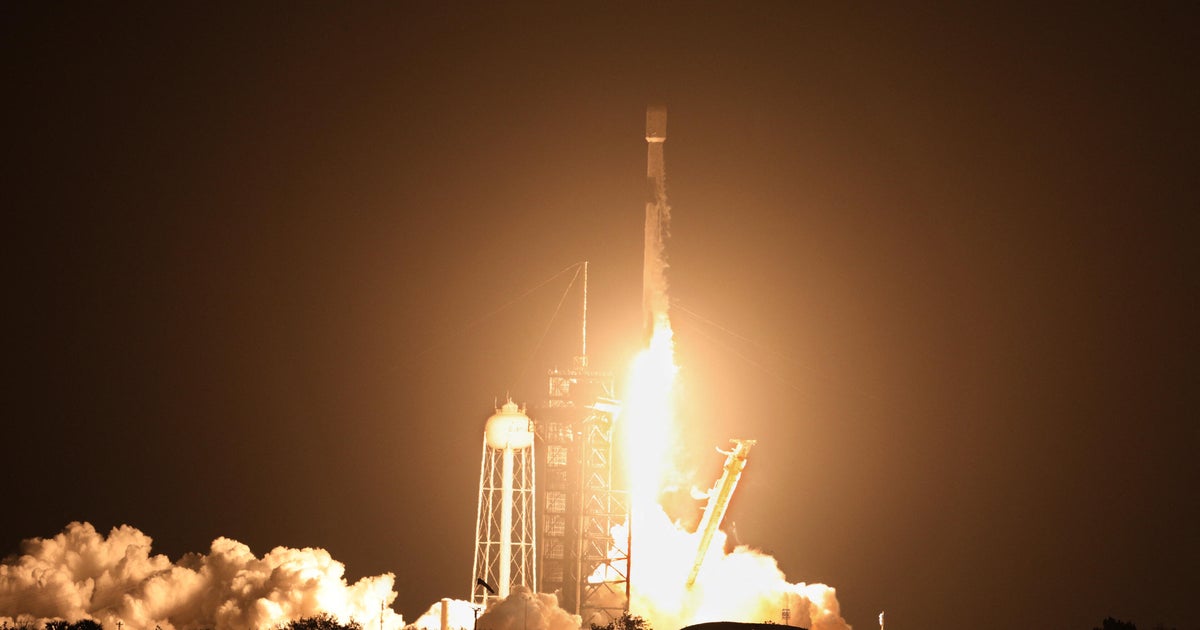
A SpaceX Falcon 9 rocket booster is on a collision course with the moon, expected to slam into the lunar surface at a speed of 5,400 mph, leaving a crater 16 feet deep. The impact is expected to be the equivalent of 2.8 tons of TNT and will be the first man-made object to hit the moon in over 50 years.
Imagine a big rock, like a car, crashing into the moon. That's basically what's happening with the SpaceX rocket booster. It's going to make a big crater and throw up a lot of dust and rock. Scientists are excited to study this because it will help them learn more about the moon and how it works.
Analysis
A Rare Man-Made Collision with the Moon
The SpaceX Falcon 9 rocket booster, which boosted two lunar landers into space in January 2025, is on a collision course with the moon. The upper part of the rocket disengaged as the two spacecraft went on their way, and the booster has been in orbit ever since. The impact is expected to occur near the moon's Einstein and Bell craters and will be the first man-made object to hit the moon in over 50 years.
The Science Behind the Collision
The collision is expected to be the equivalent of 2.8 tons of TNT and will leave a crater about 60 feet wide and 12 feet deep. The impact will also throw dust and rock outward as ejecta. Scientists are excited to study the impact and the resulting ejecta plume, which will provide valuable insight into the moon's geology and help refine models for future exploration and science missions.
What We Can Learn from the Collision
The collision will provide scientists with a unique opportunity to study the moon's geology and the behavior of ejecta plumes. By analyzing the data from the impact, scientists hope to determine how much water ice is hidden below the surface on that part of the moon. The mission will also help scientists refine their models for future exploration and science missions.
Key points
- A SpaceX Falcon 9 rocket booster is on a collision course with the moon, expected to slam into the lunar surface at a speed of 5,400 mph.
- The impact is expected to be the equivalent of 2.8 tons of TNT and will leave a crater about 60 feet wide and 12 feet deep.
- The collision will provide scientists with valuable insight into the moon's geology and the behavior of ejecta plumes.
- The mission will help scientists refine their models for future exploration and science missions.
- The collision will also help scientists determine how much water ice is hidden below the surface on that part of the moon.
The collision will provide scientists with valuable insight into the moon's geology and the behavior of ejecta plumes, which will help refine models for future exploration and science missions. Additionally, the mission will help scientists determine how much water ice is hidden below the surface on that part of the moon.
The collision could potentially damage the lunar surface and create a crater that could be difficult to study. Additionally, the impact could also throw up a lot of dust and rock, which could make it difficult for scientists to analyze the data from the mission.