Spain threatens retaliation if Italy fails to lift border controls over Ceuta
Spain has threatened to impose counter-measures on Italy if it fails to lift border controls introduced following the mass crossing of migrants into the Spanish exclave of Ceuta. Roughly 78,000 migrants from neighbouring Morocco arrived in Ceuta by sea in a matter of hour…
Intelligence analysis by Llama
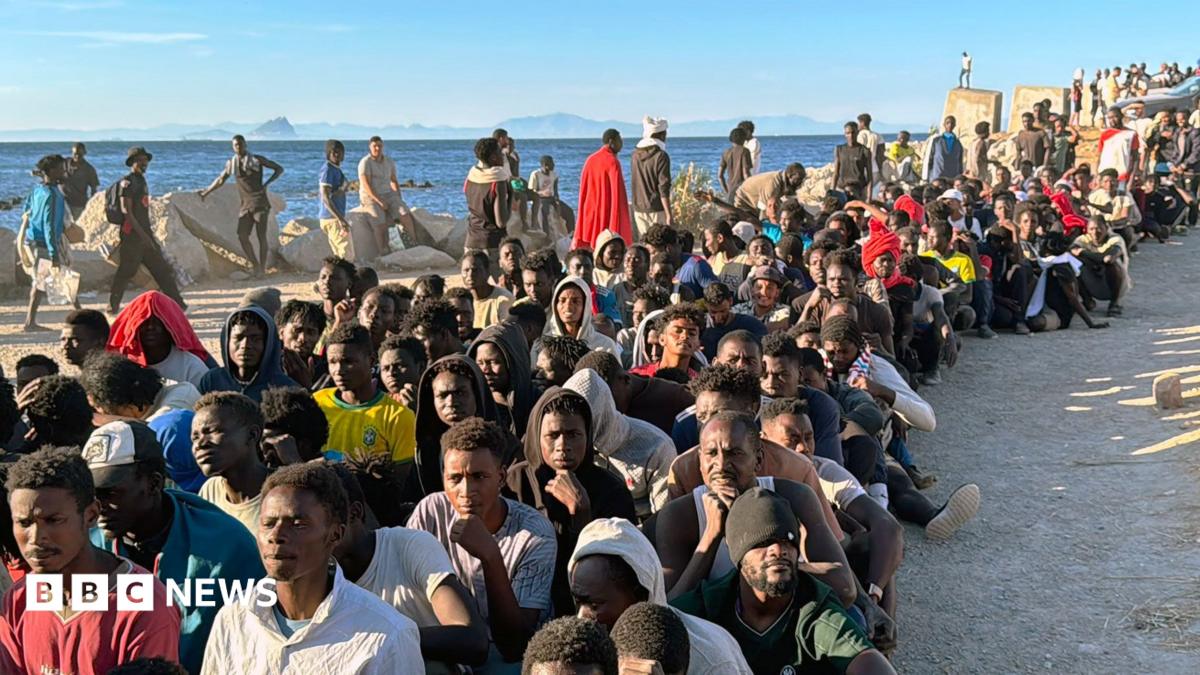
Spain has threatened to retaliate against Italy if it fails to lift border controls introduced after a mass migrant crossing into Ceuta. The move has sparked a diplomatic rift among EU nations.
Imagine a big group of people trying to cross a border into a country. The country has rules to stop them, but the rules are not working. The people are trying to get to a special place called Ceuta, which is a disputed territory between Spain and Morocco. The situation is causing a big diplomatic crisis between Spain and Italy, and has raised questions about the effectiveness of border controls and the role of criminal networks in spreading disinformation.
Analysis
Ceuta's Migrant Crisis: A Diplomatic Quagmire
The recent mass crossing of migrants into Ceuta has sparked a diplomatic crisis between Spain and Italy, with both countries engaging in a war of words over border controls. The situation has raised questions about the effectiveness of border controls and the role of criminal networks in spreading disinformation.
The crossings, which saw around 100 people die, were the largest in Ceuta's history, with roughly 78,000 migrants arriving in a matter of hours on Thursday and Friday last week. The migrants, who were mostly from Morocco, were attempting to reach the Spanish exclave, which is a disputed territory between Spain and Morocco.
In the wake of the crossings, Italy partially suspended its Schengen arrangement with Spain, which included the closure of maritime and air entry points as well as the reinforcement of land border controls. Spain has threatened to impose counter-measures on Italy if it fails to lift border controls, with the Spanish prime minister's office saying that the country would introduce 'proportionate measures to protect the interests and dignity of its citizens' if Italy failed to reverse its decision.
The situation has also caused a diplomatic rift among EU nations, with Finland and Denmark backing Italy's decision to suspend its agreement with Spain. The Czech Republic has called for Spain's membership to be temporarily suspended, while the EU's Migration Commissioner Magnus Brunner has suggested that criminal networks spreading disinformation were to blame for the crisis.
The crossings have also raised questions about the effectiveness of border controls and the role of Morocco's border guards in preventing the migrants from reaching Ceuta. Nearly 1,400 minors, some of them 'very young boys and girls', still remain in Ceuta following last week's crossings, with Spanish Youth Minister Sira Rego saying that the situation was being brought under control.
The Ceuta crossings have also caused a diplomatic rift between Spain and Morocco, with Morocco laying blame for the crisis on Spain's Supreme Court, which ruled that migrants stopped at sea while trying to reach Ceuta or Melilla cannot be summarily returned to Morocco.
The situation is complex and multifaceted, with various actors and interests at play. However, one thing is clear: the migrant crisis in Ceuta has caused a diplomatic crisis between Spain and Italy, and has raised questions about the effectiveness of border controls and the role of criminal networks in spreading disinformation.
Italy's Response: A Diplomatic Standoff
Italy's decision to suspend its Schengen arrangement with Spain has sparked a diplomatic standoff between the two countries. Italy has said that it will not accept 'ultimatums or impositions' from Madrid, and has vowed to keep border checks in place until at least 15 August.
Spain has responded by saying that it will introduce 'proportionate measures to protect the interests and dignity of its citizens' if Italy fails to reverse its decision. The Spanish prime minister's office has said that the country is monitoring the situation, but does not expect a repeat of the scenes from last week.
The situation is complex and multifaceted, with various actors and interests at play. However, one thing is clear: the migrant crisis in Ceuta has caused a diplomatic crisis between Spain and Italy, and has raised questions about the effectiveness of border controls and the role of criminal networks in spreading disinformation.
The Role of Criminal Networks: A Key Factor
The migrant crisis in Ceuta has also raised questions about the role of criminal networks in spreading disinformation. The EU's Migration Commissioner Magnus Brunner has suggested that criminal networks were to blame for the crisis, with the Spanish government agreeing with this assessment.
The situation is complex and multifaceted, with various actors and interests at play. However, one thing is clear: the migrant crisis in Ceuta has caused a diplomatic crisis between Spain and Italy, and has raised questions about the effectiveness of border controls and the role of criminal networks in spreading disinformation.
Key points
- Spain has threatened to impose counter-measures on Italy if it fails to lift border controls introduced following the mass crossing of migrants into the Spanish exclave of Ceuta.
- Roughly 78,000 migrants from neighbouring Morocco arrived in Ceuta by sea in a matter of hours on Thursday and Friday last week.
- The migrants, who were mostly from Morocco, were attempting to reach the Spanish exclave, which is a disputed territory between Spain and Morocco.
- Italy has partially suspended its Schengen arrangement with Spain, which included the closure of maritime and air entry points as well as the reinforcement of land border controls.
- Spain has threatened to introduce 'proportionate measures to protect the interests and dignity of its citizens' if Italy fails to reverse its decision.
If the situation in Ceuta is brought under control, and the border controls are effective, it could lead to a decrease in the number of migrants attempting to cross into Ceuta. This could also lead to a decrease in the number of people dying during the crossings. Additionally, if the EU nations can work together to find a solution to the migrant crisis, it could lead to a more effective and coordinated approach to border controls.
If the situation in Ceuta continues to deteriorate, and the border controls are not effective, it could lead to a further increase in the number of migrants attempting to cross into Ceuta. This could also lead to a further increase in the number of people dying during the crossings. Additionally, if the EU nations are unable to work together to find a solution to the migrant crisis, it could lead to a breakdown in relations between the countries and a further escalation of the crisis.