Spot a horseshoe crab in Singapore? Researchers want to know
Researchers in Singapore are seeking public help to report horseshoe crab sightings to track their numbers and habitats for conservation efforts. Horseshoe crabs are ancient 'living fossils' essential to coastal ecosystems but face threats from habitat loss and human acti…
Intelligence analysis by Llama
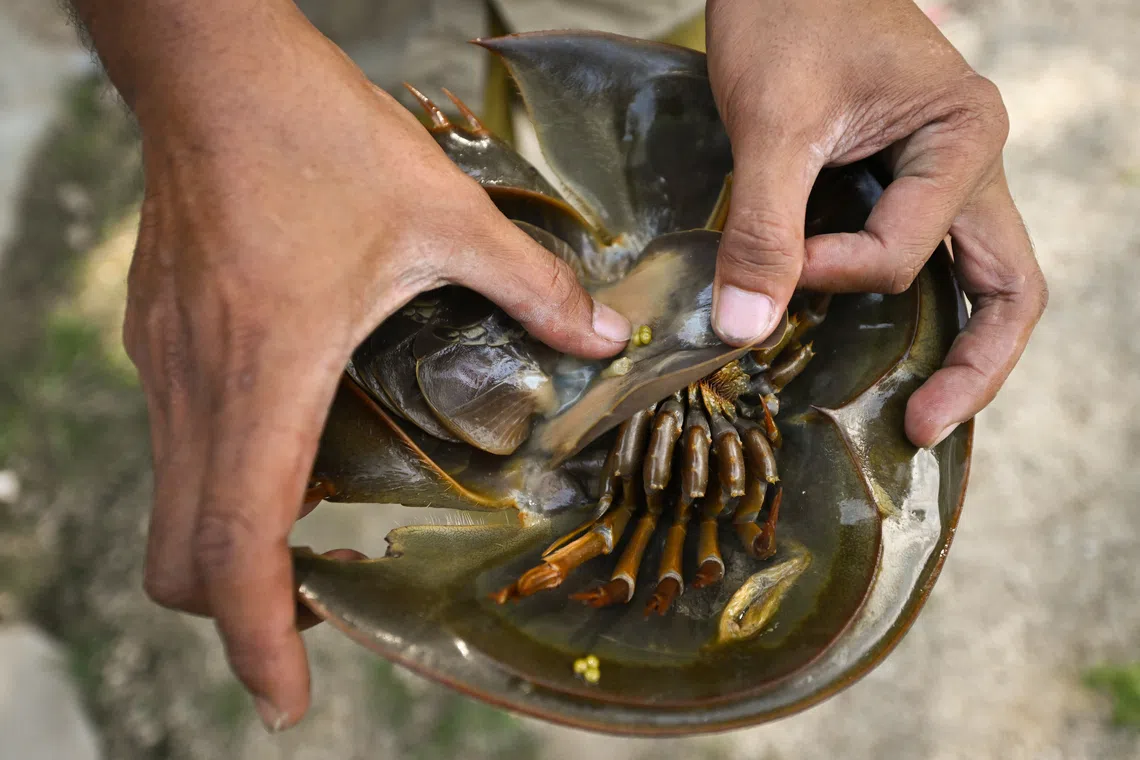
Researchers in Singapore are seeking volunteers to report horseshoe crab sightings to track their numbers and habitats for conservation efforts. Horseshoe crabs are ancient 'living fossils' essential to coastal ecosystems but face threats from habitat loss and human activities.
Horseshoe crabs are ancient creatures that have been around for 450 million years. They are important to coastal ecosystems because they help keep sediment healthy and their eggs feed other species. Researchers in Singapore are trying to learn more about these crabs and how to protect them.
Analysis
Ancient 'Living Fossils' in Singapore's Coastal Ecosystems
Horseshoe crabs have been around for 450 million years, making them older than dinosaurs. They are a keystone species of mudflats, mangroves, and sandy shores, where they dwell and help keep sediment healthy. Their eggs, laid in the millions, also feed other species in the ecosystem.
Threats to Horseshoe Crabs in Singapore
Globally, the most imminent threat to horseshoe crabs stems from habitat change and human activity. In some parts of the world, the animals are sought after for medical research. Their blue-tinged blood contains a clotting enzyme crucial for bacterial testing and vaccine development, including for Covid-19. In 2020, nearly 700,000 horseshoe crabs were harvested for their blood, according to the National Geographic magazine.
Research Efforts in Singapore
Research fellow Lee Bee Yan from the National University of Singapore's Tropical Marine Science Institute is leading a project to compile the 'much-needed' information on the distribution, abundance, and habitat use of horseshoe crabs in Singapore. There are four living species of horseshoe crab globally, and Singapore is home to two of them – the coastal horseshoe crab (Tachypleus gigas) and the mangrove horseshoe crab (Carcinoscorpius rotundicauda). Both species are listed as 'vulnerable' in the Singapore Red Data Book, which compiles the descriptions and conservation statuses of threatened plants and animals in the Republic.
Key points
- Researchers in Singapore are seeking public help to report horseshoe crab sightings to track their numbers and habitats for conservation efforts.
- Horseshoe crabs are ancient 'living fossils' essential to coastal ecosystems but face threats from habitat loss and human activities.
- There are four living species of horseshoe crab globally, and Singapore is home to two of them – the coastal horseshoe crab (Tachypleus gigas) and the mangrove horseshoe crab (Carcinoscorpius rotundicauda).
- Both species are listed as 'vulnerable' in the Singapore Red Data Book, which compiles the descriptions and conservation statuses of threatened plants and animals in the Republic.
If the public can provide more data on horseshoe crab sightings, it could help researchers develop more effective conservation plans and protect these ancient creatures for future generations.
The decline of horseshoe crab populations in Singapore is a concern, and if left unchecked, it could lead to the loss of these important species from the country's coastal ecosystems.