Supreme Court to Hear New Case on Race and School Admissions, Focusing on Maryland
Supreme Court agrees to hear case challenging school admissions policies in Montgomery County, Maryland, focusing on a lottery-based system for magnet programs.
Intelligence analysis by Qwen 2.5 (3B)
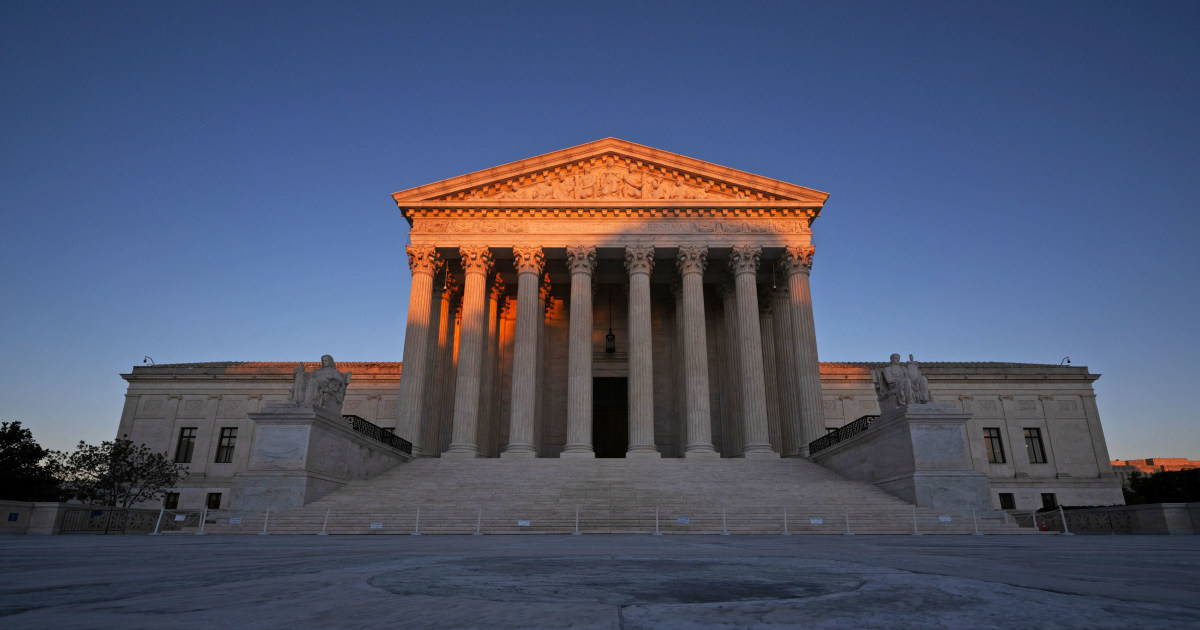
Supreme Court to consider a new case challenging school admissions policies in Montgomery County, Maryland, involving a lottery system for magnet programs that some argue unfairly favors Black and Latino students.
The Supreme Court is looking at a lottery system used to pick students for special programs in Maryland. Some people think this system unfairly picks more Black and Latino students, which could mean they can't get into these special programs anymore.
Analysis
{"#lottery-based-system":"The current magnet program admissions process in Montgomery County, Maryland, uses a lottery system to select students. The plaintiffs argue this system unfairly favors Black and Latino students, as it is based on test scores and performance relative to other students in the school.","#constitutional-issue":"The case raises questions about the constitutionality of using race as a factor in admissions, as the Supreme Court previously struck down such policies in college admissions cases. The court is not poised to issue a ruling on the constitutional issue, but rather to decide on the technical question of what evidence is needed to bring such a claim.","#historical-context":"This case is part of a broader trend of challenges to school admissions policies aimed at fostering diversity. In 2023, the Supreme Court cited the 14th Amendment in striking down the use of race in college admissions. The current case is narrower, focusing on a more technical question of evidence needed for such a claim."}
Key points
- Supreme Court agrees to hear case on school admissions policies in Montgomery County, Maryland
- Challengers argue current lottery system unfairly favors Black and Latino students
- Case focuses on technical question of evidence needed for such a claim, not constitutional issue
- Part of broader trend of challenges to school admissions policies aimed at fostering diversity
If the Supreme Court rules in favor of the challengers, it could lead to more fair and transparent ways to pick students for special programs.
If the Supreme Court rules against the challengers, it could mean more students of color might not get into these special programs, which could hurt diversity in schools.