Sustainable security cannot be dictated from outside: Iran FM
Iran's Foreign Minister Seyyed Abbas Araghchi stated that sustainable security in the Middle East must be achieved through regional dialogue and cooperation, not external imposition.
Intelligence analysis by Gemini 2.5 Flash
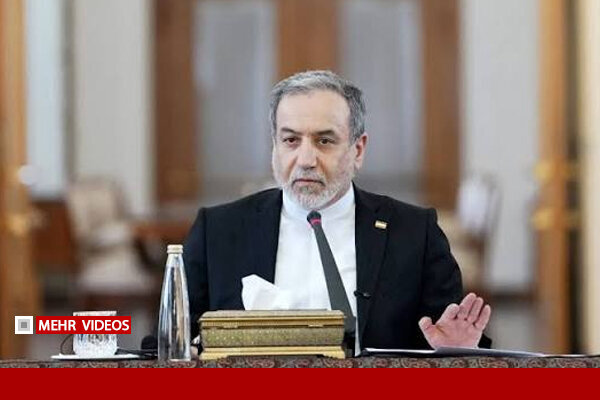
Speaking virtually at Indonesia’s Global Town Hall 2026, Iran's top diplomat, Seyyed Abbas Araghchi, articulated Tehran's stance that lasting regional security stems from mutual respect and confidence-building among Middle Eastern countries, explicitly rejecting the notion that foreign military presence or dictated wills can establish stability.
Imagine a group of kids trying to decide how to play a game in their own backyard. Iran's top diplomat, Seyyed Abbas Araghchi, is saying that the kids in the Middle East should decide the rules for their own game together, by talking and trusting each other. He believes that if grown-ups from other neighborhoods come in and try to tell them how to play, it won't be a fun or fair game for anyone, and it won't last.
Analysis
Iran's Foreign Minister Seyyed Abbas Araghchi's remarks at the Global Town Hall 2026 event underscore a foundational principle of Iranian foreign policy: the belief that regional security must be an indigenous construct. This perspective directly challenges the involvement of external powers in the Middle East's security architecture, framing their presence as an impediment rather than a facilitator of stability. The emphasis on dialogue, confidence-building, cooperation, and mutual respect among regional countries highlights Iran's preferred pathway to de-escalation and long-term peace, suggesting a vision of a self-reliant Middle East.
Seyyed Abbas Araghchi
Seyyed Abbas Araghchi, as Iran's Foreign Minister, serves as a key voice in articulating the nation's diplomatic principles and strategic outlook. His virtual address at the Global Town Hall 2026 provided an international platform to convey Iran's consistent message regarding regional autonomy in security matters. By asserting that sustainable security 'cannot be dictated from outside,' Araghchi directly critiques the historical and ongoing military interventions and political influences of non-regional actors. This position is not merely rhetorical but reflects a core tenet of Iran's approach to its neighbors and the broader international community, aiming to foster a regional order less susceptible to external manipulation.
His statement also implicitly positions Iran as a proponent of intra-regional solutions, advocating for a framework where Middle Eastern states collectively address their security challenges. This diplomatic posture seeks to enhance Iran's standing as a responsible regional actor, capable of contributing to stability through engagement rather than confrontation. The full text of his speech, which was to be published subsequently, would likely elaborate further on these principles and potentially outline specific proposals for achieving such a cooperative security environment.
Global Town Hall 2026
The choice of Indonesia's Global Town Hall 2026 as the venue for these remarks is significant, offering Iran a platform to reach a diverse international audience beyond traditional Western forums. Participating in such a global event allows Iran to present its foreign policy perspectives to a broader array of nations, particularly those in the Global South, who may share similar views on national sovereignty and non-interference. This strategic engagement helps to counter narratives that might portray Iran as isolated or solely focused on confrontational policies.
The Global Town Hall format, often designed for open discussion and idea exchange, provides an opportunity for Iran to articulate its vision for a more equitable and stable international order. By emphasizing dialogue and cooperation, Araghchi's participation aims to project an image of Iran as a constructive partner in global and regional governance. The event serves as a testament to Iran's ongoing efforts to engage diplomatically and build alliances that support its foreign policy objectives, particularly in advocating for regional solutions to regional problems.
Middle East Security
Iran's vision for Middle East security, as articulated by Araghchi, fundamentally rejects the paradigm of security being imposed by foreign powers. Instead, it champions a model rooted in internal regional dynamics, where states engage in 'dialogue, confidence-building, cooperation, and mutual respect.' This approach suggests a desire to move away from military-centric security frameworks towards more diplomatic and economic integration among regional actors. The call for an end to the 'military presence of foreign powers and imposition of their will' directly addresses the presence of forces like those from the United States and other Western nations in the Persian Gulf and broader Middle East.
This perspective implies that true stability can only emerge when regional states take ownership of their security challenges, fostering trust and collective responsibility. Such a framework would necessitate a reduction in external military footprints and a greater reliance on indigenous diplomatic mechanisms to resolve disputes. For Iran, this vision is integral to its national security doctrine, aiming to create a regional environment where its own security is enhanced through a network of cooperative relationships rather than through a balance of power dictated by external forces.
Key points
- Iran's Foreign Minister Seyyed Abbas Araghchi stated that sustainable security in the Middle East must originate from within the region.
- He emphasized that dialogue, confidence-building, cooperation, and mutual respect among regional countries are essential for achieving lasting security.
- Araghchi explicitly rejected the idea that foreign military presence or the imposition of external wills can establish sustainable security.
- The remarks were made virtually at Indonesia’s Global Town Hall 2026 event.
- The full text of his speech is expected to be published later.
If regional countries embrace Iran's call for dialogue and confidence-building, it could lead to reduced tensions, increased cooperation on shared challenges, and a more stable Middle East free from external interference. This could foster economic growth and improved living conditions across the region.
Should foreign powers continue their military presence and regional states fail to engage in meaningful dialogue, the Middle East could remain a hotbed of instability, with ongoing conflicts and proxy wars, further hindering development and perpetuating humanitarian crises.