Tata PV Business Grows 35% Post-Demerger: Market Share & FY31 Targets
Tata Motors' passenger vehicle (PV) business achieved a 35% growth in its first year post-demerger, reaching 7.44 lakh units in domestic sales and becoming India's second-largest carmaker with a 14.1% market share.
Intelligence analysis by Gemini 2.5 Flash
Tata Motors has reported impressive growth in its passenger vehicle segment following its demerger from the commercial vehicle business in October 2025. Driven by strong sales of popular SUV models like Nexon and Punch, along with significant contributions from EV and CNG vehicles, the company has outpaced industry growth and solidified its position as a major player in the Indian aut…
Imagine Tata Motors, a big car company, split its truck-making part from its car-making part. In the first year after this split, the car part grew super fast, selling 35% more cars than before! Two of their small SUVs, called Nexon and Punch, were like the star players, selling tons of units. They also sold lots of electric and gas-powered cars, showing they're good at making cars that are kind to the environment. Now, they want to sell even more cars by 2031 and make sure their workshops are just as good as their showrooms.
Analysis
Tata Motors' passenger vehicle division has demonstrated remarkable resilience and strategic effectiveness, achieving a 35% growth rate in its inaugural year as a standalone entity following the demerger in October 2025. This performance, which saw domestic sales climb to 7.44 lakh units between October 2025 and September 2026, significantly outpaced the industry's overall growth of approximately 22%. The company's market share expanded to 14.1%, positioning it as the second-largest car manufacturer in India during this period. This surge is attributed to several factors, including the positive market reception for its SUV models and the strategic utilization of revised GST rates that made vehicles more affordable across various segments. Even Tata Managing Director Shailesh Chandra expressed surprise at the magnitude of this growth, indicating that the 35% advancement exceeded internal expectations.
Nexon and Punch
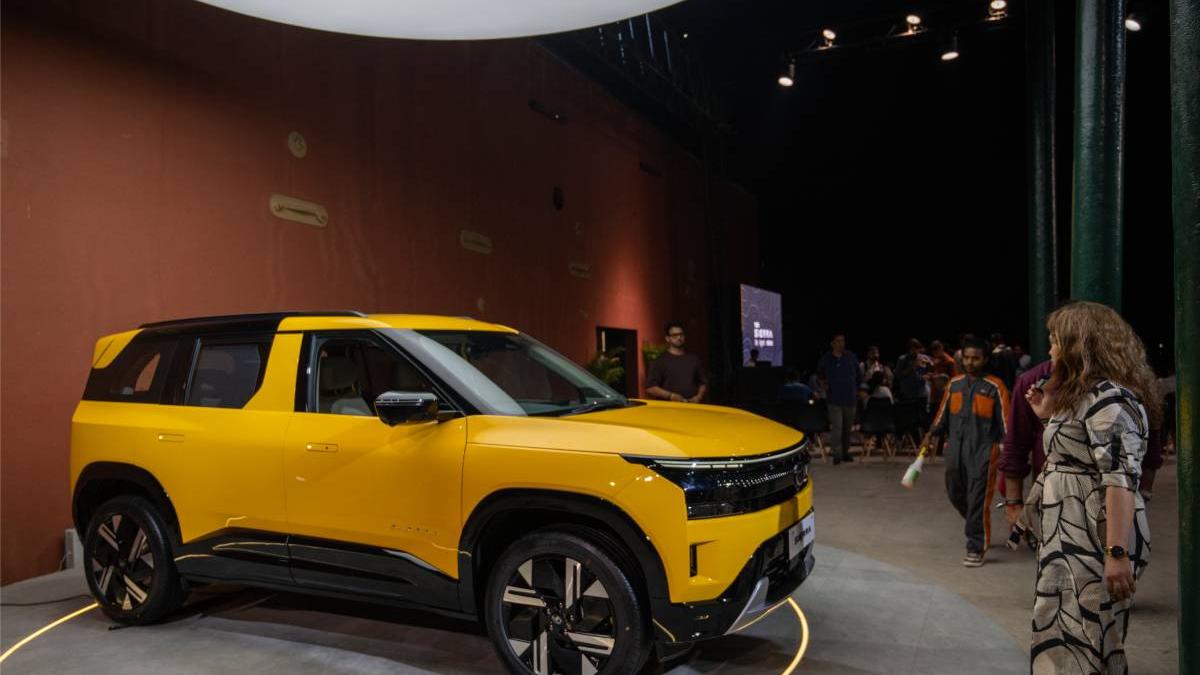
The success of Tata's PV business is heavily underpinned by the strong performance of its key SUV models, Nexon and Punch. These two vehicles collectively accounted for approximately 63% of Tata's domestic sales during the reporting period, with Nexon selling 2.38 lakh units and Punch contributing 2.33 lakh units. This dominance highlights the company's effective product strategy in the highly competitive SUV segment, catering to evolving consumer preferences for robust and feature-rich vehicles. Furthermore, the article notes that sales of the Sierra model also surpassed 60,000 units between January and September 2026, indicating a broader appeal across its SUV lineup. The company's focus on these popular models has clearly paid dividends, driving significant volume and market presence.
FY31 Targets
Looking ahead, Tata Motors has set ambitious targets for its passenger vehicle business, aiming for 12 lakh annual sales by FY31. This forward-looking strategy includes the introduction of six new nameplates, with the Avinya being one of the highlighted upcoming models. Beyond sales volume, the company is also prioritizing enhancements in customer experience and after-sales services. Tata plans to triple its service network, emphasizing improved vehicle quality and post-purchase support. The quality assurance department now reports directly to the Managing Director, and a Central Software Integration Team has been established with the goal of evolving into a 'Center of Excellence.' These initiatives underscore Tata's commitment not only to expanding its market footprint but also to solidifying its brand reputation through superior product quality and customer satisfaction.
EV and CNG Models
A significant driver of Tata's recent growth and future strategy is its strong performance in the electric vehicle (EV) and compressed natural gas (CNG) segments. These eco-friendly models collectively accounted for 44% of Tata's annual sales volumes, a figure that rose to approximately 51% in the July-September quarter. Specifically, EV sales saw an impressive 84% increase, reaching 1.3 lakh units, and the brand now claims a substantial 42% share of the Indian EV market. Similarly, CNG model sales grew by 31%, exceeding 2.03 lakh units. This dual-pronged approach to alternative fuel vehicles positions Tata Motors favorably in a market increasingly focused on sustainability and fuel efficiency, demonstrating its adaptability and foresight in product development.
Key points
- Tata Motors' passenger vehicle business grew by 35% in its first year post-demerger (October 2025-September 2026).
- Domestic sales reached 7.44 lakh units, making Tata India's second-largest carmaker with a 14.1% market share.
- Nexon and Punch SUVs were major sales drivers, accounting for 63% of domestic volumes.
- EV and CNG models contributed significantly, making up 44% of annual sales, with EV sales surging 84% and securing a 42% market share.
- Tata aims for 12 lakh annual sales by FY31, planning six new nameplates and tripling its service network while prioritizing after-sales quality.
Tata Motors' strategic focus on its passenger vehicle business post-demerger, coupled with strong performance in the EV and CNG segments, positions it for continued market leadership. The planned expansion of its service network and introduction of new models like Avinya could further solidify its second-largest carmaker status and help achieve its ambitious FY31 sales targets.
Despite the strong growth, maintaining a 35% growth rate in subsequent years could be challenging amidst increasing competition and potential shifts in consumer preferences. Any slowdown in the adoption of EVs or CNG vehicles, or issues with the quality and after-sales service improvements, could hinder Tata's ability to meet its ambitious FY31 sales targets.
Market signals
- TATAMOTORS The company's passenger vehicle business achieved significant growth and market share increase post-demerger, with strong performance in EV and CNG segments, indicating positive business momentum.
AI-generated analysis of potential market relevance. Not financial advice.