The case for Labour to introduce a wealth tax has never been stronger
The Guardian argues Labour should back a 2% tax on fortunes above £100m to address soaring inequality and protect middle earners.
Intelligence analysis by GPT-5.4 Mini
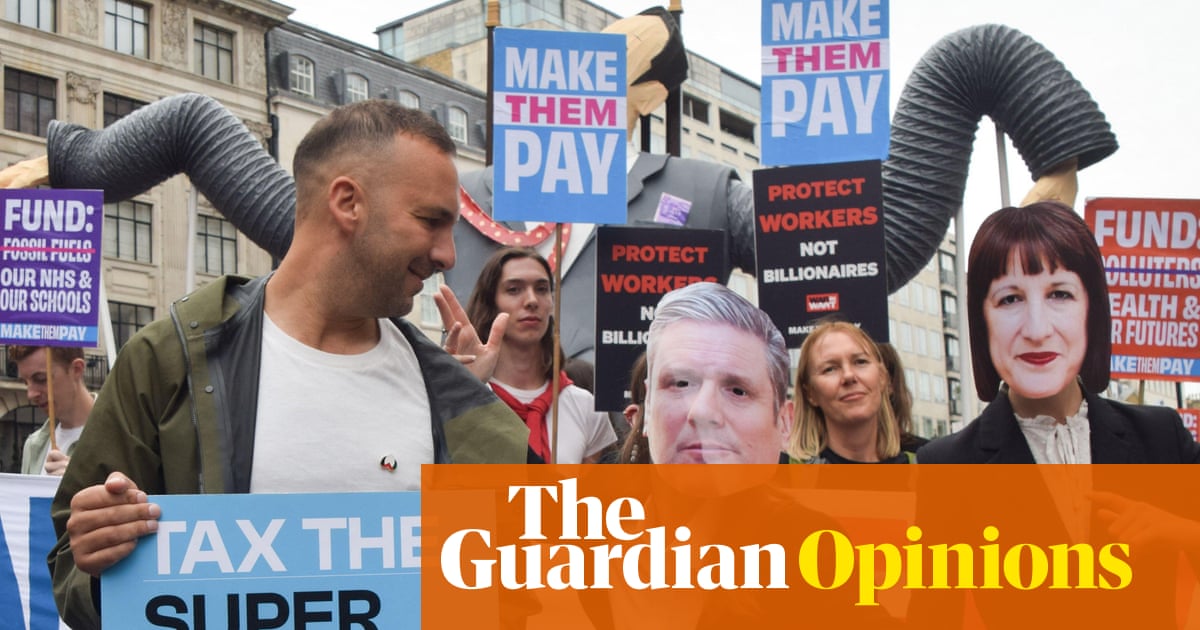
Phillip Inman says the UK's wealth gap has widened so much that a simple tax on very large fortunes is now easier to justify politically and economically. He argues it could help rebalance the system without pushing more of the burden onto ordinary earners.
The article says a tiny tax on huge fortunes could help fix a society where a few people have grabbed far more than everyone else. It is like asking the biggest kid to put a little extra in the class jar so the whole class can keep the lights on.
Analysis
What the column argues
The piece says Labour should get bolder on taxing extreme wealth because the inequality case is now stronger than ever. It points to research suggesting that while most people pay tax rates in the 40% to 50% range on income, billionaires can end up paying much less in effective terms.
The numbers and the proposal
The article focuses on Gabriel Zucman’s case for a 2% annual levy on assets above $100m, with no exemptions. In the Guardian’s telling, this is meant to be simple enough to administer and limited enough to avoid the political collapse that hit earlier European wealth taxes. The column also says the top 200 wealthy UK families now hold wealth equal to about 22% of GDP, up from roughly 5% in 1989.
The political argument
Inman argues Labour does not need international agreement to act and should not wait for the OECD or the UN. He says a government could also reduce flight risk by treating long-term residents as still resident for tax purposes for several years after they leave the UK.
The column tries to answer the standard objection that a wealth tax would punish entrepreneurship. Its response is that people do not stop starting businesses because a tax will one day apply only after they have accumulated more than £100m. It also suggests that very large fortunes are built with help from public infrastructure, workers’ skills, and the state.
The broader case
The article frames the tax as a way to begin correcting decades of rising inequality and to reduce the need for higher taxes on the middle and professional classes. It presents the issue as both a fairness question and a test of whether Labour is willing to confront the super-rich rather than accommodate them.
Key points
- The Guardian column argues the case for a wealth tax has strengthened as inequality has widened.
- It cites Gabriel Zucman’s proposal for a 2% tax on assets above $100m, with no exemptions.
- The article says the top 200 UK families now own wealth equal to about 22% of GDP.
- It suggests leaving the UK should not automatically let rich people avoid the tax for years afterward.
- The column frames the tax as a way to reduce pressure on middle-income taxpayers.
If Labour embraced a version of this idea, it could raise money from those with the broadest shoulders while making it easier to avoid higher taxes on ordinary workers. The column argues it could also start to reverse decades of widening inequality.
The article also shows why the idea is politically hard: wealthy groups and major newspapers are already warning against it. If rich residents threaten to leave, or if the policy is seen as anti-business, Labour could face a backlash before it gets off the ground.