The Gulf has entered a new era of instability. If its leaders think they can rely on old alliances, they are wrong | Nesrine Malik
A recent deadly Houthi attack on Saudi Arabia's capital signals an irreversible new era of instability in the Gulf, driven by escalating regional conflicts and the erosion of traditional alliances.
Intelligence analysis by Gemini 2.5 Flash
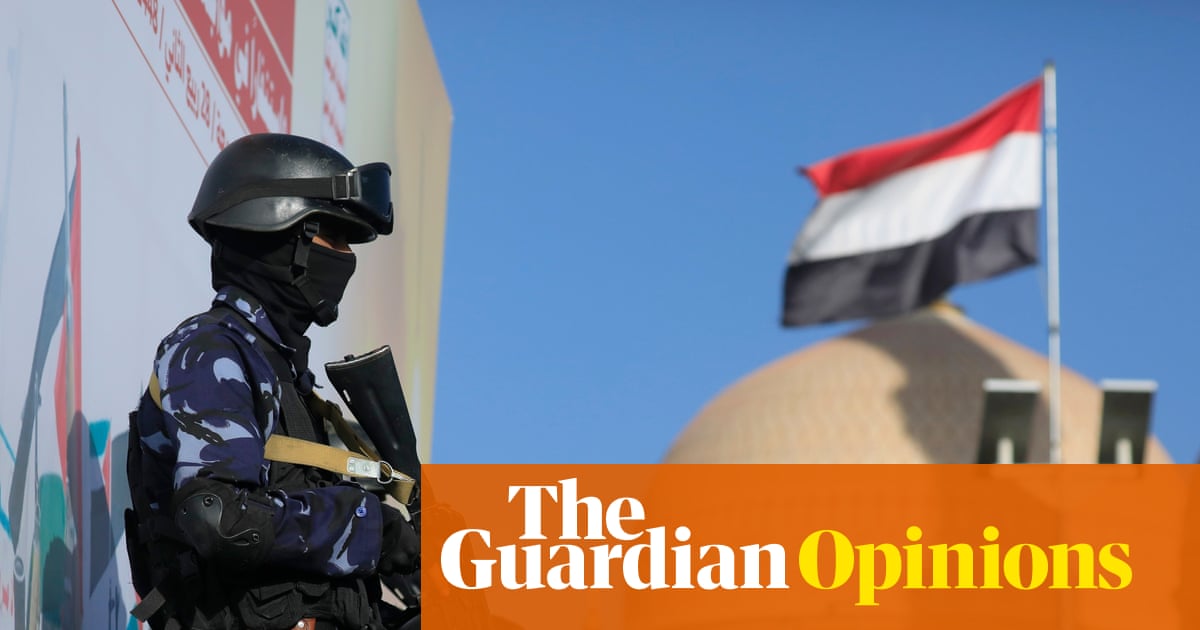
The Gulf region is experiencing profound instability, marked by a recent Houthi missile strike on Riyadh that killed 13 people. This event, following a series of attacks linked to the US/Israel war on Iran and the Gaza conflict, highlights the failure of old alliances and the disruption of the Gulf's economic and social integration into the global community.
Imagine a neighborhood where everyone used to be friends and felt safe, but now old friendships are breaking apart, and new fights are starting. A group called the Houthis, who live nearby, just launched a big attack on Saudi Arabia, hurting many people. This is making everyone in the Gulf region feel very unsafe, and it's messing up their plans to invite tourists and build new businesses, because important places like airports and oil facilities are now targets.
Analysis
The recent Houthi missile attack on King Khalid International Airport in Riyadh, resulting in 13 fatalities and 300 injuries, underscores a dramatic and potentially irreversible shift in the geopolitical landscape of the Gulf. This incident is not an isolated event but rather a culmination of escalating tensions that have been building over the past year, fundamentally altering the region's security paradigm. The article posits that the traditional reliance on alliances with the US and the perceived sanctity of Gulf sovereignty have been severely eroded, leaving the region vulnerable to internal and external pressures.
King Khalid International Airport
The attack on King Khalid International Airport represents a significant escalation, marking the deadliest strike on a Gulf country since the US and Israel initiated their war on Iran in February. For Saudi Arabia, a nation unaccustomed to such high casualty figures from direct attacks, this event is particularly jarring and is expected to provoke a forceful retaliation. The incident highlights the growing capability of non-state actors, backed by regional powers, to inflict substantial damage on critical infrastructure, challenging the long-held belief in the Gulf's invulnerability.
Bab al-Mandab
The broader regional conflict, particularly the war against Iran, has inadvertently created strategic opportunities for groups like the Houthis. The closure of the Strait of Hormuz, a critical chokepoint for global oil shipments, redirected commercial traffic along Yemen's coastline. This shift made the Bab al-Mandab strait in the Red Sea even more crucial, prompting the Houthis to advance and seize territory to gain control over this vital maritime passage. Their actions demonstrate a clear strategic objective beyond merely acting as proxies, aiming to leverage regional instability for their own territorial and political gains.
Donald Trump and Benjamin Netanyahu
The article attributes a significant portion of the current instability to the war on Iran initiated by Donald Trump and Benjamin Netanyahu. This conflict drew the Gulf states directly into the fray, leading to retaliatory strikes from Tehran against Saudi Arabia, Qatar, the UAE, Bahrain, Kuwait, and Oman. These attacks targeted not only military sites but also essential economic infrastructure, including energy facilities and desalination plants. The resulting disruption, including the closure of airports and schools, inflicted substantial damage and undermined the Gulf's efforts to integrate into the cosmopolitan international community as a hub for tourism, sports, and business.
Key points
- Houthi rebels launched a deadly missile attack on King Khalid International Airport in Riyadh, killing 13 and injuring 300.
- This attack signifies a new, irreversible era of instability in the Gulf, challenging old alliances and security norms.
- The US and Israel's war on Iran, and the Gaza conflict, are identified as key drivers of the escalating regional tensions.
- Iran has retaliated against Gulf states by targeting critical infrastructure, including energy and desalination plants.
- The conflict has disrupted vital trade routes like the Strait of Hormuz and Bab al-Mandab, leading to Houthi advances in Yemen.
The region faces a high risk of continued escalation, with Saudi Arabia likely to respond forcefully to the Houthi attack, potentially deepening the Yemen civil war and drawing more regional actors into direct conflict. This instability threatens to further disrupt global energy supplies and trade routes, while undermining the Gulf states' economic diversification efforts and their integration into the international community.
Market signals
- OIL Attacks on energy infrastructure and disruption of key shipping lanes (Strait of Hormuz, Bab al-Mandab) increase supply risk, pushing oil prices higher.
AI-generated analysis of potential market relevance. Not financial advice.