The Newest Way to Go Analog
People are opting for less distracting alternatives to their 'everything' device, choosing older digital devices like iPods, CD players, and DVD players over their modern counterparts.
Intelligence analysis by Llama
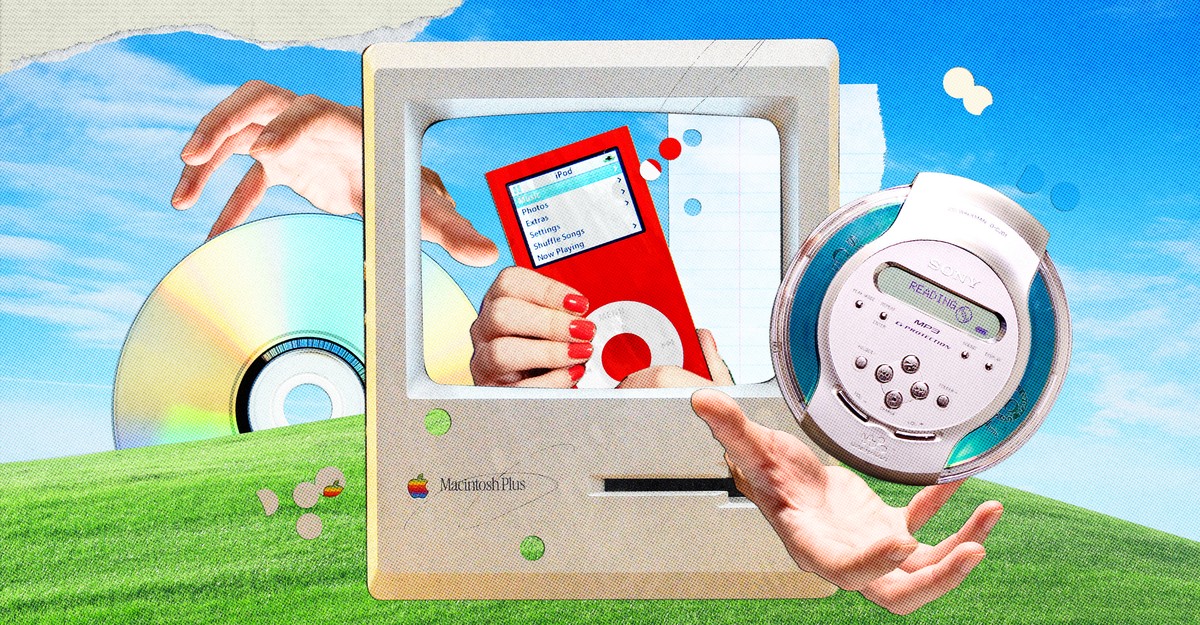
The 'analog' movement is about escaping devices that offer endless options and embracing those that offer a modicum of constraint, allowing individuals to focus on their chosen music, games, or movies without distractions.
Imagine you have a special box where you can only put your favorite songs, and you have to upload them one by one. That's what some people are doing with their music, using older devices like iPods and CD players to escape the endless options of streaming services.
Analysis
The Rise of Analog Devices
The 'analog' movement is a recent phenomenon where people, particularly those in Gen Z, are opting for less distracting alternatives to their 'everything' device. These alternatives are not always analog, but are in many cases older digital devices like iPods, CD players, and DVD players. Celeste Stange, a 29-year-old, bought her magenta 8-gigabyte iPod Nano on eBay for $69, citing the millions of other songs she could listen to on Spotify as a source of musical FOMO. She now only has what's on her iPod, which she uploads manually.
The Appeal of Constraint
For many people, the little bit of added friction is part of the appeal. Jess Fisher, a 29-year-old actor in Los Angeles, now buys new CDs each month, which she puts on her Innioasis Y1, an iPod-esque MP3 player. She looks forward to the five free weekly MP3 downloads she gets with her library card, through a music site called Freegal. She has an alert set to repeat every Monday: 'It's Freegal Time!' Others told me about their Nintendo DSes and emulators they'd filled with vintage games, so they could play without distractions.
The Experience of Ownership
Going 'analog' is also one of the few ways to own an actual copy of a song, a movie, or a game these days. And buying those products means a person has to commit to their own taste more than they would by just pressing 'Play' on 'Fun Upbeat Mix' curated by Spotify. It has given Stange the ability to say, 'I'm not going to pretend that Geese is the second coming of God' just because everyone else is listening to them. She'd gotten so used to streaming, though, that she wasn't sure what to put on her iPod at first. She looked up a Rolling Stone 'Greatest Albums' list and downloaded some of the recommendations.
Key points
- People are opting for less distracting alternatives to their 'everything' device, choosing older digital devices like iPods, CD players, and DVD players over their modern counterparts.
- The 'analog' movement is about escaping devices that offer endless options and embracing those that offer a modicum of constraint.
- This trend highlights the desire for a more intentional and present experience in a world where technology is increasingly connected and convenient.
- Going 'analog' is also one of the few ways to own an actual copy of a song, a movie, or a game these days.
This trend could lead to a more intentional and present experience, where people focus on their chosen music, games, or movies without distractions. It may also encourage people to explore new artists and genres, as they have to commit to their own taste rather than relying on algorithms.
The 'analog' movement may be a niche trend that only appeals to a small group of people, and it may not be sustainable in the long term. Additionally, it may be seen as a form of nostalgia or a rejection of modern technology, rather than a genuine desire for a more intentional experience.