The Syrian Democratic Forces, tip of the spear in anti-jihadist fight
The Syrian Democratic Forces, a Kurdish-led force, has been dissolved by its leader Mazloum Abdi. The force was formed in 2015 to fight against the Islamic State group and was backed by the United States. Its dissolution marks the end of an era for the country's Kurds, wh…
Intelligence analysis by Llama
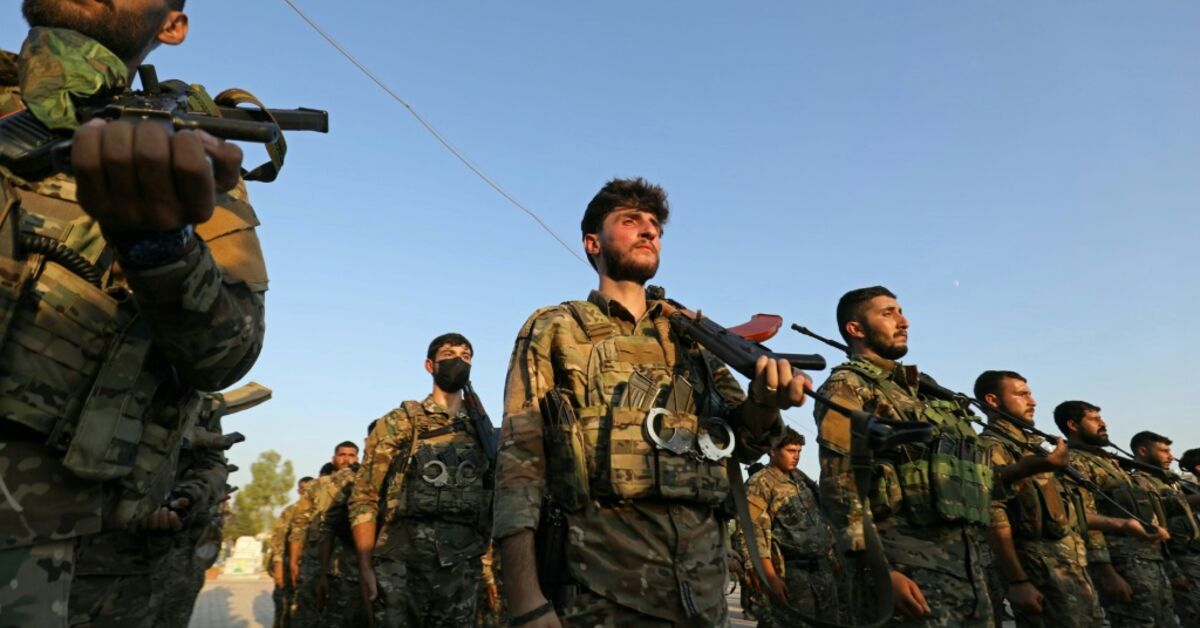
The Syrian Democratic Forces, a Kurdish-led force, has been dissolved by its leader Mazloum Abdi, marking the end of an era for the country's Kurds.
The Syrian Democratic Forces, a group of Kurdish fighters, has been dissolved by its leader. This means that the Kurds in Syria will no longer have their own army and will have to work with the government. This is a big change for the Kurds, who had been fighting for their own independence.
Analysis
The End of an Era for the Kurds in Syria
The dissolution of the Syrian Democratic Forces (SDF) by its leader Mazloum Abdi marks the end of an era for the country's Kurds, who had long dreamt of autonomy. The SDF was formed in 2015 at the instigation of the United States, impressed by the Kurdish fighters who had defeated the Islamic State group in Kobane in the north, and seeking a reliable partner in the battle against the jihadists.
The SDF then led the battle against IS, which was defeated territorially in Syria four years later. The force amassed around 100,000 fighters at its peak, was composed of Kurds and Arabs, and controlled swathes of Syria's oil-rich north and northeast. However, following January clashes that saw the Kurds lose large chunks of territory to government troops, the two sides signed a deal to integrate Kurdish military and civilian institutions into the state.
The dissolution of the SDF marks the end of Kurdish strength in Syria, according to Mutlu Civiroglu, a Washington-based analyst and expert on the Kurds. The force was also faced with repeated Turkish invasions between 2016 and 2019, with Ankara saying it wanted to push these fighters away from its border. Turkey has long viewed the SDF as linked to the Kurdish militant Kurdistan Workers' Party (PKK), which waged a decades-long insurgency in the country.
The SDF was dominated by the People's Protection Units (YPG), a Kurdish militant group seen by Ankara as an extension of the PKK. Following a call by its jailed leader Abdullah Ocalan, the PKK formally renounced its armed struggle against Turkey in May last year, drawing a line under four decades of violence that has claimed around 50,000 lives.
The People's Protection Units denied any links with the PKK, but it was 'indeed the PKK that directs the YPG behind the scenes', Syria specialist Fabrice Balanche said before the SDF dissolution. The January agreement with Damascus, under which Kurdish fighters would be integrated into state structures, stipulates that the SDF commit to expelling all non-Syrian PKK leaders and members from the country.
The SDF's integration into the state is a major victory for Sharaa, who has been trying to cement control over all of Syria since Assad's ousting. The dissolution of the SDF marks the end of an era for the country's Kurds, who had long dreamt of autonomy.
Key points
- The Syrian Democratic Forces, a Kurdish-led force, has been dissolved by its leader Mazloum Abdi.
- The force was formed in 2015 to fight against the Islamic State group and was backed by the United States.
- The dissolution of the SDF marks the end of an era for the country's Kurds, who had long dreamt of autonomy.
- The SDF was dominated by the People's Protection Units (YPG), a Kurdish militant group seen by Ankara as an extension of the PKK.
- The January agreement with Damascus, under which Kurdish fighters would be integrated into state structures, stipulates that the SDF commit to expelling all non-Syrian PKK leaders and members from the country.
The dissolution of the SDF could lead to a more stable and secure Syria, as the Kurds and the government work together to integrate Kurdish military and civilian institutions into the state.
The dissolution of the SDF could also lead to a loss of Kurdish autonomy and a decrease in the influence of the Kurds in Syria.