Trump signs order to ease diesel costs, ‘save millions of dollars’ for farmers
US President Donald Trump signed an executive order to alleviate high diesel costs for farmers, truckers, and businesses by expanding the tax-free use of red-dyed diesel and urging states to waive fuel taxes. This initiative aims to save millions for agricultural and tran…
Intelligence analysis by Gemini 2.5 Flash
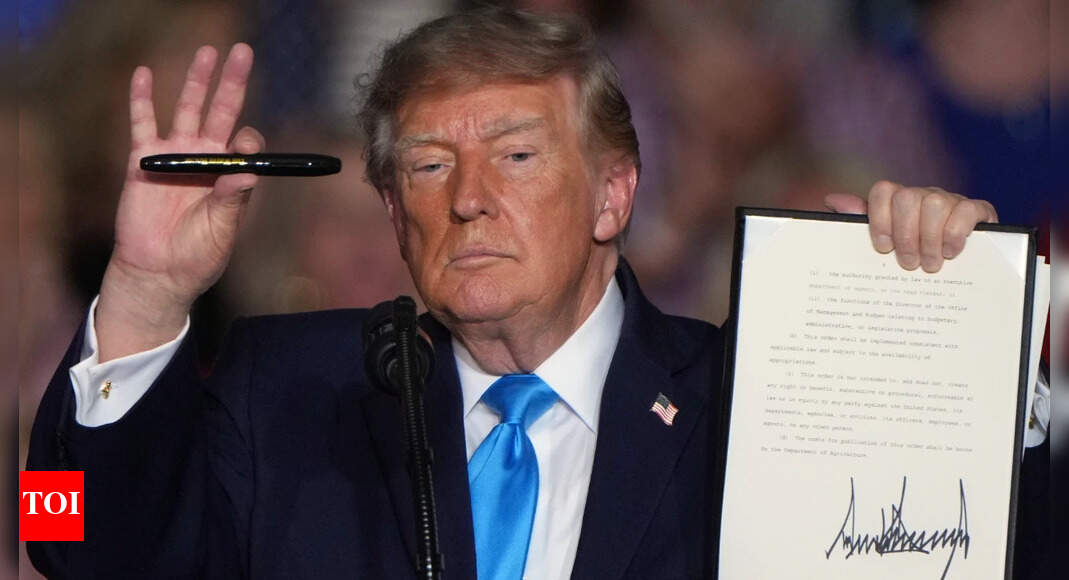
Facing pressure from high fuel prices and upcoming midterm elections, US President Donald Trump issued an executive order to reduce diesel costs. The order promotes the wider, tax-exempt use of red-dyed diesel for industries like farming and construction, and encourages states to waive certain fuel taxes, promising significant savings for businesses and a decrease in consumer grocery …
Imagine grown-ups who drive big trucks or farm machines need special fuel called diesel. This fuel usually has a tax, making it expensive. But there's a special red-colored diesel that doesn't have this tax, meant for farm work. The President signed an order to make it easier for farmers and truckers to use this cheaper red diesel, like giving them a special coupon, so they can save money and make food and other things cost less for everyone.
Analysis
Donald Trump's Executive Order
The executive order signed by President Donald Trump represents a strategic move to address the economic pressures faced by key sectors in the United States, particularly agriculture and transportation. By easing restrictions on the tax-free use of red-dyed diesel, the administration aims to directly reduce operational costs for farmers and truckers. This measure is presented as a significant financial relief, with Trump claiming it would save farmers “millions” of dollars and truckers over $100 per fill-up. The order also encourages states to consider waiving certain fuel taxes, further amplifying the potential cost reductions for businesses reliant on diesel. The timing of this executive action is notable, occurring ahead of the November midterm elections. High fuel and grocery prices have emerged as a significant concern for rural voters, a demographic that has historically shown strong support for Trump and the Republican party. By taking visible steps to lower these costs, the administration is likely attempting to bolster Republican candidates and address voter anxieties, framing the policy as a direct response to economic hardships. The political implications are clear, as Trump explicitly linked the order to the electoral success of Republican governors Pete Ricketts and Jim Pillen.
Red-Dyed Diesel
Red-dyed diesel is a specific type of diesel fuel that is exempt from federal and state excise taxes because it is intended for off-road use, such as in agricultural machinery, construction equipment, and certain industrial applications. The “red dye” serves as a visual marker to prevent its illegal use in on-road vehicles, where it would be subject to fuel taxes. The executive order's directive to increase the availability and non-enforcement of limitations on this tax-exempt fuel is designed to expand its use beyond traditional boundaries, allowing more businesses to benefit from the tax savings. The administration's rationale is that temporarily easing these restrictions will translate into substantial cost savings for businesses that depend heavily on diesel for their operations. This includes not only farmers, who use diesel for tractors and other farm equipment, but also truckers, who, despite typically using taxed diesel, might benefit from broader market effects or specific waivers. The anticipated ripple effect is a reduction in the cost of goods and groceries, as lower transportation and production costs are theoretically passed on to consumers, addressing broader inflationary concerns.
Global Fuel Market Dynamics
The context for this executive order is a global fuel market experiencing significant volatility and elevated prices. The article specifically points to the “ongoing war against Iran” and “Ukrainian attacks on Russian refineries” as key contributors to surging diesel prices. These geopolitical conflicts have led to a substantial decline in the amount of diesel available on the global market, creating supply-side pressures. Furthermore, the United States has seen its exports of American diesel rise to record levels since the US and Israel launched a war with Iran in February, further tightening domestic supply. Initially, there was speculation that the Trump administration might impose an outright ban on diesel exports to alleviate domestic price pressures, a measure advocated by some agriculture-state Republicans. However, Trump ultimately ruled out this option after Europe agreed to release fuel from its diesel reserves, indicating a complex interplay of domestic political considerations and international energy diplomacy. The decision to opt for easing red-dyed diesel restrictions instead of an export ban reflects a nuanced approach to managing fuel costs while navigating global energy supply chains and international relations.
Key points
- President Trump signed an executive order to ease high diesel costs for farmers, truckers, and businesses.
- The order expands the tax-free use of red-dyed diesel and encourages states to waive certain fuel taxes.
- The administration claims the move will save millions for farmers and over $100 per fill-up for truckers, reducing grocery prices.
- The action comes ahead of November midterm elections, addressing concerns of rural voters regarding high fuel and grocery costs.
- Global diesel prices remain high due to conflicts involving Iran and Ukraine, and record US diesel exports.
The executive order could significantly reduce operational costs for US farmers and truckers, potentially leading to lower prices for consumer goods and groceries. This relief could boost the profitability of agricultural businesses and ease financial burdens on transportation companies, contributing to overall economic stability and consumer confidence.
While aiming to reduce costs, the measure might only offer temporary relief if global diesel prices continue to surge due to ongoing geopolitical conflicts. The increased use of tax-exempt diesel could also lead to revenue shortfalls for states, potentially impacting infrastructure funding or other public services in the long run.
Market signals
- OIL Ongoing conflicts against Iran and Ukrainian attacks on Russian refineries are cited as reasons for surging diesel prices, indicating upward pressure on crude oil.
AI-generated analysis of potential market relevance. Not financial advice.