UAE remains lost in its delusions
A roundup of Iranian newspaper editorials covering UAE's regional role, ratification of the Caspian Sea Convention, Ghalibaf's Iraq trip, US sanctions pressure, and Iran-Kurdistan relations.
Intelligence analysis by Llama
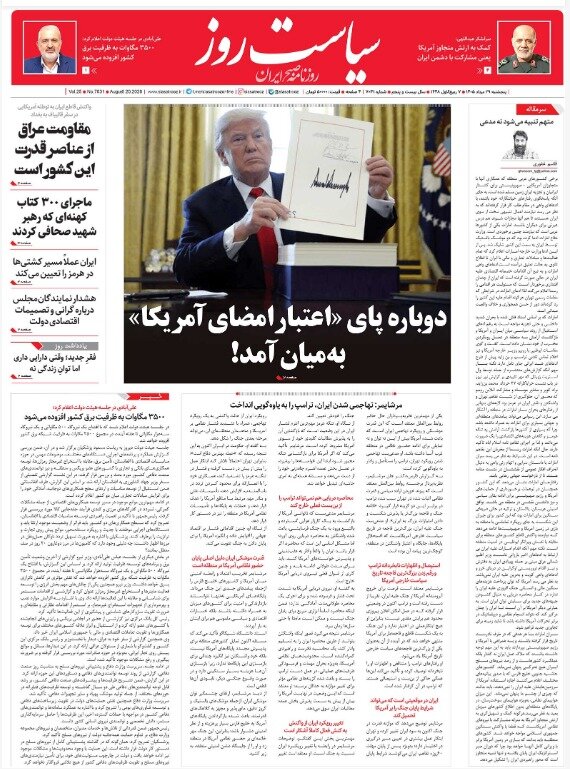
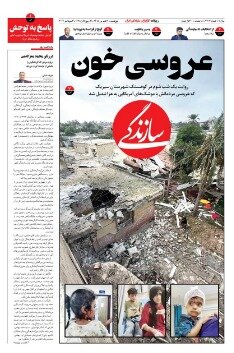
Tehran Times aggregates five Iranian dailies' editorials. Siasat-e-Rooz criticizes UAE for clinging to US-Israeli patronage after a Saudi-Pakistan-Turkey security pact. Iran spotlights the Caspian Sea Convention. Sobh-e-No frames Ghalibaf's Iraq visit as a shift from power accumulation to power transformation. Etemad and Ettelaat address US sanctions and ties with Kurdistan.
Several Iranian newspapers shared their opinions on big topics: they said the UAE is making a mistake by relying on America and Israel, praised a new Caspian Sea agreement that keeps foreign armies out, called Iran's parliamentary leader's Iraq trip an important step, and warned that US sanctions and fights with neighbors could make things harder for Iran.
Analysis
The Saudi-Pakistan-Turkey security pact and Abu Dhabi's calculations
Siasat-e-Rooz argues that the recent trilateral security arrangement among Saudi Arabia, Pakistan, and Turkey delivered a heavy blow to the UAE by reorganizing the region's security architecture outside Emirati influence. The paper contends that Abu Dhabi still clings to the illusion that American and Israeli backing will guarantee its political survival and secure a regional role. Instead of adapting through cooperative regional engagement, the editorial claims the UAE continues to operate on what it calls the American and Israeli field. The piece calls for a firm response from regional countries to counter what it describes as Abu Dhabi's destructive role in regional security. The framing positions the UAE as an outlier whose dependence on external patrons leaves it vulnerable as new alignments emerge.
The Caspian Sea Convention and the legal status of waterways
The Iran newspaper, in an interview with Akbar Valizadeh, a professor of regional studies at the University of Tehran, elevates the ratification of the Caspian Sea Convention as a framework that legally distinguishes the Caspian from the Persian Gulf and the Strait of Hormuz. Valizadeh emphasizes that the legal regimes of the two cannot be equated, even as recent developments carry a shared message for all regional states: the security of waterways and maritime navigation cannot be left solely to power balances. The convention, he notes, defines the Caspian as a zone of peace, good neighborliness, friendship, and cooperation, and explicitly prohibits the presence of armed forces from non-littoral states. The argument is that clear rules, cooperative mechanisms, and the responsibility of littoral states have become increasingly important, and the convention gives Iran a normative anchor to make that case.
Ghalibaf's Baghdad visit as a transition from accumulating power to transforming power
Sobh-e-No reads Mohammad Bagher Ghalibaf's trip to Iraq through a strategic lens, arguing that Baghdad is not merely a diplomatic destination but a node in the geometry of regional power. The paper frames the visit as one link in a larger chain: Iran's regional policy shifting from the logic of preserving influence to producing benefit from influence. The editorial calls for moving from the phase of accumulating power to the more difficult phase of transforming power, turning deterrence into security, influence into economic benefit, geography into economy, and battlefield achievements into strategic dividends. Baghdad, in this reading, is one of the testing grounds for Iran's new regional rationality, where multi-layered diplomacy is supposed to convert hard-won leverage into tangible gains.
Key points
- Siasat-e-Rooz argues the recent Saudi-Pakistan-Turkey security pact weakened the UAE and criticizes Abu Dhabi for leaning on US and Israeli backing rather than regional cooperation.
- Akbar Valizadeh tells the Iran newspaper that the Caspian Sea Convention legally distinguishes the Caspian from the Persian Gulf and bars armed forces from non-littoral states.
- Sobh-e-No frames Parliament Speaker Ghalibaf's Iraq trip as a transition from accumulating power to transforming it, calling Baghdad a testing ground for Iran's new regional rationality.
- Etemad's Seyyed Jalal Sadatian says US maximum-pressure threats are contradictory given Washington's own exposure to Strait of Hormuz disruptions and potential global energy market crises.
- Ettelaat's Ali Asghar Zargar urges Iran to avoid new friction with the Kurdistan Region to prevent additional diplomatic pressure while managing the US file.
If Iran successfully ratifies and operationalizes the Caspian Sea Convention, it gains a normative legal basis to argue that external military presence in shared waterways is illegitimate, potentially strengthening its position in disputes over the Strait of Hormuz. The framing of Ghalibaf's Iraq trip as a shift toward translating influence into economic dividends also points to a possible pathway where regional ties produce concrete gains rather than just deterrence.
The Etemad interview with Seyyed Jalal Sadatian flags that US maximum-pressure threats could escalate into a wider crisis if energy reserves decline and Asian, European, and Arab economies face a price surge, putting Iran under compounded diplomatic and economic strain. Ettelaat's interview with Ali Asghar Zargar further warns that any fresh friction with the Kurdistan Region could become a new source of external pressure and restrict Iran's diplomatic maneuvering space at a moment when it can least afford it.