UAE’s Hormuz workaround tries to bypass its trillion-dollar economic heart
The UAE wants to cut dependence on the Strait of Hormuz to 'zero', but its economy relies heavily on ports within the waterway. New terminals offer insurance, but analysts say securing trade ultimately relies on lasting peace, not just pouring concrete.
Intelligence analysis by Llama
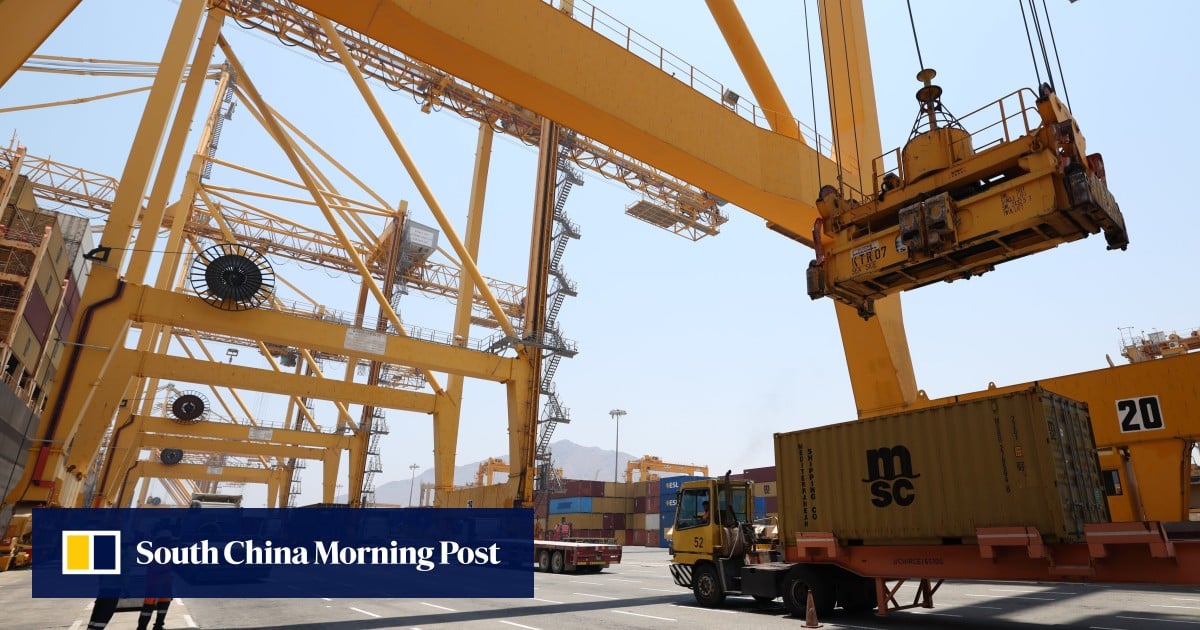
The UAE is trying to bypass its reliance on the Strait of Hormuz by investing in new ports along the Gulf of Oman. However, analysts say that securing trade ultimately relies on lasting peace, not just pouring concrete.
Imagine you're playing a game of chess, and you're trying to move your king to a safe place. But, there's a big river in the way, and you're not sure if you can cross it safely. That's kind of like what's happening with the UAE and the Strait of Hormuz. They want to move their economy to a safer place, but they're not sure if they can do it without getting hurt. So, they're trying to build new roads and ports to help them get there.
Analysis
A $60B Vote of Confidence
The UAE's efforts to bypass the Strait of Hormuz are a significant vote of confidence in the country's economy. With a $1 trillion annual non-oil trade, the UAE is one of the largest trading nations in the world. However, its economy is heavily reliant on ports within the Strait of Hormuz, which makes it vulnerable to disruptions in the region.
Why Oman's Ports Are Gaining Popularity
Oman's ports are gaining popularity as nervous exporters across Asia seek routes free from Hormuz's volatility. Duqm, Salalah, and Sohar are all enjoying a renaissance, attracting shipping lines, investors, and billion-dollar free-zone deals. The UAE has its own ports along the Gulf of Oman, and Minister for Foreign Trade Thani Al Zeyoudi has outlined plans to pour investment into Khor Fakkan, Fujairah, and Dibba, as well as an entirely new facility to be built on the country's east coast.
The Road Ahead
While the UAE's efforts to bypass the Strait of Hormuz are a significant step towards reducing its reliance on the waterway, analysts say that securing trade ultimately relies on lasting peace, not just pouring concrete. The region's complex geopolitics make it challenging to achieve lasting peace, but the UAE's efforts are a crucial step towards reducing its vulnerability to disruptions in the region.
Key points
- The UAE wants to cut dependence on the Strait of Hormuz to 'zero'
- New terminals offer insurance, but analysts say securing trade ultimately relies on lasting peace
- The UAE is investing in new ports along the Gulf of Oman
- Oman's ports are gaining popularity as nervous exporters seek routes free from Hormuz's volatility
- The region's complex geopolitics make it challenging to achieve lasting peace
If the UAE's efforts to bypass the Strait of Hormuz are successful, it could lead to increased trade and economic growth in the region. This could also lead to increased investment in the region, creating new jobs and opportunities.
However, the region's complex geopolitics make it challenging to achieve lasting peace, which is necessary for the success of the UAE's plans. If the conflict in the region escalates, it could lead to disruptions in trade and economic growth, making it difficult for the UAE to achieve its goals.