US Bombers Removed from British Airbase Due to Threat, Trump Reveals
Around 12 US B-1 bomber aircraft were relocated from RAF Fairford, UK, to their home stations in the US. President Trump stated the move was due to a threat, though details were not disclosed.
Intelligence analysis by Gemini 2.5 Flash Lite
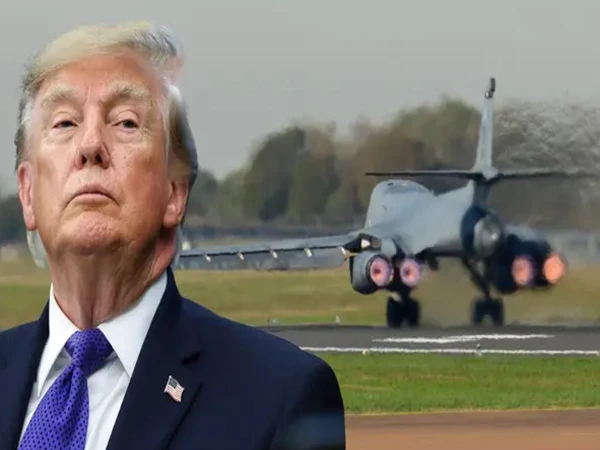
Former US President Donald Trump revealed that US bomber aircraft were withdrawn from a British Royal Air Force base due to a security threat. Approximately 12 B-1 bombers were moved back to their home stations in the United States. While Trump confirmed the existence of a threat and suggested the US knew its source, he did not provide specific details about the nature of the danger o…
Imagine some important toy airplanes were at a friend's house, but the grown-ups heard there might be a bully nearby. So, to keep the airplanes safe, they decided to move them back to their own house, even though they weren't sure if the bully would actually come.
Analysis
RAF Fairford
The decision to relocate approximately a dozen US B-1 bomber aircraft from the Royal Air Force (RAF) Fairford base in the United Kingdom to their home stations in the United States was prompted by a security concern, according to former President Donald Trump. Trump stated that US officials were aware of a threat to the base, which necessitated the removal of these valuable assets. This move underscores the dynamic nature of military deployments and the constant assessment of risks associated with stationing strategic assets in potentially vulnerable locations.
The article suggests that the threat might have involved potential sabotage or an attempt to target these sensitive and valuable aircraft, especially in the context of renewed tensions with Iran. The relocation was framed as a proactive measure to prevent adversaries from exploiting any perceived opportunity. While the exact nature of the threat and the individuals allegedly behind it were not detailed by Trump, the mere mention of such a risk highlights the complex security environment in which military operations are conducted.
Donald Trump
Former President Donald Trump played a central role in revealing the reason behind the bomber aircraft's withdrawal. He confirmed to journalists that the planes were not moved coincidentally but rather due to specific threats. Trump's assertion that the US was aware of the individuals posing the threat suggests a level of intelligence gathering and assessment that informed the decision. His statements, made as he departed the White House, brought public attention to a military movement that might otherwise have been less scrutinized.
Trump's comments also imply a strategic rationale for the relocation, emphasizing the need to deny potential adversaries an advantage. By moving the aircraft, the US aimed to mitigate the risk of them being targeted. This approach aligns with a broader strategy of force protection and maintaining operational readiness by safeguarding critical military assets from potential harm.
Security Concerns
The incident occurred following the discovery of three suspicious vehicles near the Fairford airbase on September 27. While the British government has maintained that the airbase is secure, the reported threat led to the precautionary withdrawal of the US bombers. This event brings to the forefront the persistent security challenges faced by military installations, even those considered allies' bases.
The article notes that US Secretary of State Marco Rubio characterized the aircraft transfer as a routine military movement, a common occurrence in global military operations. However, Trump's direct revelation of a specific threat suggests that this particular relocation was not entirely standard. The interplay between routine military rotations and specific security alerts illustrates the layered approach to managing military assets and ensuring their safety in an unpredictable global landscape.
Key points
- US bomber aircraft were moved from RAF Fairford, UK, back to the United States.
- Former President Donald Trump stated the relocation was due to a security threat.
- Approximately 12 B-1 bomber aircraft were involved in the transfer.
- The exact nature of the threat and involved parties were not disclosed.
- The move followed the discovery of suspicious vehicles near the base.
The proactive relocation of US bomber aircraft due to a potential threat demonstrates a robust security posture and effective intelligence gathering by US and UK authorities. This swift action ensures the safety of valuable military assets and maintains operational readiness, preventing any potential disruption to strategic capabilities.
The revelation of a specific threat against US bomber aircraft stationed in the UK raises concerns about the vulnerability of military installations and the escalating security risks in the region. The lack of detailed information about the threat could indicate a complex and potentially widespread security challenge that is difficult to fully address.