US Justice Department probes TV networks over pool coverage: Reports
The US Justice Department is investigating five major television networks for potential antitrust violations after they briefly suspended White House pool coverage in solidarity with CNN, which President Trump had banned.
Intelligence analysis by Gemini 2.5 Flash
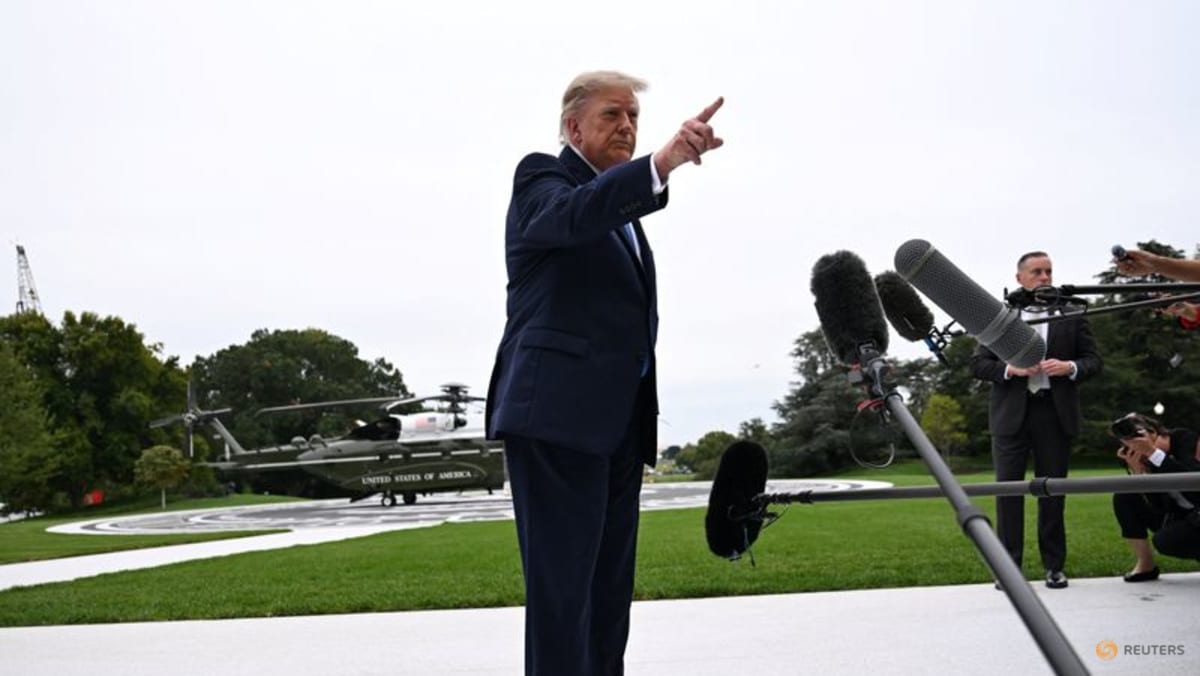
The Justice Department has launched an antitrust probe into ABC, CBS, CNN, NBC, and Fox News, alleging they engaged in a "group boycott" by halting White House pool coverage. This action followed President Trump's temporary ban of CNN, MS NOW, and Politico, which critics argue is a pretext to intimidate media exercising their First Amendment rights.
Imagine a group of reporters who take turns filming the President because there's not enough space for everyone. When the President told some reporters they couldn't come, the other reporters stopped filming for a bit to show support. Now, the government is looking into whether this was like a "group boycott" that isn't allowed for businesses, even though the reporters say they were just standing up for their right to tell the news.
Analysis
Donald Trump's Administration
The investigation stems directly from actions taken during the Trump administration, which was characterized by frequent clashes with media organizations. President Trump had a contentious relationship with several news outlets, often labeling critical reporting as "fake news" and "enemy of the people." His decision to bar CNN, MS NOW, and Politico from White House events was a significant escalation in this ongoing conflict, prompting a unified response from other major broadcasters. This incident underscores the broader challenges to press freedom and access that emerged during his presidency, setting a precedent for how government-media relations might be tested.
Sherman Act Implications
The Justice Department's invocation of the Sherman Act, an antitrust measure, introduces a novel legal dimension to the dispute. Justice Department spokeswoman Emily Covington explicitly stated that "Group boycotts among commercial competitors can violate the Sherman Act," indicating the department's intent to explore whether the networks' coordinated suspension of pool coverage constitutes an illegal restraint of trade. This legal approach suggests that the government views the media's collective action not merely as an exercise of journalistic solidarity but as a potentially anti-competitive business practice. The outcome of this investigation could redefine the boundaries of collective action by media entities in response to government restrictions.
First Amendment Concerns
Critics, such as Bruce D Brown of the Reporters Committee for Freedom of the Press, argue that the Justice Department's probe is a "pretext" to intimidate journalists and infringes upon First Amendment protections. Brown emphasized that "The decisions news organisations make about coverage are protected by the First Amendment," suggesting that the government's use of antitrust authority is a "brazen attempt" to suppress independent reporting. This perspective frames the investigation as a direct challenge to the constitutional right to a free press, raising serious questions about the government's motives and the potential chilling effect on journalistic independence. The legal battle will likely weigh the government's antitrust claims against fundamental press freedoms.
Key points
- The US Justice Department is investigating five major TV networks for potential antitrust violations.
- The probe concerns the networks' brief suspension of White House pool coverage in solidarity with CNN, which President Trump had banned.
- Justice Department spokeswoman Emily Covington cited the Sherman Act, stating "Group boycotts among commercial competitors can violate the Sherman Act."
- Critics, like Bruce D Brown, argue the investigation is a "pretext" to intimidate journalists and violates First Amendment rights.
- The networks involved are ABC, CBS, CNN, NBC, and Fox News.
The investigation could clarify the legal boundaries for media organizations' collective actions in response to government restrictions, potentially leading to a stronger, more defined framework for press freedom and journalistic solidarity.
This probe could set a dangerous precedent, allowing governments to use antitrust laws as a tool to intimidate and control media organizations, thereby chilling independent reporting and undermining First Amendment protections.