US Launches More Iran Strikes, Hits Oil Tanker Trying to Break Hormuz Blockade
The United States launched a new wave of strikes against Iran on Wednesday to curb its ability to threaten shipping in the Strait of Hormuz. US President Donald Trump warned he could widen attacks unless the Islamic republic returned to talks.
Intelligence analysis by Llama
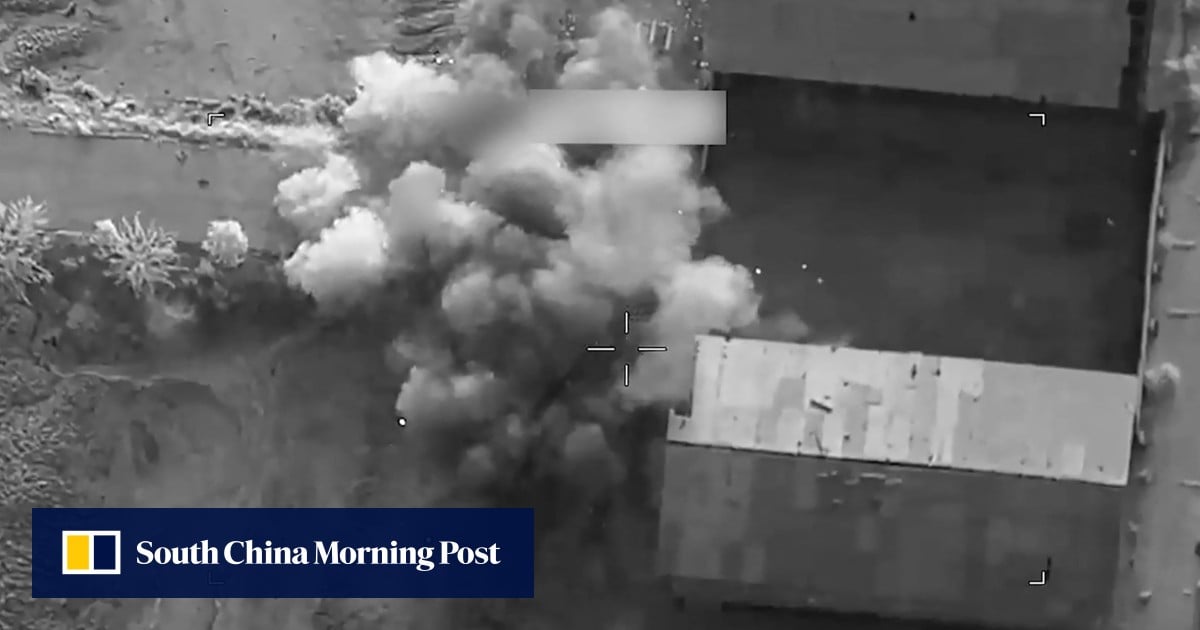
The US military launched a new wave of strikes against Iran to curb its ability to threaten shipping in the Strait of Hormuz. The strikes targeted Iranian military capabilities and an empty oil tanker that was trying to break the naval blockade of Iran's ports.
The US military is fighting with Iran over a waterway called the Strait of Hormuz. The US wants to stop Iran from blocking ships that carry oil, which is a very important resource. The US is using airstrikes to try and stop Iran from doing this.
Analysis
A New Escalation in the US-Iran Conflict
The US military launched a new wave of strikes against Iran on Wednesday, targeting Iranian military capabilities and an empty oil tanker that was trying to break the naval blockade of Iran's ports. The strikes are part of a broader effort by the US to curb Iran's ability to threaten shipping in the Strait of Hormuz, a critical waterway for global oil trade.
The US Central Command said the strikes began at 1900 GMT and targeted Iranian military capabilities used to threaten vessels freely transiting the vital waterway. The US military also said one of its aircraft fired on and disabled an empty oil tanker that was trying to break the naval blockade of Iran's ports. Central Command said the Curacao-flagged M/T Belma was stopped after the aircraft fired Hellfire missiles into the ship's smokestack.
The strikes have significant implications for global oil markets and regional stability. The US-Iran conflict has been ongoing for several years, with both sides engaging in a series of tit-for-tat attacks. The latest strikes are part of a broader effort by the US to prevent Iran from disrupting shipping in the Strait of Hormuz, a critical waterway for global oil trade.
Iranian state media reported explosions in several cities, including Bandar Abbas, Rask and Chabahar. Earlier reports also cited blasts around southern sites including Qeshm and Bandar Imam Khomeini, while state media later said fresh US strikes hit Bushehr, home to Iran's only civilian nuclear plant.
The US strikes have been widely condemned by Iran and its allies. Iranian Foreign Minister Mohammad Javad Zarif called the strikes a 'clear example of US aggression' and warned that they would 'only lead to more violence and instability in the region'.
The US-Iran conflict has significant implications for global oil markets and regional stability. The US strikes aim to prevent Iran from disrupting shipping in the Strait of Hormuz, a critical waterway for global oil trade. The conflict has been ongoing for several years, with both sides engaging in a series of tit-for-tat attacks. The latest strikes are part of a broader effort by the US to prevent Iran from disrupting shipping in the Strait of Hormuz.
Key points
- The US launched a new wave of strikes against Iran on Wednesday to curb its ability to threaten shipping in the Strait of Hormuz.
- The strikes targeted Iranian military capabilities and an empty oil tanker that was trying to break the naval blockade of Iran's ports.
- The US-Iran conflict has significant implications for global oil markets and regional stability.
- The US strikes aim to prevent Iran from disrupting shipping in the Strait of Hormuz, a critical waterway for global oil trade.
If the US and Iran can negotiate a peaceful resolution to their conflict, it could lead to a significant reduction in tensions and a decrease in the risk of further violence in the region.
If the US and Iran continue to engage in a cycle of violence and retaliation, it could lead to a significant escalation of the conflict and a major disruption to global oil markets.