Venezuela’s Maduro, wife due back in US court in drug trafficking case
Ousted Venezuelan president Nicolas Maduro and his wife Cilia Flores are scheduled for a US court hearing to set a trial date, possibly June 2027, in their high-profile drug trafficking case.
Intelligence analysis by Gemini 2.5 Flash
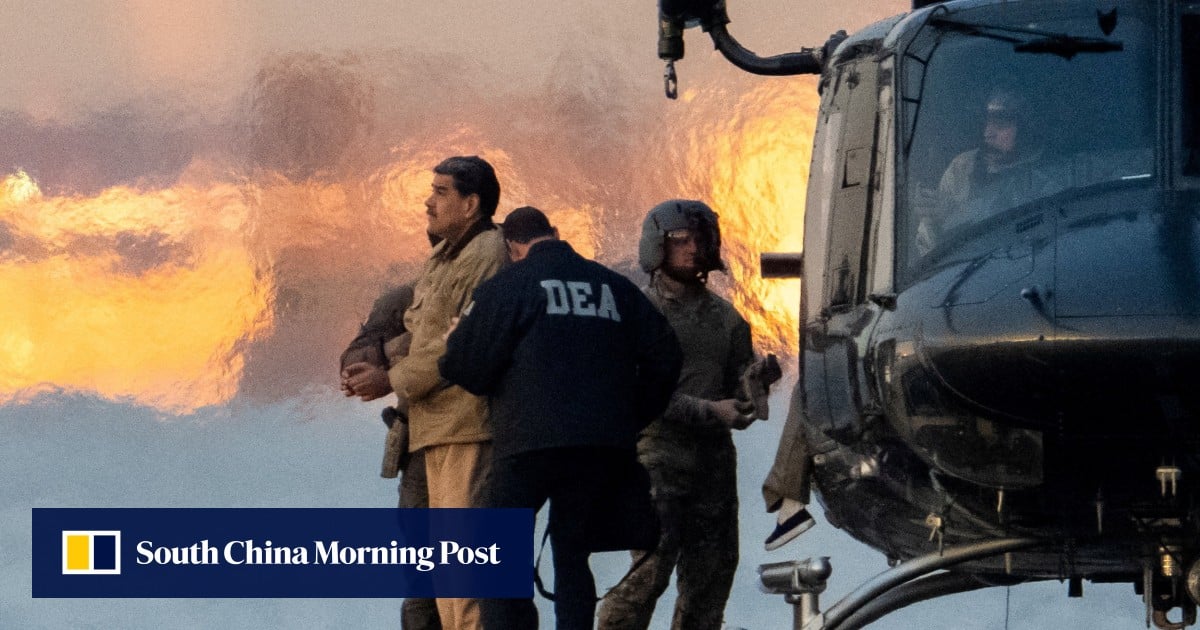
Former Venezuelan leader Nicolas Maduro and his wife face US federal charges for allegedly using their positions to facilitate cocaine shipments. They have pleaded not guilty, and their defense plans to argue head-of-state immunity as the case moves towards a potential trial in 2027, following their capture by US Special Forces.
Imagine a principal and their spouse from a faraway school are accused of letting bad stuff happen with candy on their school grounds. Now, they've been brought to a different country's court to answer for it. They say they didn't do it and that, as a principal, they shouldn't even be judged by another school's rules. The court is now trying to figure out when to have a big meeting to decide what really happened.
Analysis
The Legal Battle Ahead
The upcoming court hearing for Nicolas Maduro and Cilia Flores marks a significant juncture in a high-profile drug trafficking case that has spanned years. Prosecutors from the Manhattan US Attorney's office and Maduro's defense lawyers have proposed a June 2027 trial start date, indicating the complex and protracted nature of the legal proceedings. This timeline suggests extensive discovery, motion practice, and preparation will be required by both sides before the case can proceed to trial.
A central pillar of Maduro's defense strategy will be a motion to dismiss the case based on head-of-state immunity. This argument posits that as the former leader of a sovereign nation, Maduro should be shielded from prosecution in a foreign court. Such a legal challenge raises profound questions about international law, national sovereignty, and the limits of extraterritorial jurisdiction, potentially setting precedents for how the US handles similar cases involving foreign dignitaries.
Geopolitical Ramifications and US Foreign Policy
The capture of Maduro and Flores by US Special Forces in January 2027, reportedly ordered by then-President Donald Trump, underscores the aggressive stance taken by the United States against the Venezuelan government. This operation, conducted within Venezuelan territory, highlights the US's willingness to employ direct action to address perceived threats and enforce its legal mandates against foreign leaders. The case is not merely a criminal prosecution but a potent symbol of the ongoing geopolitical tensions between Washington and Caracas.
The outcome of this trial could significantly impact future US foreign policy towards Venezuela and other nations. A conviction would validate the US's approach and potentially embolden similar actions, while a dismissal based on immunity could complicate future efforts to prosecute foreign officials. The international community, including countries like China, will be closely observing the legal and political fallout, as it could influence global norms regarding sovereignty and international criminal justice.
Implications for International Law and Sovereignty
The assertion of head-of-state immunity by Maduro's legal team brings to the forefront a contentious area of international law. While customary international law generally grants immunity to sitting heads of state, the application of this principle to former leaders, especially in cases involving alleged international crimes like drug trafficking, is often debated. The US court's decision on this motion will be a critical test of how domestic legal systems reconcile with principles of international sovereign immunity.
This case could establish important legal precedents regarding the scope and limitations of such immunity, particularly when a nation's leader is accused of using state apparatus for criminal enterprises. The implications extend beyond Venezuela, potentially influencing how other countries approach the prosecution of foreign officials and shaping the discourse on accountability for state-sponsored illicit activities. The global legal community will be watching closely for the court's interpretation and application of these complex legal doctrines.
Key points
- Former Venezuelan President Nicolas Maduro and his wife Cilia Flores are due in US court for a drug trafficking case.
- The hearing will address scheduling, with a proposed trial start date of June 2027.
- Maduro's defense intends to argue for dismissal based on head-of-state immunity from prosecution.
- The couple was captured by US Special Forces in January 2027 under orders from then-President Donald Trump.
- They have pleaded not guilty to charges of facilitating cocaine shipments using their leadership positions.
If the legal process proceeds transparently and fairly, it could set a precedent for international accountability for leaders accused of illicit activities, potentially deterring similar actions by other state actors.
The prolonged legal battle and the assertion of head-of-state immunity could further strain US-Venezuela relations, potentially leading to increased geopolitical instability in Latin America and raising complex questions about international law and sovereignty.