‘We Know Where It Is’: Treasury Secretary Threatens To Freeze $1B of Iran’s Crypto
U.S. Treasury Secretary Scott Bessent announced that American authorities plan to seize $1 billion in crypto from Iran this week, asserting that economic sanctions are proving effective.
Intelligence analysis by Gemini 2.5 Flash
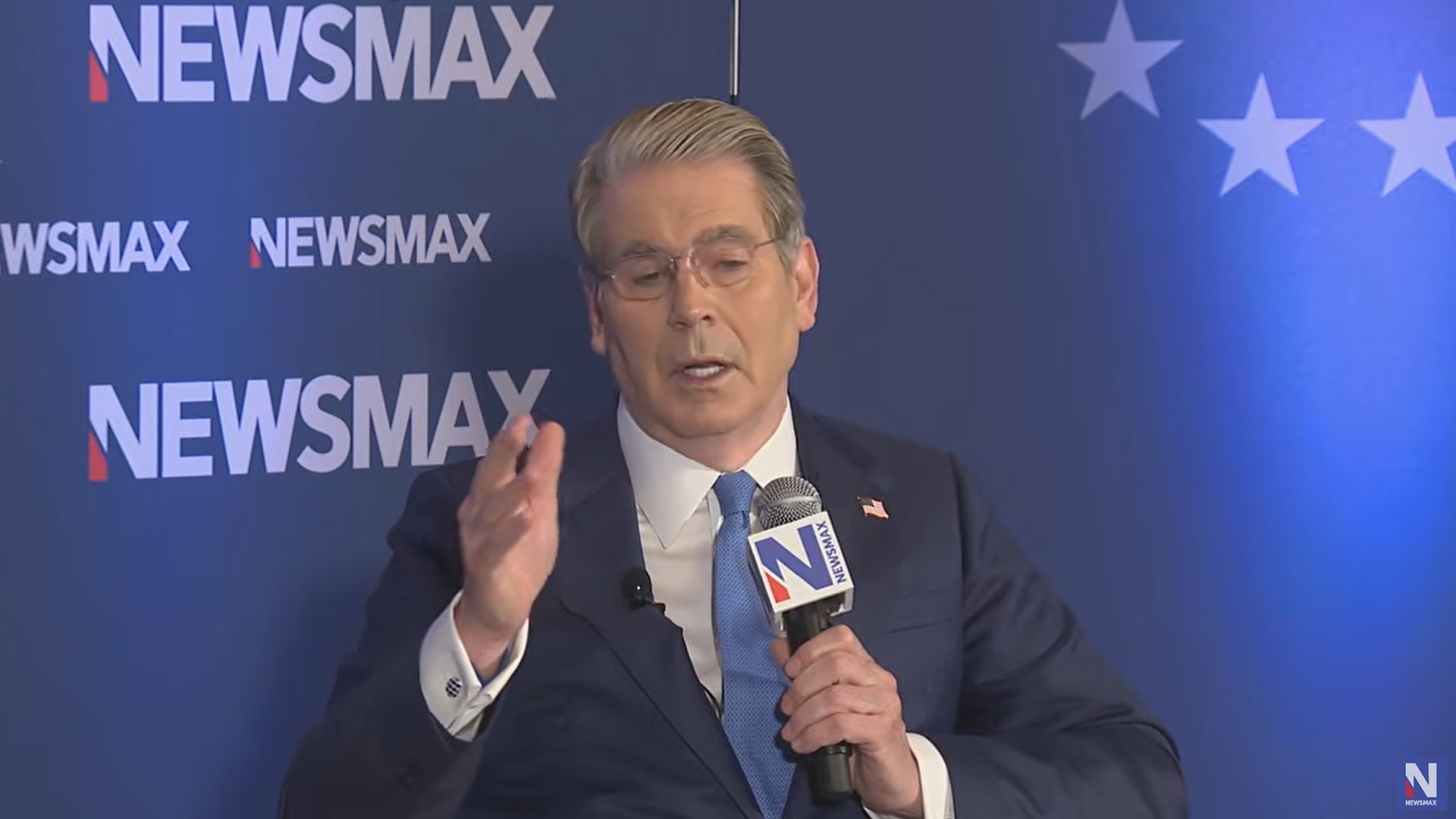
Treasury Secretary Scott Bessent stated that the U.S. is intensifying its economic pressure on Iran, moving from a 'maximum pressure' to an 'absolute isolation' campaign, which includes targeting and seizing cryptocurrencies used by Iran to circumvent sanctions.
Imagine a country trying to buy and sell things with other countries, but a big bossy country says, "No, you can't!" So, the first country starts using digital money, like special online tokens, to sneak around the rules. Now, the big bossy country's money police chief says, "We know where your digital money is, and we're going to take a huge chunk of it, about a billion dollars worth, this week!" It's like finding where someone hid their secret candy stash and taking it away.
Analysis
U.S. Treasury Secretary Scott Bessent recently made a significant announcement regarding the American government's efforts to counter Iran's use of cryptocurrencies for sanctions evasion. Speaking at Newsmax’s NPolicy Summit in Washington, D.C., Bessent declared that the U.S. intends to seize $1 billion in crypto from Iran within the week. This move is presented as a continuation of a broader strategy, evolving from a "maximum pressure" campaign to an "absolute isolation campaign," which Bessent claims is successfully working to curb Iran's financial activities.
Scott Bessent
Treasury Secretary Scott Bessent's statements underscore a determined stance by the U.S. government to leverage its capabilities in the digital asset space to enforce sanctions. He emphasized that the actions taken against Iran's crypto operations are unprecedented, indicating a novel approach to financial warfare in the age of digital currencies. Bessent had previously noted in April that U.S. authorities had begun targeting crypto wallets linked to the Iranian regime, signaling a sustained and escalating effort.
His remarks at the summit, particularly the assertion, "We know where it is," suggest a high level of confidence in the U.S.'s intelligence and technical capabilities to track and potentially seize these assets. This public declaration serves as both a warning to other entities attempting to circumvent sanctions through crypto and a reassurance to those concerned about the efficacy of traditional financial controls in a decentralized environment.
$1 Billion
The announced seizure of $1 billion in cryptocurrency represents a substantial sum, highlighting the scale at which Iran is reportedly utilizing digital assets to bypass international sanctions. While Bessent did not specify which particular cryptocurrencies would be targeted in this upcoming seizure, he had previously indicated that the U.S. had seized Iranian crypto in the form of stablecoins, such as Tether's USDT. This distinction is crucial, as the technical characteristics of different cryptocurrencies significantly impact the feasibility of seizure.
The U.S. government's focus on such a large sum underscores the perceived threat that crypto-enabled sanctions evasion poses to its foreign policy objectives. The move aims to disrupt Iran's ability to conduct cross-border transactions and finance its economy, which has been under severe pressure from renewed U.S. sanctions since President Donald Trump revived his "maximum pressure" campaign in February 2025.
Bitcoin
The article specifically addresses the technical challenges associated with seizing Bitcoin, noting that it would be "very hard — if not impossible — for the U.S. to freeze Iran’s bitcoin unless it keeps it on a centralized exchange." This is due to Bitcoin's inherent censorship-resistant nature, a core tenet of its design. Unlike centralized assets or some stablecoins, Bitcoin transactions on the blockchain are immutable and cannot be unilaterally reversed or frozen by a single entity without control over the private keys.
This technical reality suggests that any successful seizure of Bitcoin would likely involve assets held by third-party custodians or exchanges that are subject to U.S. jurisdiction, rather than directly from self-custodied wallets. Iran has reportedly been using Bitcoin to settle cross-border transactions through its domestic crypto exchanges and even launched a Bitcoin-backed insurance service for its shipping companies, illustrating its strategic adoption of the cryptocurrency to navigate the sanctions landscape.
Key points
- U.S. Treasury Secretary Scott Bessent announced plans to seize $1 billion in crypto from Iran this week.
- Bessent stated that U.S. economic sanctions on Iran are working, transitioning to an 'absolute isolation campaign'.
- Iran has been using Bitcoin and other cryptocurrencies to circumvent U.S. sanctions.
- Freezing Bitcoin is technically challenging unless it is held on a centralized exchange, unlike some other cryptocurrencies like Tether's USDT.
- The U.S. previously targeted crypto wallets linked to the Iranian regime and seized stablecoins.
From the U.S. perspective, the announced seizure indicates that economic sanctions are effectively working, demonstrating the government's increasing capability to track and disrupt illicit financial flows even within the cryptocurrency ecosystem. This could strengthen the U.S.'s position in international relations and its ability to enforce foreign policy.
The article highlights the inherent difficulty of freezing censorship-resistant cryptocurrencies like Bitcoin, suggesting that the U.S. might only be able to seize assets held on centralized exchanges. This limitation could mean that Iran, or other sanctioned entities, might still retain significant amounts of self-custodied crypto, undermining the full effectiveness of the U.S. isolation campaign.