What are the similarities and differences between the Iran-US memorandum of understanding and the JCPOA?
A new preliminary memorandum of understanding between Iran and the US is being compared to the 2015 JCPOA, despite fundamental differences in their legal nature, scope, and objectives. The new MoU aims to end a war, while the JCPOA sought to prevent a nuclear crisis.
Intelligence analysis by Gemini 2.5 Flash
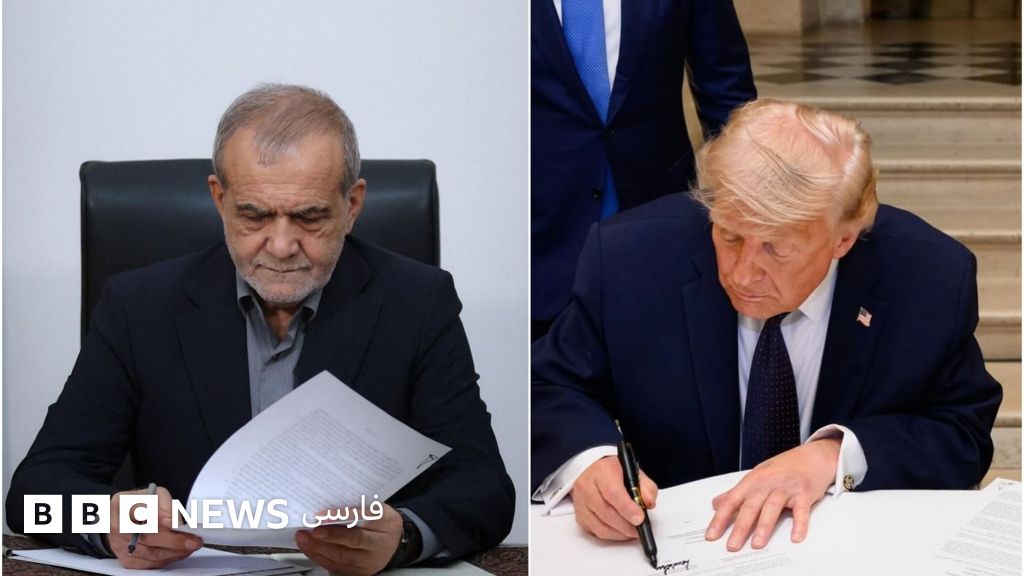
The article analyzes a recently signed preliminary memorandum of understanding (MoU) between Iran and the United States, drawing parallels and distinctions with the 2015 Joint Comprehensive Plan of Action (JCPOA). It highlights that while both address Iran's nuclear program and sanctions, their underlying purposes, legal structures, and levels of detail vary significantly, with the ne…
Imagine two big kids, Iran and the US, have been arguing about Iran's special science project. The first time, they made a super detailed plan with lots of rules and numbers to make sure the project was safe. But then one kid, the US, ripped up the plan. Now, they're trying again, but this new plan is just a simple handshake agreement to talk more and make a *new* detailed plan later, especially because they've also been fighting about other things, not just the science project.
Analysis
A Preliminary Framework for De-escalation
The recently signed memorandum of understanding (MoU) between Iran and the United States marks a significant, albeit preliminary, step in their complex relationship. Unlike the 2015 Joint Comprehensive Plan of Action (JCPOA), which was a comprehensive, final agreement designed to prevent a nuclear crisis, this new MoU is explicitly framed as a preliminary framework. Its primary objective is to end a state of conflict, rather than preemptively manage a nuclear threat. This fundamental difference in purpose dictates much of the variation in their structure and content. The MoU, a concise 14-point document, sets the stage for up to 60 days of further negotiations, indicating that many critical details are yet to be ironed out.
Divergent Scope and Legal Standing
A key distinction lies in the scope and legal standing of the two agreements. The JCPOA was a multilateral accord involving Iran and the P5+1 (US, UK, France, Russia, China, Germany), coordinated by the European Union, and subsequently endorsed by UN Security Council Resolution 2231. This gave it robust international legal backing and a clear framework for lifting UN sanctions. In contrast, the new MoU is fundamentally bilateral, signed directly between the United States and the Islamic Republic of Iran. While it mentions other regional and international actors, its core structure is a direct engagement between the two nations. Furthermore, the MoU explicitly states that any final agreement stemming from it would later require approval by a binding UN Security Council resolution, underscoring its current preliminary legal status. The thematic scope also differs, with the new MoU introducing issues like Lebanon, the naval blockade, the Strait of Hormuz, and Iran's economic reconstruction, which were not central to the JCPOA.
Nuclear Specifics: Generalities vs. Granular Detail
The treatment of Iran's nuclear program highlights the most striking differences in detail. The JCPOA was characterized by its highly specific, numerical limitations on Iran's nuclear activities. It precisely defined enrichment levels (3.67% for 15 years), uranium stockpile limits (300 kg), centrifuge numbers (reduced from about 19,000 to about 6,100), and the redesignation of facilities like Fordow and Arak. The new MoU, however, avoids such granular detail. It contains only general affirmations, such as Iran's commitment not to produce or acquire nuclear weapons, and defers specifics regarding enrichment levels, centrifuge types, and the fate of enriched uranium stockpiles to future negotiations. While it proposes dilution of enriched materials under IAEA supervision as a minimal solution, the comprehensive framework for Iran's nuclear program remains largely undefined, awaiting a more detailed final agreement. This reflects its status as a foundational document rather than a prescriptive one.
Key points
- The new Iran-US MoU is a preliminary framework for negotiations, aiming to end a conflict, unlike the JCPOA which was a final agreement to prevent a nuclear crisis.
- The MoU is bilateral (US-Iran), while the JCPOA was multilateral (Iran and P5+1).
- The new MoU defers detailed nuclear program specifics, like enrichment levels and centrifuge numbers, to future negotiations, offering only general non-proliferation commitments.
- Topics like Lebanon, naval blockade, and economic reconstruction are included in the new MoU, which were not central to the JCPOA.
- Any final agreement from the MoU would require future UN Security Council approval, whereas the JCPOA was immediately endorsed by a UN resolution.
If the preliminary MoU leads to successful negotiations, it could pave the way for a more stable and predictable relationship between Iran and the US, potentially easing regional tensions and fostering economic reconstruction in Iran. A final agreement could re-establish international oversight of Iran's nuclear program, reducing proliferation risks.
The preliminary nature of the MoU means there's a high risk of negotiations failing, especially given the deep-seated mistrust and the complexity of the issues. Without specific commitments, Iran could continue its nuclear advancements, and the lack of multilateral backing could make any future agreement fragile and susceptible to unilateral withdrawal, similar to the JCPOA's fate.