What if AI could remember your adventures for you? Souvi is exploring the idea
Chinese startup Vibe Technology has launched Souvi, an outdoor AI memory device designed to help users preserve life experiences from activities like hiking and travel by transforming raw footage into curated personal memories.
Intelligence analysis by Gemini 2.5 Flash
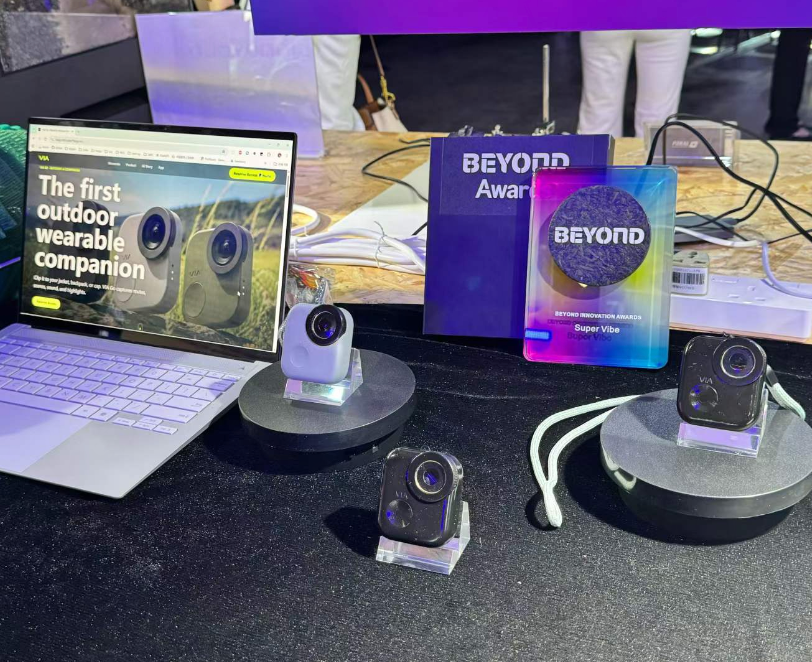
Souvi aims to address the challenge of capturing and organizing personal memories by using AI to process low-interruption recordings into curated content such as illustrated travel journals and videos. This approach allows users to fully engage in their experiences while the AI handles the complex task of memory preservation, distinguishing it from traditional action cameras or genera…
Imagine a smart little camera that goes with you on adventures like hiking or camping. Instead of you having to take tons of pictures and videos and then sort them all out later, this camera, called Souvi, uses a super-smart computer brain (AI) to pick the best parts and turn them into a cool story or a fun video for you. It's like having a personal memory helper so you can just enjoy playing!
Analysis
Souvi represents a distinct shift in the application of AI hardware, moving beyond the prevalent focus on voice assistants, information processing, and workplace productivity. The device, developed by Shanghai-based Vibe Technology, targets outdoor enthusiasts and travelers, aiming to solve the common problem of overwhelming digital content that often remains unorganized and unreviewed. By offering a low-interruption recording experience coupled with intelligent AI processing, Souvi seeks to transform scattered photos and videos into coherent, meaningful personal narratives, allowing users to truly "live it" while the device "remembers."
Souvi's Differentiated Approach
Souvi distinguishes itself from conventional action cameras, which primarily focus on raw footage capture, and other AI wearables centered on voice interaction or transcription. Its core value proposition lies in its ability to interpret, select, and organize content, generating curated outputs like illustrated travel journals, videos, or interactive memory pages. This curation process is crucial, as the company emphasizes that the real challenge is not merely generating an attractive video, but discerning what truly holds personal significance. An ordinary group photo, for instance, might be more valuable than a visually stunning but personally irrelevant clip, requiring AI to understand emotional context and connections without fabricating events.
Vibe Technology's Strategy
Vibe Technology employs a strategic software-first, hardware-in-parallel development model to refine Souvi's capabilities. The software team is dedicated to enhancing the AI's ability to select, understand, and generate content from raw materials, while the hardware team continuously refines the device through real-world prototyping. This collaborative approach ensures that both the capture mechanism and the processing intelligence evolve in tandem. Technically, the company leverages adapted and fine-tuned open-source models for visual understanding and has developed an in-house content-generation and task-orchestration framework to weave images, videos, and text into compelling stories.
Deng Jiawei's Vision
According to CEO Deng Jiawei, Souvi is envisioned as more than just a recording device; it's an entry point into a broader personal memory operating system. The immediate goal is to perfect the experience of organizing individual trips, with future plans to integrate content from diverse devices and sources, thereby connecting memories across different times and places. Vibe Technology is also exploring advanced AI-powered content services, including richer creative options and personalized ways to revisit past experiences. International expansion, starting with Japan, South Korea, and North America via online crowdfunding, is also on the roadmap, though the company acknowledges the practical challenges of user adoption, retention, and willingness to pay for such a novel service.
Key points
- Souvi is an outdoor AI memory device developed by Chinese startup Vibe Technology.
- It aims to preserve life experiences by combining low-interruption recording with AI-powered content processing.
- The device curates raw photos and videos into organized memories like travel journals or interactive pages, focusing on personal significance.
- Vibe Technology employs a software-first, hardware-in-parallel development strategy, utilizing open-source models and in-house frameworks.
- The long-term vision is for Souvi to be an entry point into a personal memory operating system, with plans for international expansion.
Souvi could revolutionize how people preserve personal memories, making it effortless to revisit cherished experiences and potentially fostering a deeper connection to past adventures. Its focus on curated, meaningful content could lead to a new category of AI-powered personal devices that enhance human experience rather than just productivity.
The success of Souvi faces significant hurdles, including user willingness to regularly wear the device, the actual perceived value of AI-organized content, and trust concerns regarding privacy of personal memories. Without strong user adoption and demonstrated value, the differentiated product concept may not translate into sustained market demand.