Zelenskyy appears to mock Witkoff for his praise for ‘humanitarian’ Putin after Kyiv attacks
Volodymyr Zelenskyy responded to Russian missile attacks on Kyiv by sarcastically referring to Putin as a "humanitarian." The attacks damaged residential buildings, energy facilities, and businesses, killing at least two.
Intelligence analysis by Gemini 2.5 Flash Lite
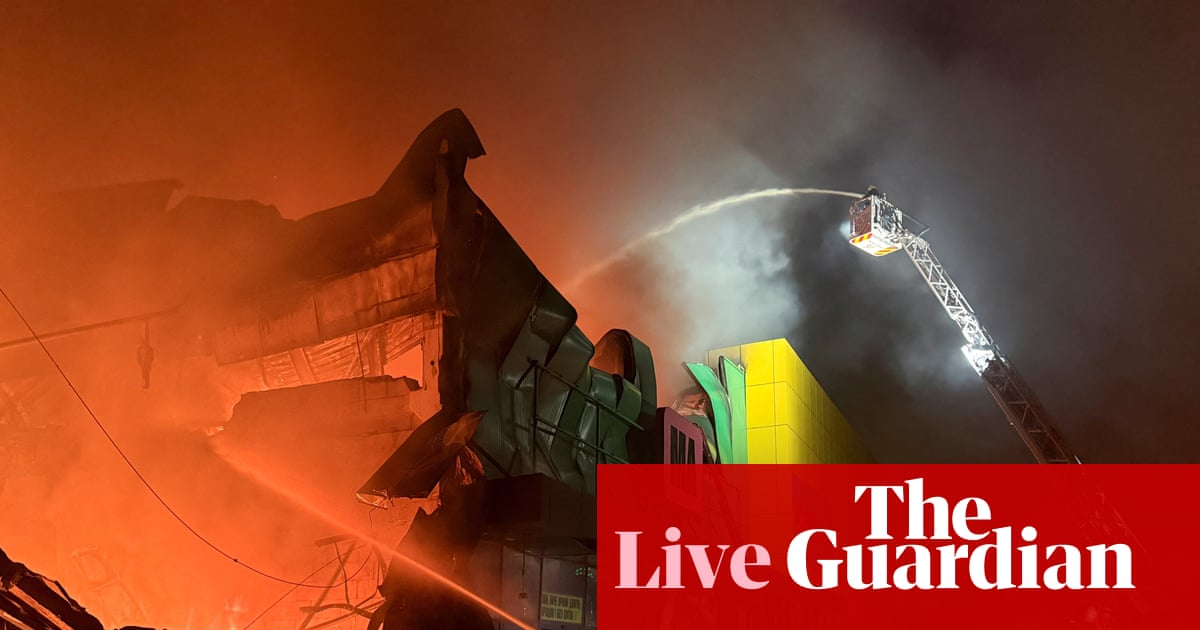
Ukraine's President Zelenskyy used biting sarcasm to criticize US peace envoy Steve Witkoff's praise for Vladimir Putin's "humanitarian" nature. Zelenskyy highlighted that "humanitarians" launched ballistic missiles at Kyiv, causing widespread damage and casualties, directly contradicting any notion of humanitarianism and underscoring the need for real pressure on Russia.
Imagine someone says a bully is nice, but then the bully throws rocks at your house right after you talk to them. That's what Ukraine's president did, calling the attackers 'humanitarians' after they bombed his city, showing that words don't match actions.
Analysis
Kyiv Attacks
Ukraine's President Volodymyr Zelenskyy responded with sharp sarcasm to overnight Russian missile attacks on Kyiv, which involved three waves of ballistic missiles and 21 projectiles. He specifically targeted comments made by US peace envoy Steve Witkoff, who had previously described Russia's Vladimir Putin as "a humanitarian." Zelenskyy's retort, "Three waves of ballistic missiles have been launched at Kyiv by Russian ‘humanitarians’ since yesterday evening," directly juxtaposed the envoy's words with the destructive reality on the ground. The attacks resulted in significant damage across the city, affecting ordinary residential buildings, critical energy infrastructure, a railway station, the metro system, shopping malls, and even a monastery. Emergency services were actively working at all affected locations.
Civilian Casualties and Infrastructure Damage
The missile barrages inflicted a heavy toll on civilian life and infrastructure. In Kyiv alone, at least two people were confirmed dead, and 34 others were injured, including five children. The scope of the damage extended beyond the capital, with Zelenskyy noting that "Twelve of our regions came under Russian attack overnight." This widespread assault underscores Russia's continued strategy of targeting civilian areas and essential services, despite diplomatic overtures. The mention of a monastery among the damaged sites further illustrates the indiscriminate nature of the attacks, which seem to disregard religious and cultural sites.
Diplomatic Implications and Pressure
Zelenskyy's remarks carry significant diplomatic weight, serving as a direct rebuke to any attempts to soften Putin's image or downplay the severity of Russia's actions. He emphasized that the timing of the attacks, occurring "almost immediately after another round of talks," indicated no genuine change in Russia's attitude. This suggests that diplomatic engagement alone is insufficient. Zelenskyy stressed the critical need for "real pressure on Russia" to achieve meaningful steps toward ending the conflict and the killing. The implication is that sanctions, military aid, and other forms of pressure are more effective levers for peace than mere dialogue when met with continued aggression.
Key points
- Ukraine's President Zelenskyy sarcastically called Russian attackers 'humanitarians' after missile strikes on Kyiv.
- The attacks used 21 ballistic missiles across three waves, damaging residential buildings, energy facilities, and businesses.
- At least two people died and 34 were injured in Kyiv, with 12 regions across Ukraine targeted overnight.
- Zelenskyy stated that Russia's response to talks with missiles shows no change and demands real pressure.
- The incident highlights a disconnect between diplomatic praise for Putin and the reality of Russian aggression.
The strong condemnation from President Zelenskyy could galvanize international support for increased pressure on Russia, potentially leading to more effective diplomatic solutions or a shift in Russia's approach. A clear denunciation of 'humanitarian' claims amidst attacks might also deter similar rhetoric from international figures.
The continued missile attacks, despite diplomatic engagement, signal a deepening of the conflict and a potential hardening of Russia's stance. This could lead to further civilian casualties and destruction, while undermining trust in diplomatic processes and prolonging the war.