An absurd illustration of Britain’s housing problem
Readers respond to an article about a £200m palace in London that has lain empty for years, highlighting the UK's housing problem.
Intelligence analysis by Llama 3.3 70B
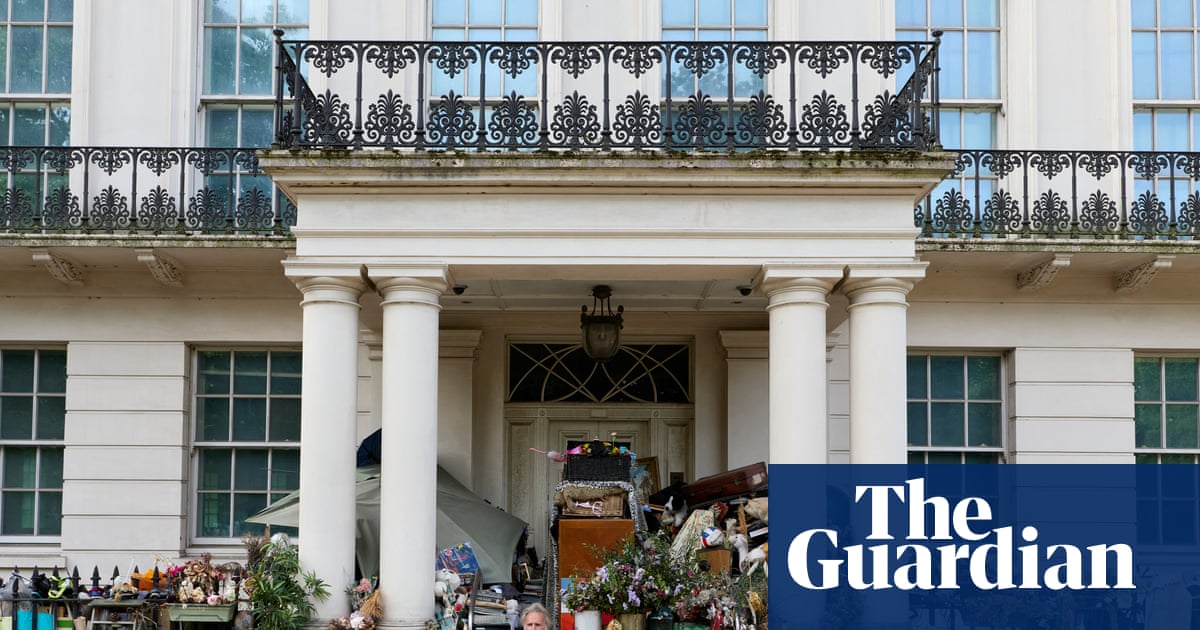
The article sparks debate about vacant properties and housing inequality, with readers suggesting solutions like compulsory purchase powers and targeted levies.
Imagine a big, expensive house in London that's been empty for years. Meanwhile, many people are struggling to find a place to live. It doesn't make sense, and it's a big problem in the UK.
Analysis
The article about a homeless person sleeping in the portico of a £200m palace in London has sparked a heated debate about the UK's housing problem. Readers have responded with their own experiences and suggestions for solving the issue. One reader, Kate Dudley, suggests that councils should have the right to seize massive mansions and use them as temporary shelter, arguing that housing shouldn't be just an asset for the super-rich. Another reader, Aisha Morrell, proposes a targeted levy on long-term empty properties, with the revenue generated going to charities and community organisations tackling homelessness. John Boxall suggests the idea of compulsory sale orders, where unused or badly managed properties are sold at auction, as a more effective and cost-efficient solution. The debate highlights the complexity of the issue and the need for innovative solutions that recognize both the realities of property ownership and the needs of those struggling with housing insecurity. The fact that grand properties are lying empty while people are struggling to find affordable housing is seen as ludicrous and a stark illustration of the UK's housing problem. The issue is not just about individual failures, but also about collective challenges and the need for a fairer society. The use of compulsory possession or purchase powers, as well as targeted levies, could be a step towards addressing the problem, but it requires a nuanced approach that takes into account the complexities of the issue.
Key points
- The UK is facing a housing crisis, with many people struggling to find affordable housing
- Grand properties are lying empty, highlighting the issue of housing inequality
- Readers suggest solutions such as compulsory purchase powers, targeted levies, and compulsory sale orders
- The issue is complex and requires a nuanced approach
- Addressing the problem could lead to more affordable housing options and community-led initiatives
If the UK can find a way to address the issue of empty homes, it could lead to more affordable housing options for those in need. Innovative solutions, such as targeted levies or compulsory sale orders, could help to bring vacant properties back into use and provide a safer and more stable environment for homeless individuals. Additionally, if councils are given more power to seize and repurpose empty properties, it could lead to the creation of more community-led initiatives and social programs.
The issue of empty homes in the UK is complex and deeply ingrained, and it may be difficult to find a solution that works for everyone. If left unaddressed, the problem could continue to exacerbate housing inequality and social exclusion, leading to more people struggling to find affordable housing and increased homelessness. Furthermore, the use of compulsory purchase or possession powers could be contentious and lead to disputes over property values and ownership.