Blast in a tunnel at Indian hydropower project leaves 12 dead and 13 missing
A suspected methane gas explosion collapsed part of a tunnel at India's 500-megawatt Teesta hydroelectric project in Sikkim, killing 12 and leaving 13 missing amid toxic rescue conditions.
Intelligence analysis by Llama
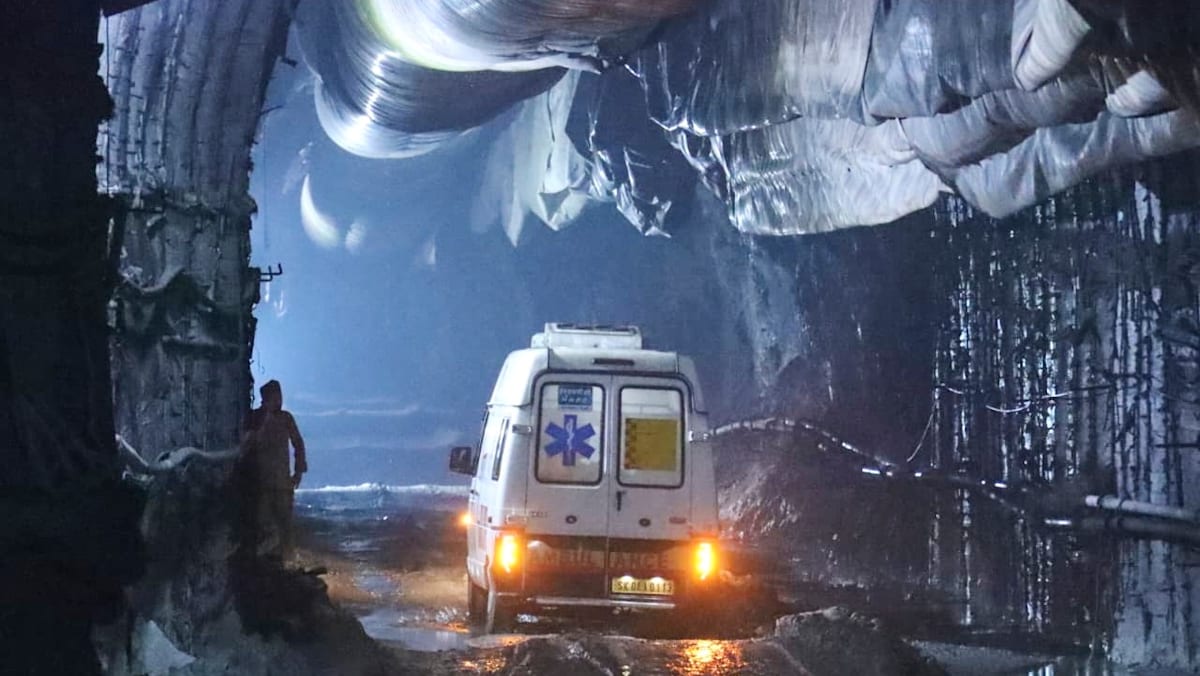
A blast ripped through a tunnel at a hydropower project in India's Sikkim state, killing 12 labourers and trapping 13 others. Rescue teams face dangerous methane, carbon monoxide, and hydrogen sulfide levels, exposing broader safety risks in Himalayan infrastructure.
A big tunnel being dug under a mountain in India exploded like a shaken soda bottle, trapping workers inside. Just as a balloon can pop when filled with too much air, gas built up underground and burst. Twelve people died and 13 are still missing, while rescuers in oxygen masks search the dangerous debris.
Analysis
Teesta Tunnel Catastrophe
The blast tore through a tunnel under construction at the 500-megawatt Teesta hydroelectric project in Samardung village, about 40km from Gangtok in Sikkim, late Monday (Jul 20). Twenty-one labourers were inside when the explosion occurred; two escaped. Six power utility officials who entered to assist became trapped themselves, according to the report. By Tuesday, 12 bodies had been recovered and 13 people remained missing, with rescue teams from India's National Disaster Response Force (NDRF) racing against time.
The Teesta project sits along the seismically active Teesta River basin, which flows from Sikkim into West Bengal. Its location near the Chinese border adds a geopolitical dimension to what is otherwise framed as an industrial safety incident. State Chief Minister Prem Singh Tamang visited the site Tuesday as Sikkim's government coordinated the response, with survivors telling civil official Anupama Tamling that they heard a loud explosion before debris came crashing through the tunnel.
Gas Buildup Suspected in the Explosion
Officials believe the explosion was triggered by methane accumulation underground, a hazard common in young rock formations that can trap ancient gases. NDRF official Nitin Kumar confirmed the presence of methane, carbon monoxide, and hydrogen sulfide inside the tunnel, with conditions dangerous enough to limit rescue shifts to roughly 15 minutes at a time even with oxygen gear.
Dr Devesh Walia, a geology professor at North-Eastern Hill University in Meghalaya, told the AP that the area's rock formations include coal-bearing strata where gas pockets can form. His assessment aligns with the broader view that the Himalayan region's geology makes tunnel work uniquely treacherous. Young, fractured rocks, seismic activity, and unpredictable underground voids all conspire to elevate the risk of sudden gas releases, a hazard that conventional ventilation planning may underestimate.
A Pattern of Infrastructure Risk
The Sikkim disaster is the latest in a string of construction failures across India's Himalayan belt. In February 2026, an explosion in a coal mine in neighbouring Meghalaya killed at least 18 workers. In 2023, a tunnel section in Uttarakhand collapsed, trapping 41 workers for 17 days before they were rescued. The CNA piece notes that rapid infrastructure growth in India often collides with fragile geology, construction lapses, extreme weather, and uneven safety standards.
For the hydropower sector specifically, the Teesta accident raises fresh questions about whether risk assessments and ventilation protocols are keeping pace with the scale of construction. India has aggressive clean-energy targets that lean heavily on Himalayan hydropower, and each fatal accident complicates the trade-off between energy expansion and worker safety in one of the country's most challenging geographies.
Key points
- A suspected methane gas explosion ripped through a tunnel at the 500MW Teesta hydroelectric project in Sikkim, India, on Monday (Jul 20).
- At least 12 people were confirmed dead and 13 remained missing as of Tuesday, with two labourers and six power utility officials also trapped at one stage.
- Rescue teams from India's NDRF detected methane, carbon monoxide, and hydrogen sulfide inside the tunnel, limiting shifts to roughly 15 minutes even with oxygen gear.
- The project sits near the Chinese border in a seismically active Himalayan zone where young, fractured rock formations are prone to trapping underground gases, according to geological experts.
- The disaster follows a February 2026 coal mine explosion in neighbouring Meghalaya that killed at least 18 and a 2023 Uttarakhand tunnel collapse that trapped 41 workers for 17 days.
If rescuers locate the missing 13, survivors could be reached and given medical care, providing closure for affected families. The disaster may also accelerate tighter safety audits, better gas detection systems, and geological reviews across India's Himalayan hydropower portfolio, potentially preventing future tragedies.
Rescue conditions remain treacherous with toxic methane, carbon monoxide, and hydrogen sulfide present, and the 15-minute shift limit could slow recovery, raising the chance that the missing 13 are not found alive. The accident may foreshadow further incidents in the seismically active Teesta basin, complicating India's hydropower expansion plans and prompting renewed scrutiny of oversight in the sector.