Fresh South China Sea tensions add urgency to ASEAN-China code of conduct talks: Analysts
Rising tensions in the South China Sea, marked by a recent clash between the Philippines and China, are intensifying calls for ASEAN and China to finalize a long-delayed code of conduct.
Intelligence analysis by Gemini 2.5 Flash
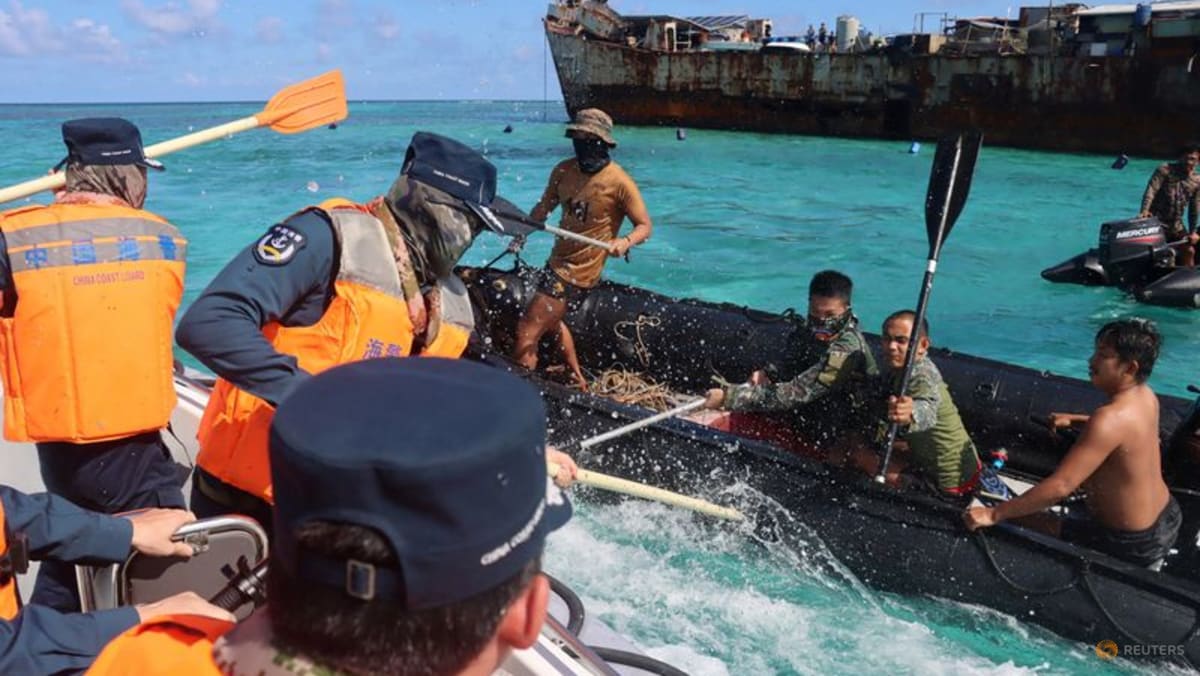
A recent confrontation near the Second Thomas Shoal, where a Philippine navy personnel was injured, has highlighted the volatile situation in the South China Sea. Analysts emphasize the critical need for a code of conduct between ASEAN and China to prevent future incidents from escalating into broader crises, especially as major powers like the US engage in regional meetings.
Imagine a big playground where many kids want to play with the same toys, but they don't have clear rules. Sometimes, they push and shove, and someone gets hurt. That's a bit like what's happening in a big ocean area called the South China Sea, where different countries want to use the same parts. Now, a group of countries called ASEAN and a big country called China are trying to write down some rules, like a playground agreement, so everyone can play nicely and avoid fights, especially after a recent bump between the Philippines and China.
Analysis
Escalating Tensions and Diplomatic Fallout
The South China Sea remains a significant flashpoint in regional geopolitics, with recent events underscoring its volatility. A confrontation on July 20 between Philippine and Chinese personnel near the Second Thomas Shoal, resulting in injuries to a Philippine navy member, has brought these long-simmering disputes back into sharp focus. Both nations have accused each other of provocation, leading to the summoning of ambassadors and a strong condemnation from the United States regarding China's "dangerous and aggressive actions."
This incident occurred shortly after the Philippines commemorated the 10th anniversary of the landmark arbitral ruling that favored Manila's claims in the disputed waters. While the ruling provides a legal framework, its non-recognition by Beijing means that direct confrontations continue to pose significant risks. The dynamic of close calls, run-ins, and posturing, as noted by analyst Lucio Blanco Pitlo III, creates a highly perilous environment where an accident could easily spiral into a major diplomatic or even military crisis, affecting not only security but also economic and people-to-people exchanges.
The Imperative for a Code of Conduct
The renewed urgency for a Code of Conduct (COC) between ASEAN and China stems directly from these escalating tensions. The Philippines, as this year's ASEAN chair, is actively seeking broader regional support to expedite these negotiations. The proposed COC aims to establish clear rules and mechanisms to prevent maritime incidents from escalating, thereby serving a "general shared interest of all" coastal states in upholding a rules-based order at sea. Sustained engagement through these talks is seen as vital to "arrest a downward spiral in the relations" and stabilize the volatile South China Sea issue.
Analysts stress that continued dialogue between Manila and Beijing is paramount, despite their volatile relations. The COC is envisioned as a practical tool to manage disputes, even if it doesn't resolve underlying sovereignty claims. Its successful implementation could provide a much-needed framework for de-escalation and crisis management, fostering greater predictability and reducing the likelihood of miscalculation in one of the world's most strategically important waterways. The ongoing ASEAN Foreign Ministers' Meeting in Manila provides a critical platform for these discussions, with the presence of key international players.
Broader Geopolitical Implications
The latest flashpoint has cast a shadow over the ASEAN Foreign Ministers' Meeting, highlighting the complex interplay of regional and global powers in the South China Sea. The attendance of United States Secretary of State Marco Rubio and Chinese Foreign Minister Wang Yi at the meeting underscores the international dimension of these disputes. The US, a treaty ally of the Philippines, has consistently voiced concerns over China's actions and emphasized freedom of navigation, adding another layer of complexity to the regional dynamics. While Washington and Beijing are expected to manage their differences, the South China Sea remains a key area of strategic competition.
For ASEAN, navigating these tensions while maintaining its centrality and unity is a delicate balancing act. The bloc seeks to engage both China and the US constructively, advocating for peaceful resolution and adherence to international law. The successful negotiation of a robust and effective COC would not only benefit claimant states but also reinforce ASEAN's role as a credible regional mediator. However, the divergent interests of various parties, coupled with the strategic ambitions of major powers, present significant challenges to achieving a comprehensive and binding agreement that can genuinely prevent future confrontations.
Key points
- A recent clash between the Philippines and China near the Second Thomas Shoal has heightened South China Sea tensions.
- Analysts emphasize the urgent need for ASEAN and China to finalize a long-delayed Code of Conduct to prevent future confrontations.
- The Philippines, as ASEAN chair, is seeking regional support to expedite these negotiations.
- The proposed Code of Conduct aims to establish rules to prevent maritime incidents from escalating into crises.
- The latest incident casts a shadow over the ASEAN Foreign Ministers' Meeting, attended by US and Chinese foreign ministers, highlighting broader geopolitical implications.
If ASEAN and China can successfully finalize a robust Code of Conduct, it could significantly de-escalate tensions and provide a clear framework for managing maritime incidents. This would foster greater regional stability, ensure freedom of navigation, and allow for continued economic cooperation among all parties involved.
Should the Code of Conduct talks continue to stall or fail to produce a meaningful agreement, the risk of further confrontations and potential escalation in the South China Sea remains high. This could lead to increased diplomatic crises, disrupt vital trade routes, and undermine regional security and economic growth.