China Merchants Securities drops South Korea ETF as Seoul stock volatility spills over
China Merchants Securities has ended market making for the mainland's only South Korea-focused exchange-traded fund (ETF) amid heightened turbulence in South Korea's stock market.
Intelligence analysis by Llama
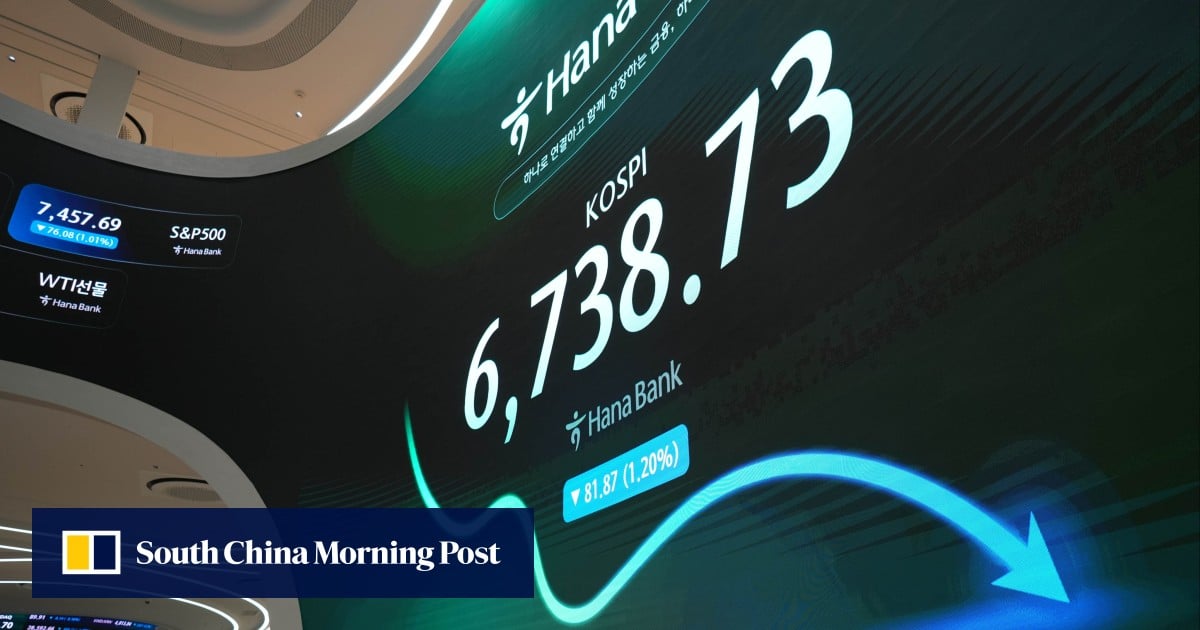
China Merchants Securities has withdrawn as a liquidity provider for the Huatai-PineBridge China-Korea Semiconductor ETF due to commercial reasons, not a reflection of their view on market directions. This decision comes as South Korea's stock market experiences volatility, with the benchmark Korea Composite Stock Price Index surging 116 per cent and then plummeting over 28 per cent.
China Merchants Securities, a Chinese brokerage house, has stopped helping to make the South Korea-focused exchange-traded fund (ETF) liquid. This is because the South Korean stock market has been very volatile, with big price swings and liquidity constraints. China Merchants Securities made this decision for commercial reasons, not because they think the market will go down.
Analysis
A $60B Vote of Confidence
China Merchants Securities' decision to end market making for the Huatai-PineBridge China-Korea Semiconductor ETF is a significant development in the Chinese capital markets. The Shenzhen-based brokerage's withdrawal from the ETF comes just weeks after assuming the role as market maker on June 17. This decision was purely commercial and did not reflect their view on market directions, according to China Merchants. The move is a reflection of the challenges faced by market makers in providing liquidity during times of high volatility in the South Korean stock market. The benchmark Korea Composite Stock Price Index surged 116 per cent from about 4,224 points early this year to a record 9,385.59 on June 19, before plunging over 28 per cent to 6,516.27 on Monday. The sell-off triggered eight marketwide circuit breakers and 37 'Sidecar' trading halts - automatic cooling-off periods that temporarily pause algorithmic trading during volatile sessions.
Why Cursor?
The decision by China Merchants Securities to end market making for the South Korea-focused ETF is significant as it reflects the challenges faced by market makers in providing liquidity during times of high volatility in the South Korean stock market. The volatility in the South Korean stock market has left market makers exposed to sharp price swings and liquidity constraints, said Yiming Li, senior analyst for manager research at Morningstar. The decision by China Merchants Securities to end market making for the South Korea-focused ETF is a reflection of the challenges faced by market makers in providing liquidity during times of high volatility in the South Korean stock market.
The Road Ahead
The decision by China Merchants Securities to end market making for the South Korea-focused ETF is significant as it reflects the challenges faced by market makers in providing liquidity during times of high volatility in the South Korean stock market. The volatility in the South Korean stock market has left market makers exposed to sharp price swings and liquidity constraints, said Yiming Li, senior analyst for manager research at Morningstar. The decision by China Merchants Securities to end market making for the South Korea-focused ETF is a reflection of the challenges faced by market makers in providing liquidity during times of high volatility in the South Korean stock market.
Key points
- China Merchants Securities has ended market making for the Huatai-PineBridge China-Korea Semiconductor ETF.
- The decision was purely commercial and did not reflect their view on market directions.
- The volatility in the South Korean stock market has left market makers exposed to sharp price swings and liquidity constraints.
- China Merchants Securities also ended market-making services for five other Qualified Domestic Institutional Investor (QDII) products linked to Japan's Nikkei 225 and the United States' Nasdaq 100 indexes.
If the South Korean stock market stabilizes, China Merchants Securities may reconsider their decision to end market making for the South Korea-focused ETF. This could lead to increased liquidity and stability in the market.
If the volatility in the South Korean stock market continues, China Merchants Securities may not reconsider their decision to end market making for the South Korea-focused ETF. This could lead to decreased liquidity and increased instability in the market.