China to Head Off AI-Fuelled Inequality by Lifting Salaries, Narrowing Pay Gap
China has prioritized income growth and wage reform to protect its workforce from AI-driven inequality. A new blueprint targets middle-income expansion, vocational training, and collective wage bargaining.
Intelligence analysis by Llama
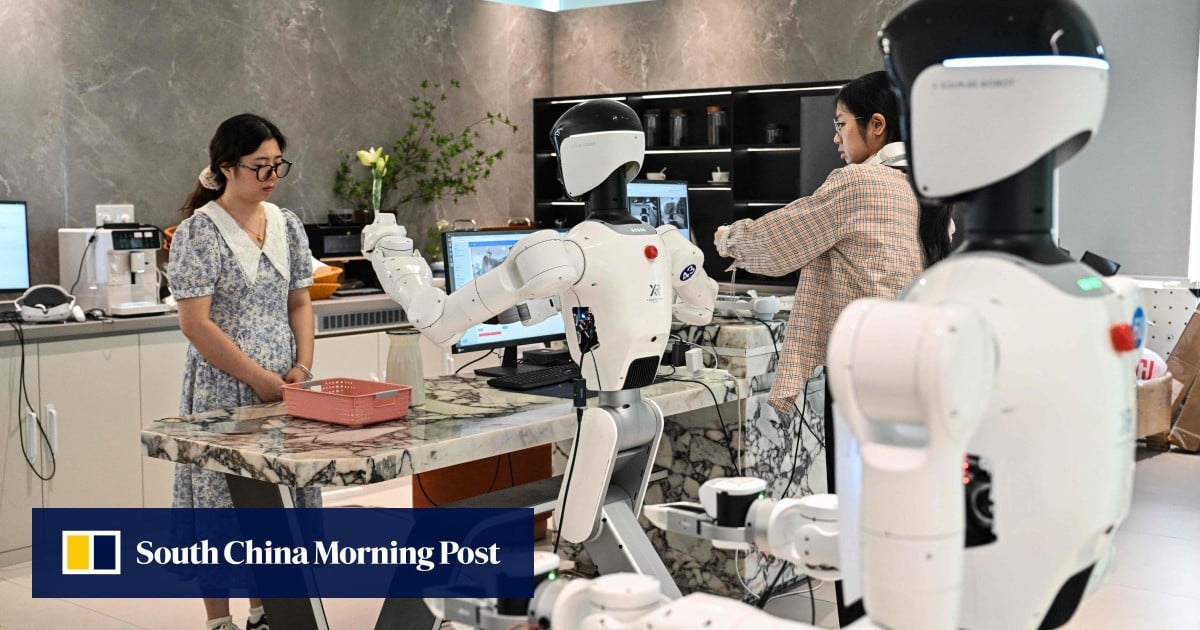
China's economic recovery plan aims to address income inequality by promoting collective wage bargaining, steady wage growth, and pay incentives for critical talent. The plan also focuses on protecting the bottom tier of the workforce and addressing the impact of AI on the job market.
China is trying to make sure that everyone gets a fair share of the benefits from its economic growth. It's doing this by making sure that people get paid fairly for their work and by training people for new jobs that will be created by technology.
Analysis
A Comprehensive Approach to Managing AI-Driven Inequality
China's economic recovery plan has made income growth and wage reform a priority to protect its workforce from AI-driven inequality. The new blueprint released by the Ministry of Human Resources and Social Security on Thursday lays out a detailed road map for the strategy, vowing to promote collective wage bargaining within the private sector, ensure steady wage growth, and tilt pay towards frontline workers. Within state enterprises, the plan urges managing 'excessively high earnings' while raising pay incentives for critical talent and linking compensation directly to technical expertise.
To protect the bottom tier of the workforce, Beijing called for refining its mechanism for adjusting minimum wage standards and initiating legislative research on minimum wage laws. Authorities aim to 'adopt a comprehensive approach to manage how shifting external environments and AI advancements affect the workforce, prioritising job-expanding initiatives', according to the blueprint.
The document comes as a wide income gap, especially between rural and urban areas, remains a major concern in the world's second-largest economy. And some economists warn that the rapid rise of AI could make matters worse. Beijing has also pledged to 'combine investment in physical assets with investment in people' – a new slogan introduced in its 15th five-year plan – to tap into the spending power of lower-income groups while grappling with weak domestic demand.
Protecting the Bottom Tier of the Workforce
The plan's focus on protecting the bottom tier of the workforce is crucial for addressing income inequality in China. By refining its mechanism for adjusting minimum wage standards and initiating legislative research on minimum wage laws, Beijing can ensure that the most vulnerable members of society are not left behind. The plan's emphasis on vocational training and collective wage bargaining is also a positive step towards addressing income inequality.
The Impact of AI on the Job Market
The rapid rise of AI is a major concern for China's job market. The plan's focus on adopting a comprehensive approach to manage the impact of AI on the workforce is crucial for addressing income inequality. By prioritising job-expanding initiatives and promoting collective wage bargaining, Beijing can ensure that the benefits of AI are shared by all members of society.
Conclusion
China's economic recovery plan is a positive step towards addressing income inequality in the country. The plan's focus on collective wage bargaining, vocational training, and protecting the bottom tier of the workforce is crucial for ensuring that the benefits of economic growth are shared by all members of society. By adopting a comprehensive approach to managing the impact of AI on the workforce, Beijing can ensure that the country's economic recovery is sustainable and equitable.
Key points
- China has prioritized income growth and wage reform to protect its workforce from AI-driven inequality.
- The new blueprint targets middle-income expansion, vocational training, and collective wage bargaining.
- The plan aims to protect the bottom tier of the workforce and address the impact of AI on the job market.
- China has pledged to 'combine investment in physical assets with investment in people' to tap into the spending power of lower-income groups.
If China's plan is successful, it could lead to a more equitable distribution of wealth and a more sustainable economic recovery. The focus on collective wage bargaining and vocational training could also lead to increased productivity and competitiveness for Chinese businesses.
However, there are also risks associated with China's plan. If the country fails to address the impact of AI on the job market, it could lead to widespread unemployment and social unrest. Additionally, the plan's focus on collective wage bargaining could lead to increased costs for businesses and potentially even higher prices for consumers.