Claude Uplifts Biomolecular Modeling
Anthropic's Claude AI has significantly optimized open-source biomolecular modeling tools, achieving an average 4x speedup and enabling larger system predictions on single GPUs. This advancement makes complex protein design and drug discovery research more accessible.
Intelligence analysis by Gemini 2.5 Flash
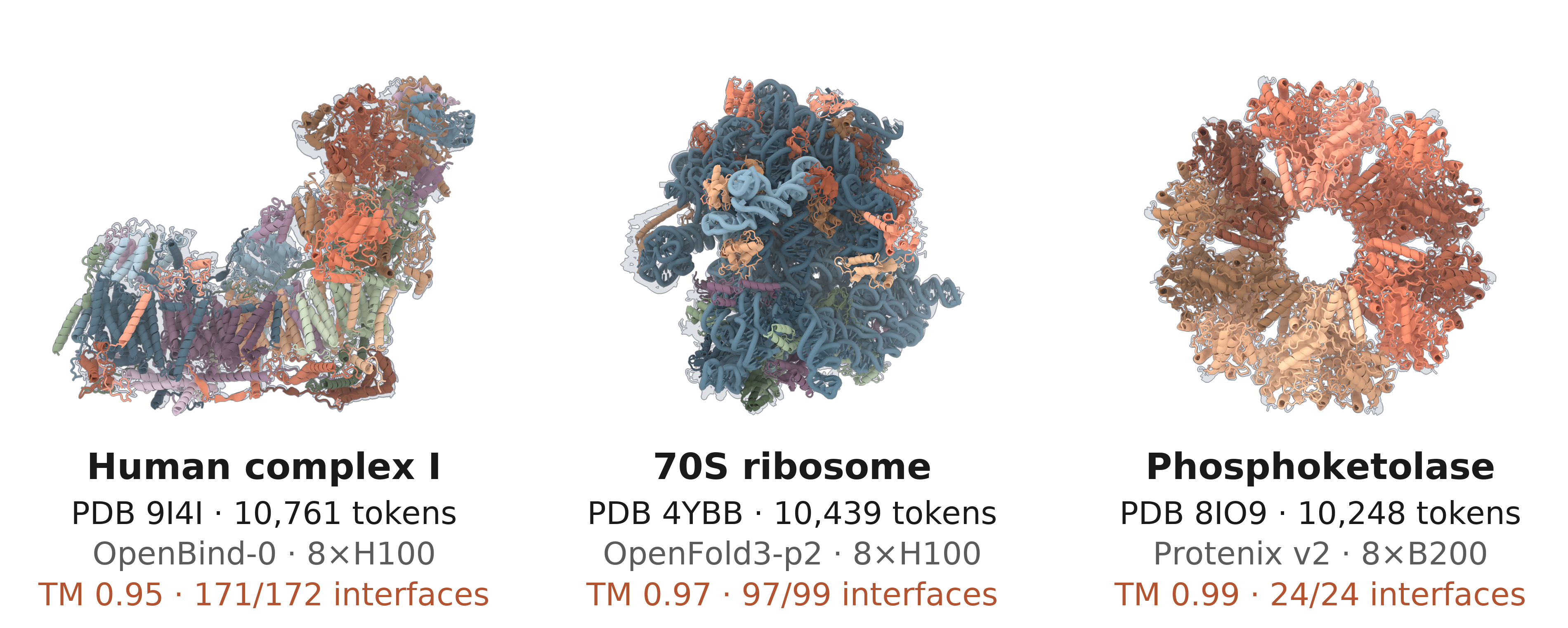
Anthropic has announced that its Claude AI model successfully optimized over 30 open-source biomolecular models, dramatically improving their speed and memory efficiency. This allows scientists to predict and design biomolecules faster and handle larger systems, reducing the computational resources previously required for advanced research like de novo protein binder design.
Imagine you have a super-smart robot named Claude that helps scientists build tiny biological LEGO structures, like proteins, which are crucial for life. These LEGOs used to take a very long time and a huge computer to figure out. Now, Claude has made the instructions for building these LEGOs much faster and easier to understand, like giving you a shortcut. This means scientists can now build bigger and more complicated LEGO structures with a regular computer, helping them discover new medicines or understand diseases much quicker.
Analysis
Anthropic's latest research highlights a significant leap in the application of AI to biomolecular modeling, specifically through the optimization capabilities of its Claude model. The project focused on enhancing the efficiency of open-source models used for tasks such as protein structure prediction, protein design, genomics, and protein language models. By making these tools faster and less memory-intensive, Anthropic aims to broaden access to cutting-edge computational biology, which was previously constrained by high resource demands.
4x Speedup and 10,000 Tokens
Claude's optimization efforts yielded impressive results, accelerating more than 30 biomolecular models by approximately 4x on average. This substantial speed improvement means that researchers can conduct experiments and simulations much more quickly, iterating through designs and predictions at an unprecedented pace. The article notes that even with identical outputs, a nearly 2x speedup was achieved, indicating robust optimization without sacrificing accuracy.
Beyond speed, Claude also introduced a low-memory mode that is particularly impactful. This mode allows for the accurate prediction of biomolecular systems exceeding 10,000 tokens—representing amino acids, nucleotides, and atoms—on a single NVIDIA GPU node. This capability is a game-changer for scientists working with large and complex biological systems, as it removes a significant barrier to entry by reducing the need for extensive, multi-GPU computing clusters, thereby making advanced research more accessible to individual labs and smaller institutions.
FlashPairformer
A key technical innovation behind these optimizations is the development of FlashPairformer, a set of custom kernels created with Claude's assistance. These kernels specifically target triangle attention and triangle multiplication operations, which are computationally expensive components in modern structure prediction models like AlphaFold3 and OpenFold3. These operations are cubic in both runtime and memory, meaning a small increase in system size leads to a massive increase in computational cost.
FlashPairformer achieves state-of-the-art performance, outperforming existing field standards like NVIDIA’s cuEquivariance and BioNeMo Inference Runtime. It delivers an average speedup of 2.7-2.9x for triangle attention and 1.7-3.2x for triangle multiplication, depending on the model configuration. This targeted optimization of core computational bottlenecks is critical for enabling the overall efficiency gains observed across the broader suite of biomolecular models, demonstrating AI's ability to not just use, but also improve, underlying computational infrastructure.
Adaptyv Bio Competition
To further foster innovation and community engagement, Anthropic is co-sponsoring a protein design competition with Adaptyv Bio. This initiative commits up to $1 million in Claude credits and an additional $250,000 in Modal compute credits, along with wet lab validation for over 5,000 designs. The competition focuses on five challenging problems at the frontier of current protein design capabilities, aiming to leverage the newly optimized tools and encourage breakthroughs.
This competition serves multiple purposes: it provides substantial resources to researchers, validates the practical utility of the optimized models, and helps push the boundaries of protein design. By offering both computational resources and crucial wet lab validation, Anthropic and its partners are creating a comprehensive ecosystem for scientific discovery, ensuring that promising computational designs can be tested in real-world biological settings. This collaborative approach underscores a commitment to accelerating scientific progress through open-source contributions and community support.
Key points
- Anthropic's Claude AI optimized over 30 open-source biomolecular models, achieving an average 4x speedup.
- A new low-memory mode allows accurate prediction of systems larger than 10,000 tokens on a single NVIDIA GPU.
- Claude helped develop FlashPairformer, custom kernels that outperform existing standards for triangle attention and multiplication operations.
- The optimizations reduce the GPU hours needed for protein design by two orders of magnitude, making research more accessible.
- Anthropic and Adaptyv Bio are co-sponsoring a protein design competition with up to $1 million in Claude credits and wet lab validation.
This advancement promises to significantly accelerate drug discovery and development by making sophisticated biomolecular modeling more accessible and efficient. Researchers can now explore a wider range of protein designs and biological interactions, potentially leading to breakthroughs in treating diseases and developing novel materials faster than ever before.