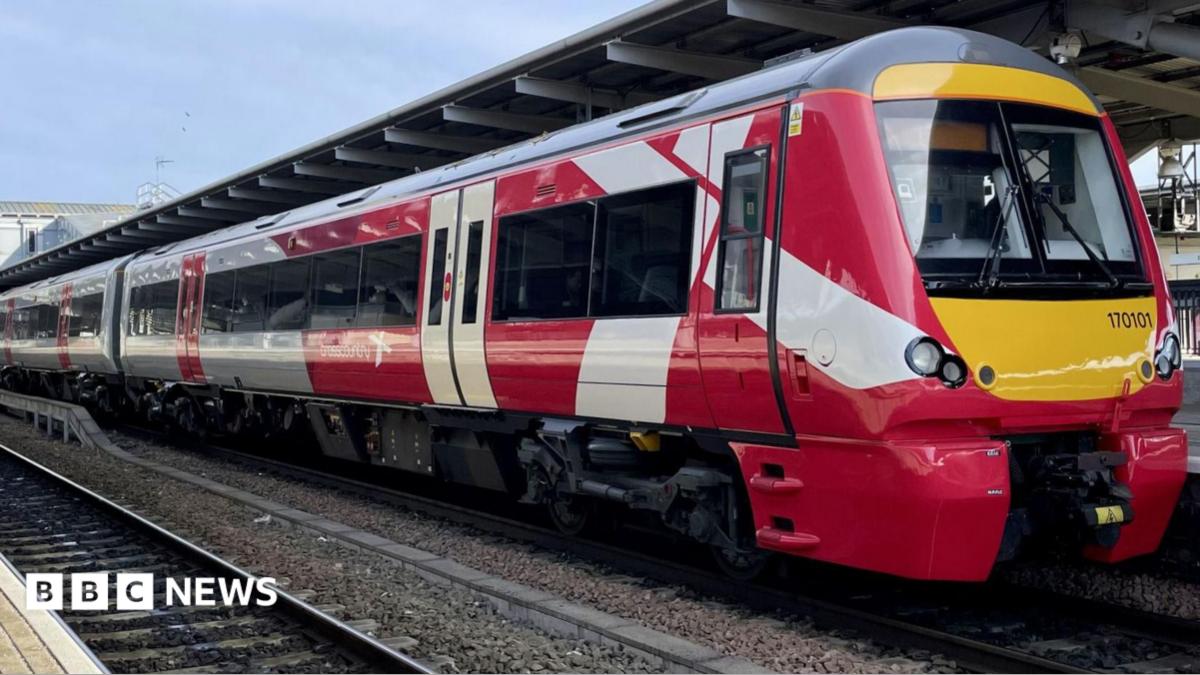
CrossCountry cancels 'almost all' UK services after power cut
CrossCountry has cancelled nearly all its UK rail services following a power cut at its Birmingham control centre, leading to widespread disruption for passengers across major routes.
Intelligence analysis by Gemini 2.5 Flash
A critical power outage at CrossCountry's central control facility in Birmingham has rendered essential railway management systems inoperable, forcing the operator to halt almost all its services nationwide. This incident has caused significant travel chaos for thousands of passengers, particularly those planning weekend journeys, underscoring the fragility of vital transport infrastr…
Imagine a giant toy train set where the main control panel, which tells all the trains where to go, suddenly loses power. That's what happened to CrossCountry trains. Now, almost all their trains can't move because no one can tell them what to do, making lots of people late for their trips and causing a big mess across the country.
Analysis
The recent widespread cancellations by CrossCountry, one of Britain's major rail operators, stem from a single point of failure: a power cut at its Birmingham control centre. This incident, occurring on a Saturday, quickly escalated into a national issue, demonstrating how reliant modern transport networks are on centralized digital systems. The inability to manage train movements from a core hub effectively paralyzed services, leading to significant inconvenience and economic repercussions across the UK.
Birmingham
The power outage originated in Birmingham, specifically at CrossCountry's control centre, on a Saturday. This central location is critical for managing the operator's extensive network, which spans from Glasgow to Penzance and Leeds to Manchester. The immediate consequence was the unavailability of numerous systems essential for railway operations, highlighting the vulnerability of complex logistical networks to localized infrastructure failures. The incident underscores the importance of robust backup power and disaster recovery protocols for critical national infrastructure.
The disruption emanating from Birmingham had a ripple effect, impacting major routes that pass through key economic hubs such as Stoke-on-Trent, Coventry, Wolverhampton, York, Cheltenham, Cardiff, Liverpool, and Newcastle. This geographical spread meant that the localized power cut quickly became a national transport crisis, affecting commuters, leisure travelers, and particularly football fans attempting to reach weekend fixtures. The concentration of control functions in a single location, while efficient under normal circumstances, proved to be a significant liability in this unforeseen event.
CrossCountry
CrossCountry, an operator previously ranked as Britain's worst in June, found itself in a challenging position, having to cancel 'almost all' its services until further notice. The company acknowledged 'significant and unforeseen disruption' and issued an apology to affected passengers. This incident further strains the operator's reputation and could lead to increased scrutiny of its operational resilience and contingency planning. The only route expecting a 'near-normal' service was between Peterborough, Cambridge, and Stansted Airport, illustrating the near-total paralysis of its broader network.
The company's response included advising passengers that tickets would be accepted by other operators and that customers were entitled to Delay Repay compensation for delays over 30 minutes, or a full refund if they chose not to travel. National Rail also stepped in, allowing affected customers to use London Underground and West Midlands Metro services at no extra cost, and extending ticket validity until Wednesday. While these measures aim to mitigate passenger inconvenience, the scale of the disruption points to a systemic issue that goes beyond individual customer service.
New Street Station
At New Street Station in Birmingham, a major transport hub, the immediate impact of the cancellations was evident. Barriers to all platforms were open, and regular announcements informed passengers of the disruption. However, a notable detail was the apparent absence of CrossCountry service cancellations on the digital display boards, with their services simply removed from the lists. This lack of clear, real-time information on official digital channels, contrasted with a handwritten board alerting passengers, likely added to passenger confusion and frustration.
The scene at New Street Station, a critical interchange for many affected routes, served as a microcosm of the broader chaos. Passengers were observed venting their anger on social media, describing the situation as a 'worst case scenario' for weekend travel. The reliance on alternative operators like Great Western Railway for services to Plymouth and Penzance, and the advice for football fans to expect 'extremely busy' services and potentially stand for their entire journey, highlight the cascading effects of the initial power cut and the scramble to manage its fallout. The incident underscores the need for robust communication strategies during major service disruptions.
Key points
- CrossCountry cancelled almost all UK rail services due to a power cut at its Birmingham control centre.
- The power outage rendered many essential railway management systems unavailable.
- Major routes across the UK, including Glasgow to Penzance and Leeds to Manchester, are affected.
- Passengers are advised to use tickets on other operators and are eligible for compensation or refunds.
- The incident caused significant anger among passengers and highlighted operational vulnerabilities.
To mitigate the immediate impact, CrossCountry tickets are being accepted by other rail operators, and customers can claim compensation or refunds for their disrupted journeys. The extended validity of tickets until Wednesday also offers passengers greater flexibility to reschedule their travel plans.
The widespread cancellations, particularly on a busy weekend, inflict significant economic disruption on travelers, businesses, and event organizers. This incident further damages CrossCountry's reputation, already ranked as Britain's worst operator, potentially leading to long-term customer distrust and financial penalties.