Cruise Ship Rams Container Ships - New Storm Surge Warning
A cruise ship, "Mein Schiff 3," collided with two container ships in Bremerhaven during a severe autumn storm, causing significant damage but no injuries. The incident led to the cancellation of the cruise ship's planned voyage to the Canary Islands.
Intelligence analysis by Gemini 2.5 Flash
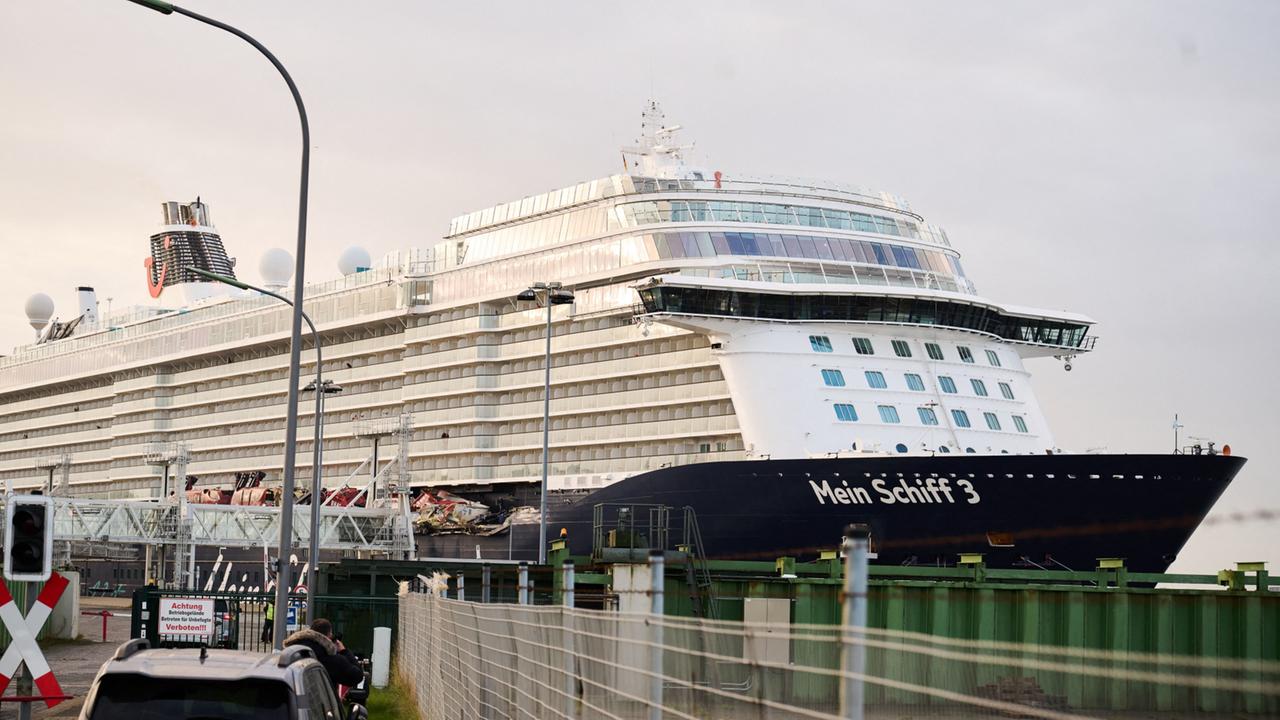
Northern Germany experienced an autumn storm, "Manja," which caused a cruise ship to ram two container vessels in Bremerhaven and triggered a storm surge on the North Sea coast. While authorities reported relatively few major incidents and no serious injuries, the storm led to travel disruptions, localized flooding, and power outages across the region and in neighboring countries.
Imagine a big autumn storm like a giant, grumpy wind monster blowing across northern Germany. This monster made the sea super wavy and pushed a huge cruise ship, called "Mein Schiff 3," right into two other big cargo ships in a harbor. It was like bumper cars for giant boats! Luckily, no one got hurt, but the ships got boo-boos, and the cruise ship couldn't go on its holiday trip. The storm also made the sea water rush onto beaches and roads, and even knocked down trees, causing some trains to stop. But the grown-ups in charge were ready, so most people stayed safe.
Analysis
The recent autumn storm, dubbed "Manja," brought considerable disruption to northern Germany, particularly impacting maritime activities and coastal areas. While the overall assessment from police indicated that the region weathered the storm with relatively few major incidents, the collision in Bremerhaven involving a cruise ship and two container vessels stands out as a significant event. This incident, attributed to a strong gust of wind, underscores the inherent risks of operating large vessels in adverse weather conditions, even with tugboat assistance.
Mein Schiff 3
The cruise ship "Mein Schiff 3," operated by Tui Cruises, was involved in a collision with two container ships while departing Bremerhaven. According to police reports, a powerful gust of wind caught the vessel, pushing it into two container ships moored at the Stromkaje. This resulted in minor damage to one container ship, substantial damage to the other, and significant damage to the "Mein Schiff 3" itself, including visible damage to its lifeboats. Fortunately, there were no reports of water ingress or injuries to any crew or passengers.
Following the incident, the "Mein Schiff 3" returned to the cruise terminal, and its scheduled voyage to the Canary Islands was promptly canceled. Tui Cruises confirmed that the damages necessitated immediate repair work at a shipyard, impacting the travel plans of 2,428 guests and 922 crew members who were on board at the time. All three ships involved in the collision were subsequently issued a sailing ban, pending further assessment and repairs.
Sturmtief Manja
Sturmtief "Manja" was the meteorological force behind the turbulent weather conditions across northern Germany. The storm brought high waves and strong winds, leading to a storm surge that particularly affected the East Frisian North Sea island of Norderney. Water levels there reached 8.20 meters, approximately 1.75 meters above normal high tide, demonstrating the storm's intensity. Beyond the immediate coastal impact, "Manja" also caused broader disruptions, including a heavy cargo ship temporarily losing maneuverability near the Dutch island of Schiermonnikoog, resulting in injuries to three crew members.
The storm's effects extended inland and to neighboring countries. In Hamburg, the Altona fish market was flooded as anticipated, and a driver had to be rescued from a submerged underpass in Hafencity. Fallen trees blocked train tracks in Stade, Niedersachsen, trapping over 150 passengers for two hours. Internationally, the storm led to widespread power outages in the UK and France, significant disruptions at Amsterdam's Schiphol Airport, and temporary suspensions of ferry services in Scandinavia, alongside fallen trees and power cuts in Denmark and Norway.
Bundesamt für Seeschifffahrt und Hydrographie
The Federal Maritime and Hydrographic Agency (BSH) played a crucial role in monitoring and warning the public about the storm's ongoing threats. Even after the initial wave of incidents, the BSH issued a renewed storm surge warning for the North Sea for the midday and afternoon high tides. This subsequent warning indicated that water levels along the East Frisian coast and in the Weser area were expected to be approximately 1.5 meters higher than mean high water, while the North Frisian coast and the Elbe area could see levels 1.5 to two meters higher. These warnings are vital for coastal communities and maritime operations, allowing for continued preparedness and safety measures. The proactive communication from agencies like the BSH underscores the importance of meteorological and hydrographic services in mitigating the potential damage and ensuring public safety during severe weather events.
Key points
- The cruise ship "Mein Schiff 3" collided with two container ships in Bremerhaven due to a strong gust of wind during an autumn storm.
- The collision caused significant damage to all three vessels, including broken lifeboats on the cruise ship, but resulted in no injuries or water ingress.
- The "Mein Schiff 3" had its planned voyage to the Canary Islands canceled for immediate repairs, and all three ships were issued a sailing ban.
- Storm "Manja" also caused a storm surge on the North Sea coast, notably affecting Norderney, and led to various disruptions across northern Germany and neighboring countries.
- The Federal Maritime and Hydrographic Agency (BSH) issued new storm surge warnings for the North Sea, anticipating elevated water levels.
Despite the severity of the storm and the ship collision, the fact that no serious injuries or water ingress occurred on the vessels highlights effective safety protocols and emergency responses. The quick cancellation of the cruise and immediate plans for repairs demonstrate a proactive approach to passenger safety and operational integrity, minimizing further risks.
The incident underscores the vulnerability of maritime operations to extreme weather, potentially leading to significant financial losses from ship damage, repair costs, and lost revenue from canceled voyages. Continued severe weather events could strain emergency services and infrastructure, causing prolonged disruptions to transport and coastal communities.