Doing more with less: A Singaporean surgeon’s lessons from a hospital between two Sudans
Singaporean surgeon Tang Jun Han shares lessons learned from a hospital in Sudan's disputed region, facing severe resource constraints and violence-related injuries.
Intelligence analysis by Qwen 2.5 (3B)
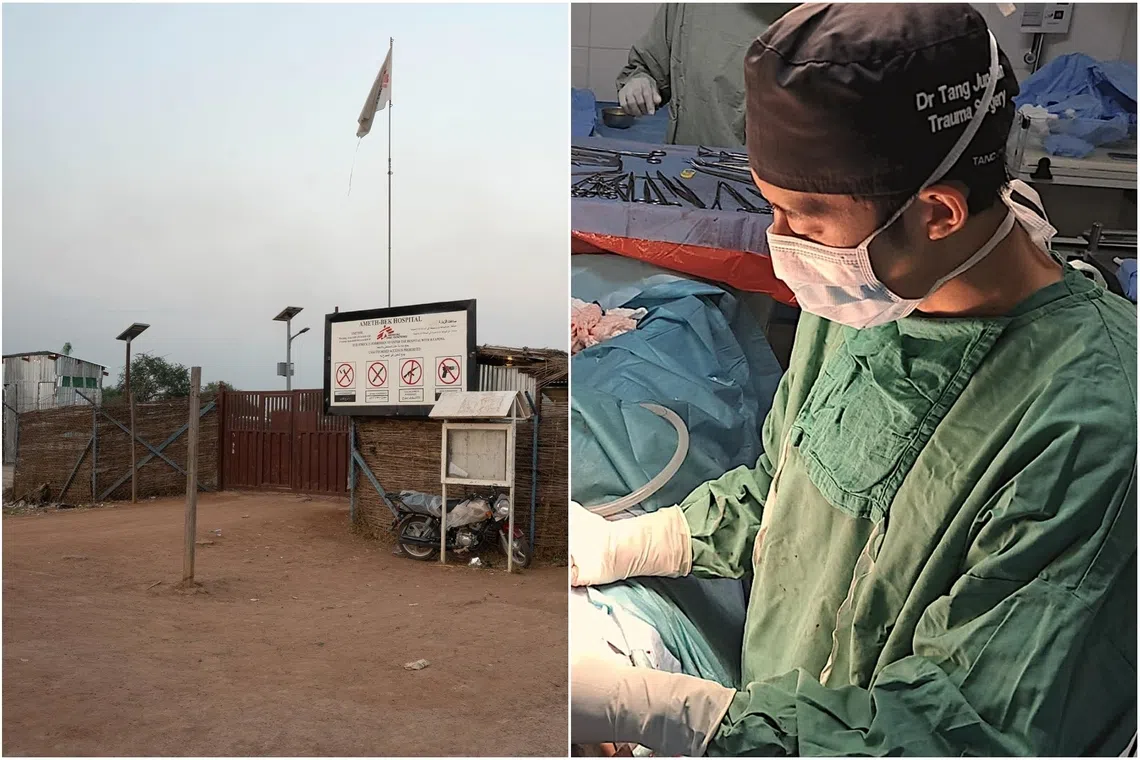
A Singaporean surgeon describes his experiences working in a hospital in Sudan's disputed region, where he faced severe resource constraints and violence-related injuries.
A Singaporean doctor went to a hospital in Sudan where they had to use their creativity to help people because they didn't have many tools or supplies. They had to make do with what they had and sometimes had to make new tools to help people.
Analysis
Resource Constraints in Abyei
The hospital in Abyei, Sudan is a 91-bed secondary facility that serves a large region, with almost every case coming through its doors. The team performed 1,170 operations in just three months. The hospital has limited resources, including one functioning diathermy pencil for each day's cases. The team had to be deliberate about every blood test and use resources efficiently.
Decisions and Adaptations
The team had to adapt their surgical practices to the limited resources available. For example, they improvised a simple vacuum dressing to draw fluid from wounds, used a hook made from an intravenous cannula for children with foreign objects in their ears, and used a Cystofix catheter to drain fluid from around the heart of a child with a life-threatening condition.
Challenges and Solutions
The hospital lacked an ICU and limited blood products, which required careful decision-making. The team had to consider what could be sustained after surgery as much as what could be achieved in the theatre. They also had to account for the consequences of their decisions, such as the need for prostheses and stoma bags in a community where they might not be available.
Key points
- The hospital in Abyei, Sudan is a 91-bed secondary facility serving a large region with severe resource constraints.
- The team performed 1,170 operations in just three months, facing violence-related injuries and other urgent cases.
- The team had to be creative and resourceful, using improvised tools and techniques to provide care.
Despite the challenges, the team was able to perform many surgeries and save lives. Their experience can help other doctors in similar situations.
The doctor's experience shows how difficult it can be to provide medical care in conflict zones with limited resources. The team had to make tough decisions to save lives and ensure patients could continue to receive care after surgery.