EU lawmakers arrive in China for high-stakes talks to manage mounting tensions
A European Parliament delegation has begun a three-day visit to China to address strained ties amid escalating trade friction, geopolitical uncertainty, and expanding EU import curbs.
Intelligence analysis by Gemini 2.5 Flash
An eight-member delegation from the European Parliament's Committee on Foreign Affairs is in China for high-level talks, marking a resumption of institutional exchanges frozen since 2021. The discussions aim to manage complex relations, focusing on economic imbalances, the Ukraine war, human rights, and tech sovereignty.
Imagine two big groups of friends, Europe and China, who haven't been getting along perfectly lately. Some friends from Europe are visiting China to talk about their disagreements, like who's being fair with toys (trade), how to help a friend who's fighting (Ukraine war), and making sure everyone is treated kindly (human rights). They hope to sort things out so they can be better friends, even if they don't agree on everything.
Analysis
Resumption of Strained Dialogue
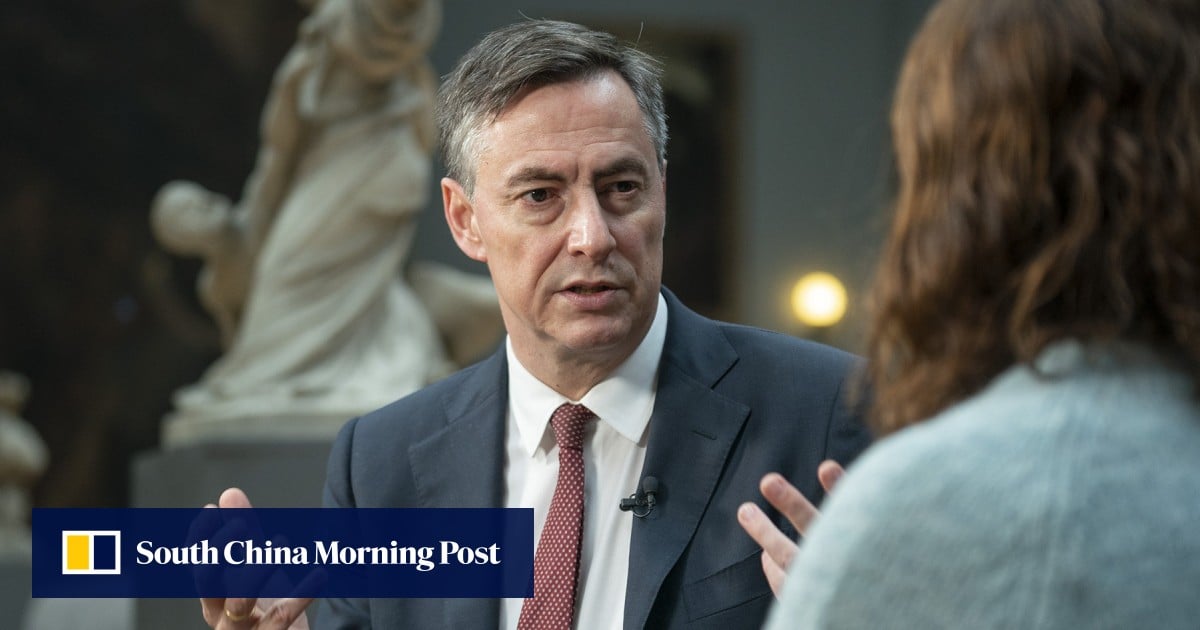
A European Parliament delegation, led by Committee on Foreign Affairs chairman David McAllister, has embarked on a three-day visit to China, signaling a significant step in the resumption of high-level institutional exchanges. These dialogues were largely frozen in 2021 following sanctions related to human rights concerns in Xinjiang, only to be partially restored last year. The current visit aims to build on this fragile restoration, providing a platform for direct engagement between EU lawmakers and senior Chinese officials in Beijing and Shanghai.
The delegation's presence underscores the EU's commitment to maintaining open communication channels with China, despite profound disagreements. This direct engagement is seen as essential for managing the "evolving and multifaceted" nature of their relationship, which has been characterized by increasing friction across various domains. The very act of the visit, after a period of strained relations, suggests a mutual recognition of the need to prevent further deterioration and explore avenues for cooperation, even amidst deep-seated differences.
Navigating a Complex Agenda
The agenda for the talks is extensive and addresses the most contentious aspects of the China-EU relationship. Key discussion points include the geopolitical fallout of rising economic imbalances, which have been a persistent source of tension as the EU seeks fairer trade practices and market access. The ongoing Russia-Ukraine war is another central theme, with the EU pressing China to leverage its influence over Moscow to encourage peace talks, a stance Beijing has historically resisted. Human rights in China, particularly in regions like Xinjiang, remain a critical concern for European lawmakers, reflecting the values-based dimension of EU foreign policy.
Furthermore, the delegation will delve into stability in the Indo-Pacific region, an area of increasing strategic importance for both blocs. In Shanghai, discussions will extend to tech sovereignty, competition, and the global governance of artificial intelligence, highlighting the growing significance of technological cooperation and rivalry. These topics collectively illustrate the breadth of issues that define the complex and often challenging relationship between the EU and China, requiring careful diplomatic navigation.
Challenges to Constructive Engagement
Despite the resumption of dialogue, significant hurdles remain. The differing stances on the Ukraine war, in particular, continue to be a major source of tension. Brussels has accused Beijing of aiding Moscow, including recent claims of China assisting in the training of Russian troops, which Beijing has vehemently denied. This divergence complicates efforts to find common ground and build trust, as the EU views China's position on Ukraine as a critical test of its global responsibility.
According to Cui Hongjian, head of European studies at Beijing Foreign Studies University, resolving the conflict requires the EU to establish a basis for constructive dialogue rather than making unilateral accusations or demands. This perspective highlights the challenge of bridging the gap between the EU's expectations for China's role in global security and Beijing's own strategic interests and narrative. The success of these high-stakes talks will depend on the ability of both sides to move beyond accusations and engage in pragmatic discussions, even if fundamental disagreements persist.
Key points
- A European Parliament delegation is on a three-day visit to China to manage strained ties.
- The visit marks a resumption of institutional exchanges frozen since 2021 over Xinjiang-related sanctions.
- Key discussion topics include economic imbalances, the Russia-Ukraine war, human rights, and Indo-Pacific stability.
- The delegation will also meet tech representatives in Shanghai to discuss tech sovereignty and AI governance.
- Differing stances on the Ukraine war remain a significant source of tension between Beijing and Brussels.
The resumption of high-level dialogue offers a crucial opportunity for both sides to de-escalate tensions and find common ground on pressing global issues. Successful talks could lead to improved trade relations, a more coordinated approach to global challenges like climate change, and a clearer understanding of each other's geopolitical priorities.
Given the deep-seated disagreements on issues like the Ukraine war, human rights, and economic imbalances, the talks could fail to yield significant breakthroughs. This might lead to continued trade friction, further geopolitical estrangement, and a lack of coordinated action on critical international matters, exacerbating existing global uncertainties.