Federal Reserve holds interest rates steady for fourth time this year
The US Federal Reserve left interest rates unchanged for the fourth time this year. The decision was made in the first meeting under new chair Kevin Warsh.
Intelligence analysis by Llama 3.3 70B
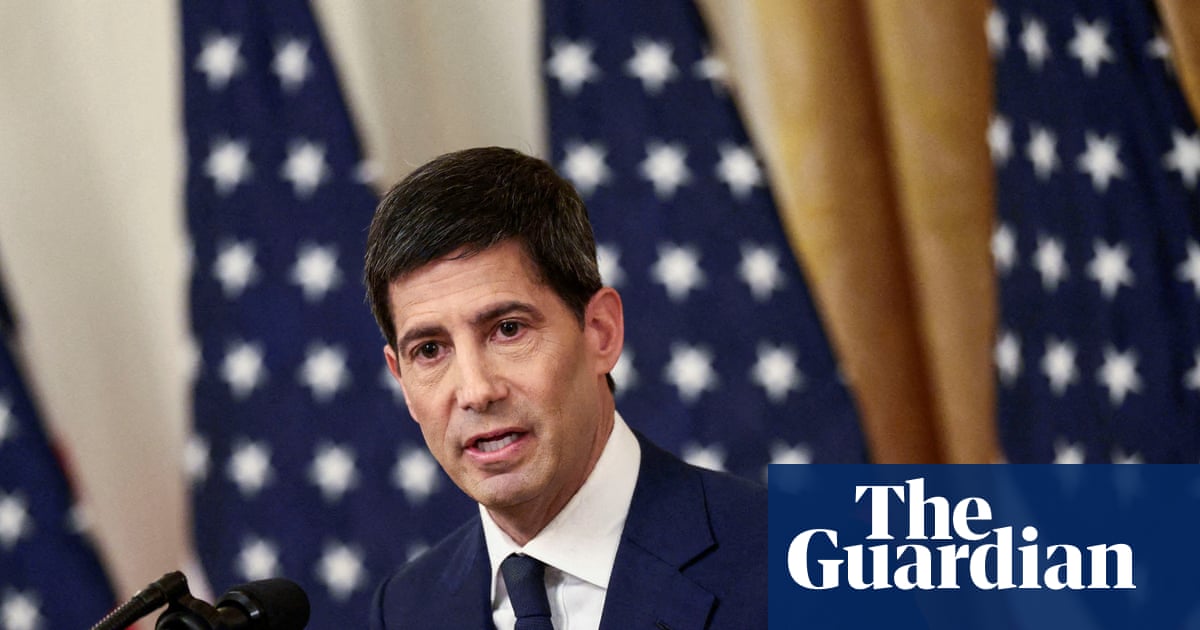
The Fed's open market committee cited solid economic activity and strong productivity growth, despite elevated uncertainty due to the conflict in the Middle East.
The Federal Reserve is like a bank for banks. It helps control the economy by setting interest rates. Right now, the Fed is keeping interest rates the same, which means it's not making any big changes to the economy. This is important because it can affect how much money people have to spend and how many jobs are available.
Analysis
A New Era for the Fed
The Federal Reserve's decision to hold interest rates steady marks a new era for the central bank under the leadership of Kevin Warsh. Warsh, a Donald Trump appointee, has taken over the Fed during a tumultuous time for the US economy. The decision to keep rates unchanged was widely expected, but it still has significant implications for the economy.
The Fed's open market committee cited solid economic activity and strong productivity growth, despite elevated uncertainty due to the conflict in the Middle East. The committee also removed the easing bias from its monthly policy statement, which previously indicated that the central bank was looking for further opportunities to make a rate cut.
Inflation and Geopolitical Uncertainty
The US economy has been rattled by heightened inflation and geopolitical uncertainty. A sharp spike in energy prices caused by the war in the Middle East has pushed inflation to 4.2%, the highest level the US has seen since 2023. However, core inflation, which strips out volatile food and energy prices, has increased only mildly, to 2.9% from the year prior.
The conflict in the Middle East has also led to a decline in hourly earnings, which dropped to a seasonally adjusted 0.7%. This indicates that price increases have stripped out wage gains over the past year. Despite these challenges, the labor market has remained relatively strong, with the unemployment rate holding steady at 4.3%.
The Road Ahead
The Fed's decision to hold interest rates steady will have significant implications for the US economy in the coming months. The central bank will continue to monitor inflation and economic growth, and may adjust interest rates accordingly. The decision will also impact the US dollar, bond yields, and the overall economic growth.
The new chair, Kevin Warsh, will face significant challenges in the coming months, including managing the economy through a period of heightened uncertainty. Warsh has argued for the importance of rate cuts, and it is unclear whether he will continue to advocate for lower rates in the future. The Fed's credibility and independence will also be closely watched, particularly given the political pressure from the White House.
Key points
- The Federal Reserve left interest rates unchanged for the fourth time this year
- The decision was made in the first meeting under new chair Kevin Warsh
- The Fed cited solid economic activity and strong productivity growth, despite elevated uncertainty due to the conflict in the Middle East
The Fed's decision to hold interest rates steady could lead to continued economic growth and low unemployment. If inflation remains under control, the Fed may be able to keep interest rates low, which could boost consumer spending and business investment. Additionally, the ceasefire deal between the US and Iran could lead to lower energy prices, which could help reduce inflation and boost economic growth.
The Fed's decision to hold interest rates steady may not be enough to address the rising inflation and geopolitical uncertainty. If inflation continues to rise, the Fed may be forced to raise interest rates, which could slow down economic growth and lead to higher unemployment. Additionally, the conflict in the Middle East could continue to disrupt energy markets and lead to higher prices, which could hurt the economy.