Fighting in Yemen: Fierce clashes between Houthi militia and government forces in Yemen
Fierce fighting continues in Yemen's Taiz province, near the strategic Bab al-Mandab strait, between Houthi rebels and internationally recognized government forces.
Intelligence analysis by Gemini 2.5 Flash
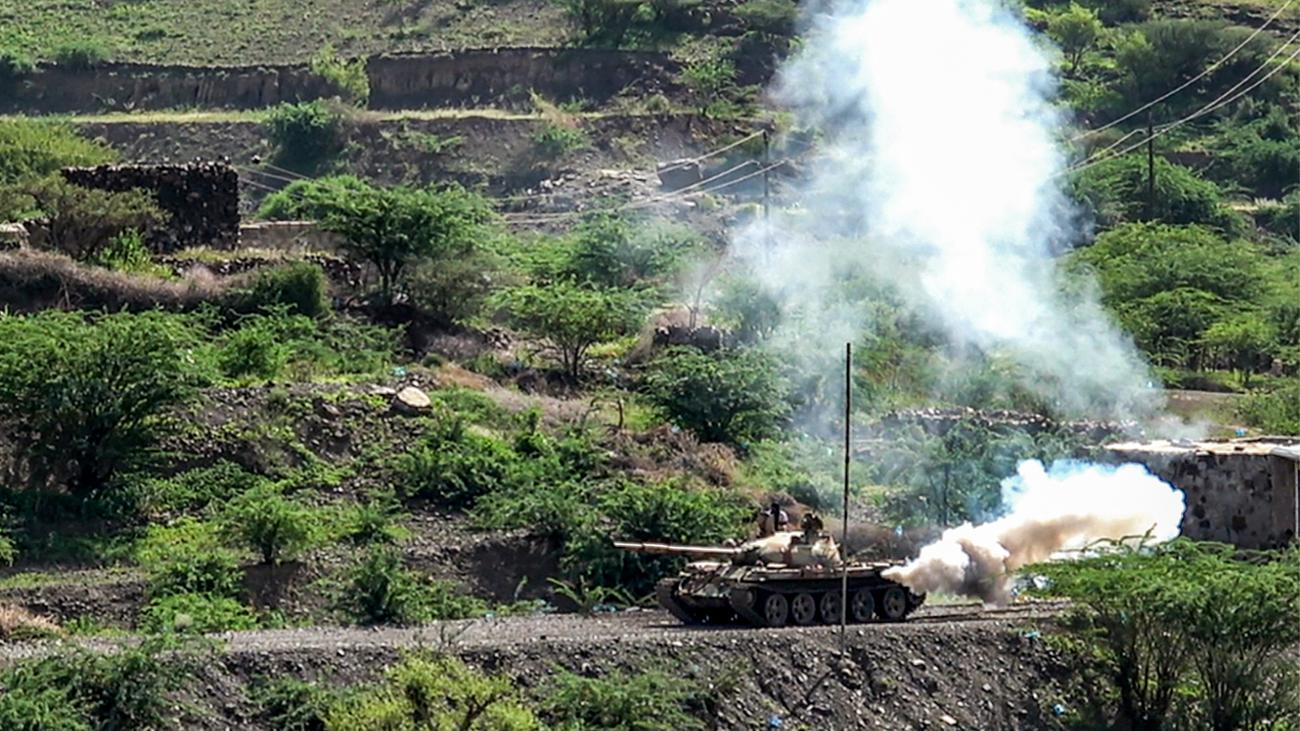
The conflict in Yemen has intensified with renewed clashes in the strategically vital Taiz province, close to the Bab al-Mandab strait. Houthi forces, allied with Iran, have recently consolidated control over key coastal areas and islands, impacting a crucial global shipping route, while Saudi-backed government troops attempt to push back.
Imagine a very important watery highway that ships use to carry toys and food between big continents. Bad guys called Houthis are fighting the government in a country called Yemen, and they've taken over parts of this highway. This makes it harder and more dangerous for ships to pass, like a traffic jam on a busy road, which can make things more expensive for everyone.
Analysis
Taiz Province
The mountainous Taiz province has become a focal point for the renewed fighting in Yemen, with clashes concentrating on its western parts. This region holds significant strategic importance due to its proximity to the coast and the vital Bab al-Mandab strait. The control of Taiz is crucial for either side to assert dominance over the coastal areas, which are essential for both military operations and economic access.
The recent escalation has led to a severe humanitarian crisis within Taiz. According to government estimates, at least 67,000 people have been displaced from the region. This figure contributes to a broader total of over 125,000 individuals forced to flee their homes across Yemen since the beginning of the month, highlighting the devastating human cost of the ongoing conflict.
Bab al-Mandab
The Bab al-Mandab strait is a narrow but immensely significant waterway connecting the Red Sea with the Gulf of Aden, serving as the primary shipping route between Europe and Asia. Its strategic importance cannot be overstated, as a substantial portion of global maritime trade, including oil and goods, passes through this choke point. The Houthi militia's recent lightning offensive successfully brought the entire west coast of Yemen under their control, including strategically located islands within the strait.
This territorial gain grants the Houthi forces what the article describes as "practically unrestricted access" to the Bab al-Mandab. Such control poses a considerable risk to international shipping, potentially allowing the Houthis to disrupt or threaten maritime traffic. The implications for global trade, particularly for European economies reliant on this route, are substantial, raising concerns about supply chain stability and shipping costs.
Saudi Arabia
Saudi Arabia plays a pivotal role in the Yemeni conflict, actively supporting the internationally recognized Yemeni government forces in their fight against the Iran-allied Houthi militia. This backing includes military assistance, such as the air strikes reported by Houthi media in the provinces of Taiz and Hajjah, which allegedly targeted infrastructure like transmission masts. The Saudi intervention is part of a broader regional struggle for influence, with the conflict often framed as a proxy war between Saudi Arabia and Iran.
Despite Saudi support, the Houthi militia has maintained control over significant portions of Yemen for years, including the capital Sanaa. The ongoing involvement of external powers like Saudi Arabia further complicates the conflict, perpetuating the civil war and exacerbating the already catastrophic humanitarian situation in Yemen. The inability of either side to achieve a decisive victory suggests a prolonged conflict with continued regional and international ramifications.
Key points
- Fierce fighting continues in Yemen's Taiz province between Houthi militia and government forces.
- The clashes are concentrated near the strategically vital Bab al-Mandab strait, a key global shipping route.
- Houthi forces recently seized control of Yemen's entire west coast and islands in the strait, gaining "practically unrestricted access."
- Saudi Arabia supports government forces, conducting air strikes against Houthi targets.
- Over 125,000 people have been displaced by fighting this month, exacerbating a catastrophic humanitarian situation.
The continued Houthi control over the Bab al-Mandab strait and the escalation of fighting could severely disrupt global shipping, leading to higher freight costs and potential supply chain issues for European economies, including Germany. The humanitarian crisis in Yemen is also likely to worsen significantly with further displacement and conflict.
Market signals
- OIL Increased conflict and Houthi control over the Bab al-Mandab strait raise risks to global shipping and oil transit, potentially driving up prices.
AI-generated analysis of potential market relevance. Not financial advice.