Former Azrou Students at the Summit of the Moroccan State
Azrou College, founded by the French Protectorate to create a docile Berber elite, unexpectedly produced independence activists, ministers, and generals who shaped independent Morocco.
Intelligence analysis by Gemini 2.5 Flash
The French Protectorate established Azrou College to cultivate a loyal, French-speaking Amazigh elite, intending to keep them separate from nationalist movements. However, the institution defied its colonial purpose, becoming a crucial incubator for the future leaders of independent Morocco, including high-ranking officials and military figures.
Imagine a special school built by a foreign power to train local kids to be loyal helpers. But instead of just being helpers, these kids learned so much that they grew up to become the most important leaders, generals, and judges of their own independent country! It was like a secret factory for future presidents and powerful people, even though it wasn't supposed to be.
Analysis
Azrou College
Conceived by the French Protectorate, Azrou College was established with a clear, strategic objective: to cultivate a compliant, French-speaking Amazigh elite in Morocco. This "Berber policy" aimed to distance these future leaders from the burgeoning nationalist movements centered in cities like Fès and Rabat, ensuring their loyalty to the colonial administration. The institution was designed to supply personnel for the army and civil service, thereby reinforcing French control through an indigenous, yet subservient, leadership class.
The college's curriculum and environment were meticulously crafted to achieve this goal, fostering a distinct identity among its students. The intention was to create a cadre of individuals who would serve as intermediaries, bridging the gap between the colonial power and the local population, while remaining detached from broader Moroccan nationalist aspirations. This strategic educational initiative was a cornerstone of the Protectorate's long-term vision for maintaining influence in the region.
Mohamed Benhlal
The true impact and unexpected trajectory of Azrou College are meticulously documented in Mohamed Benhlal's seminal essay, "Le collège d’Azrou : une élite berbère civile et militaire au Maroc, 1927-1959." Benhlal's research, which incorporates historical analysis and invaluable testimonies from former students, reveals a profound irony: the college, despite its colonial origins, became a crucible for a new generation of Moroccan leaders. His work highlights how the institution inadvertently fostered a sense of national identity and ambition among its students.
Benhlal's findings demonstrate that instead of producing docile administrators, Azrou College became a breeding ground for independence activists, future ministers, governors, magistrates, and even thirteen generals. This outcome directly contradicted the French Protectorate's original political design, showcasing the resilience and adaptability of Moroccan intellectual development. The essay thus provides a critical re-evaluation of the college's legacy, positioning it as a pivotal institution in the formation of independent Morocco's elite.
Hassan II
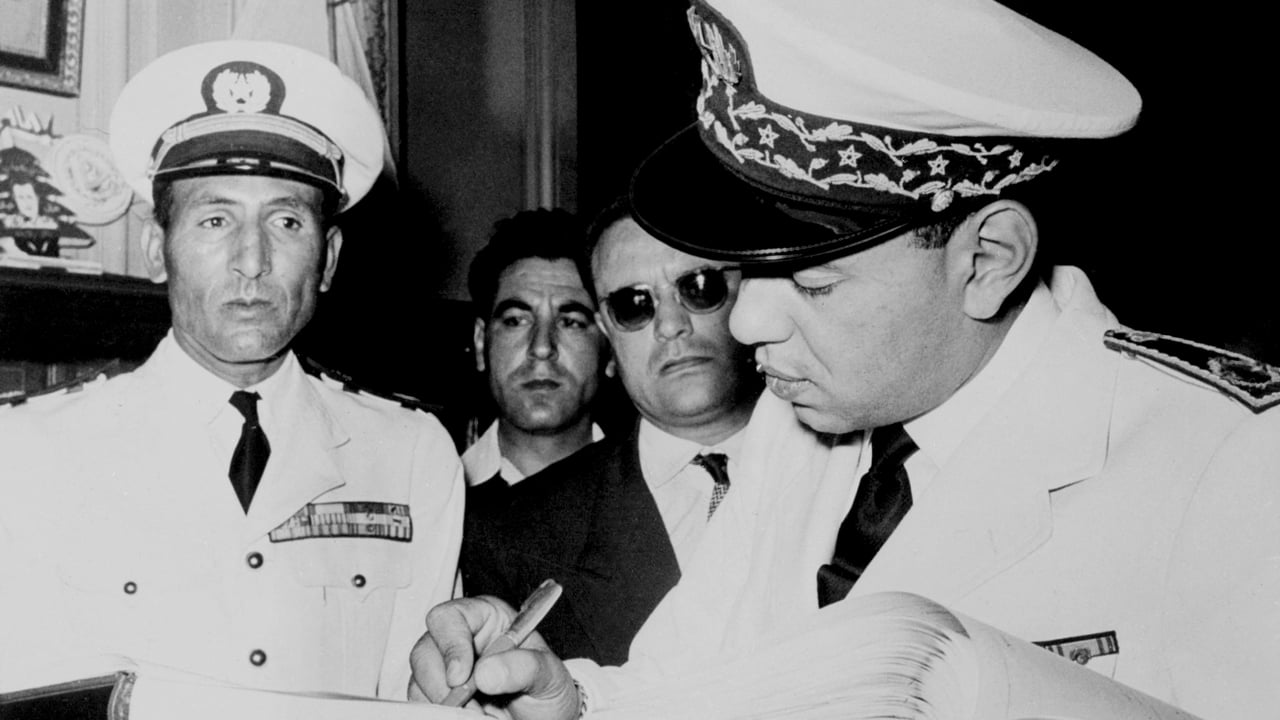
Following Morocco's independence in 1956, the alumni of Azrou College rapidly ascended to prominent positions across the newly formed state apparatus. They became indispensable figures, serving under both Mohammed V and his successor, Hassan II, in key roles within the army, the royal palace, and various administrative departments. Their education and training, initially intended for colonial service, proved invaluable in building the foundations of the independent Moroccan government.
However, the legacy of Azrou alumni under Hassan II was not without its complexities and darker chapters. The article notes that some former students were tragically implicated in the attempted coups of 1971 and 1972, events that profoundly shook the Moroccan monarchy. This involvement underscores the multifaceted nature of the elite produced by Azrou, reflecting both their crucial contributions to state-building and their entanglement in the political upheavals of the post-independence era. The college's influence thus extended to both the stability and the challenges faced by the Moroccan state.
Key points
- Azrou College was founded by the French Protectorate to create a docile, French-speaking Amazigh elite.
- The college's original purpose was to serve the colonial administration and army, away from nationalist centers.
- Contrary to its design, Azrou produced independence activists, ministers, governors, magistrates, and thirteen generals.
- Many alumni became indispensable figures in the independent Moroccan state under Mohammed V and Hassan II.
- Some former students were involved in the attempted coups of 1971 and 1972, revealing a complex legacy.
The college's unexpected outcome ensured that independent Morocco had a ready pool of educated and capable individuals to staff its new government and military. This provided a crucial foundation for national development and stability during a critical period of state-building.
Despite its positive contributions, the college's colonial origins and the involvement of some alumni in the 1971 and 1972 coups highlight the complex and sometimes turbulent legacy of this elite institution, reflecting the challenges of post-independence political transitions.