Here's where you want to be to see the 2026 solar eclipse
The 2026 solar eclipse on August 12 is a big day for astronomy fans. The eclipse will be visible from western Iceland and northern Spain, but other places like Canada, the United States, and Europe can still see it, albeit with partial sun coverage.
Intelligence analysis by Llama
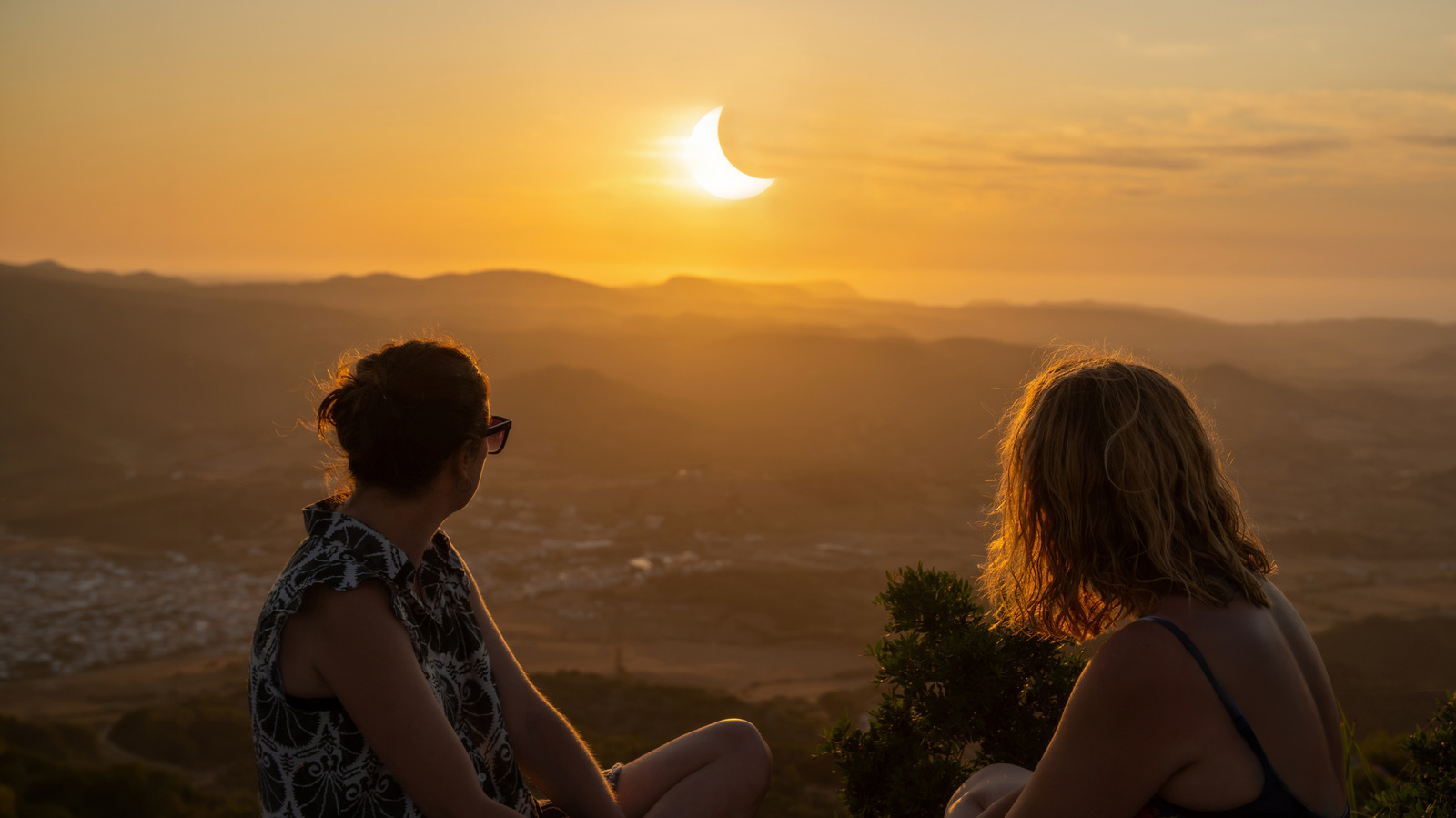
The 2026 solar eclipse will be visible from western Iceland and northern Spain, but other places can still see it with partial sun coverage. The eclipse will be a total solar eclipse, lasting longer than usual due to its coincidence with lunar perigee.
Imagine you're watching a big shadow move across the Earth. That's what's happening during a solar eclipse. The moon is moving in front of the sun, blocking its light. It's like a big cosmic dance, and it's a rare and amazing sight to see.
Analysis
A Rare Opportunity for Stargazers
The 2026 solar eclipse is a rare opportunity for stargazers to witness a total solar eclipse. This event is significant because it marks the first total solar eclipse since 2024 and coincides with the annual Perseid meteor shower. The eclipse will be visible from western Iceland and northern Spain, but other places can still see it with partial sun coverage.
The Science Behind the Eclipse
The 2026 solar eclipse is a total solar eclipse, lasting longer than usual due to its coincidence with lunar perigee. Lunar perigee is when the moon appears larger because it's at the closest point in its orbit to Earth. This coincidence makes the eclipse longer and more visible. The eclipse will be a rare opportunity for scientists to study the sun's corona and the moon's orbit.
Safety Precautions
It's essential to take safety precautions when viewing the eclipse. Looking directly at the sun during the eclipse can cause severe, irreversible eye damage. To avoid this, viewers should use specialized eclipse glasses or solar viewers. The American Astronomical Society offers a list of approved products to ensure safe viewing. Alternatively, viewers can use indirect viewers like pinhole projectors or household objects with small holes to view the eclipse.
Key points
- The 2026 solar eclipse will be visible from western Iceland and northern Spain.
- The eclipse will be a total solar eclipse, lasting longer than usual due to its coincidence with lunar perigee.
- Viewers should take safety precautions when viewing the eclipse, using specialized eclipse glasses or solar viewers.
- The American Astronomical Society offers a list of approved products for safe viewing.
- Indirect viewers like pinhole projectors or household objects with small holes can be used to view the eclipse safely.
If the 2026 solar eclipse is a success, it could lead to a new wave of interest in astronomy and space exploration. The event could inspire people to learn more about the universe and its wonders, leading to a new generation of scientists and explorers.
However, the 2026 solar eclipse could also be marred by safety concerns. If viewers do not take proper precautions, they could suffer from eye damage or other injuries. Additionally, the event could be disrupted by bad weather or other unforeseen circumstances.