India, Australia troops train for coastal, island warfare in AUSTRAHIND 2026
Indian and Australian army troops are conducting joint combat drills, Exercise AUSTRAHIND 2026, in Thiruvananthapuram, focusing on coastal and island warfare tactics, with New Zealand participating as an observer.
Intelligence analysis by Gemini 2.5 Flash
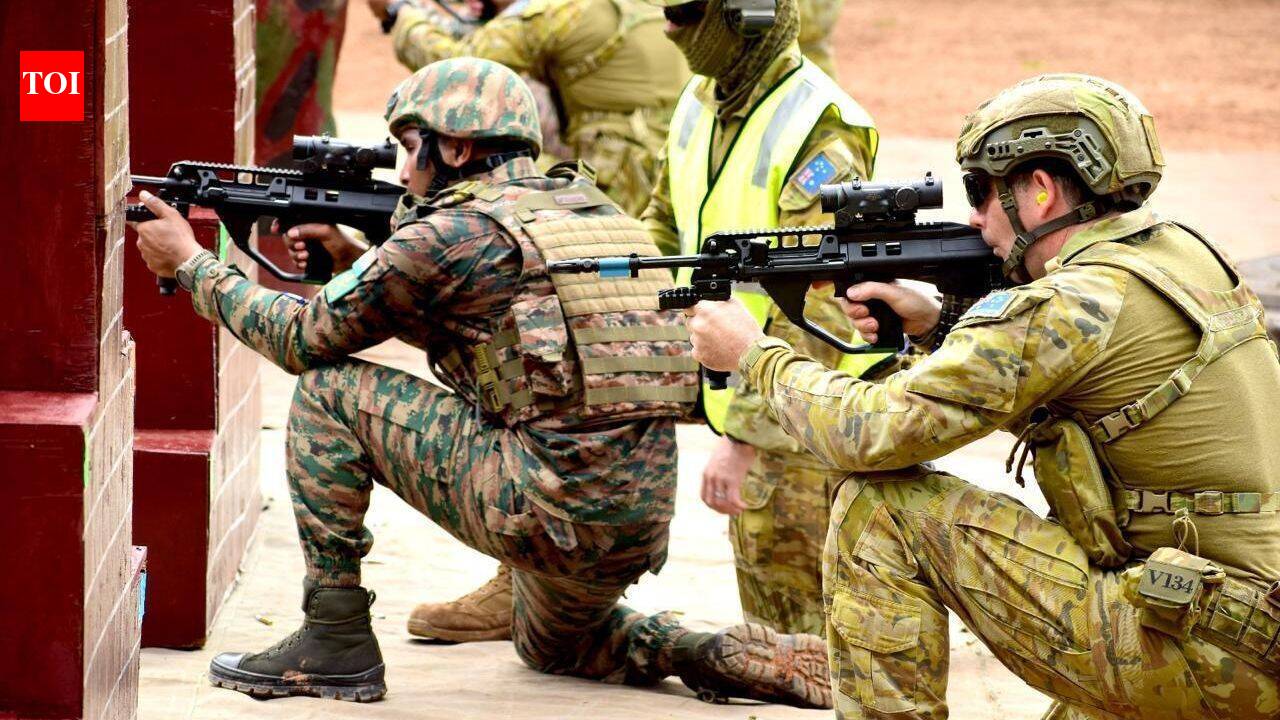
The fifth edition of Exercise AUSTRAHIND 2026 brings together 240 servicemen from India and Australia for 14 days of intensive training in jungle, island, and coastal terrains. The drills aim to enhance operational synergy, combat readiness, and interoperability for sub-conventional operations under a UN mandate, incorporating specialized activities like combat swimming and drone mane…
Imagine two teams of soldiers, one from India and one from Australia, playing a big game of 'army training' in a jungle and by the sea in a place called Thiruvananthapuram. They're practicing how to work together, swim in combat, hide in ambushes, and even fly drones to be super ready for any tricky situations, especially on islands or near the coast. It's like practicing for a big school play so everyone knows their part perfectly!
Analysis
AUSTRAHIND 2026
Exercise AUSTRAHIND 2026 represents a significant stride in military cooperation between India and Australia, marking its fifth iteration. This biennial joint combat drill is meticulously designed to foster greater operational synergy and combat readiness between the two nations' armed forces. The exercise specifically targets sub-conventional operations within island and coastal environments, a critical domain given the evolving geopolitical landscape and maritime security challenges in the Indo-Pacific region.
The 14-day exercise, which commenced on October 19 and concludes on November 1, involves approximately 240 personnel, with an equal contingent of 120 soldiers from both the Indian and Australian armies. For the first time, an observer delegation from New Zealand is also participating, indicating a broader regional interest in these collaborative defence efforts. This inclusion underscores the growing importance of multilateral engagement in addressing shared security concerns and enhancing collective defence capabilities.
Thiruvananthapuram
The Foreign Training Node in Thiruvananthapuram, Kerala, serves as the strategic location for Exercise AUSTRAHIND 2026. This choice of venue is particularly apt, offering diverse terrain that includes jungle, island, and coastal environments, which are essential for realistic combat-oriented training. The geographical features of Thiruvananthapuram provide an ideal setting for troops to undertake specialized activities such as combat swimming, ambush strategies, and focused aerial operations, directly aligning with the exercise's theme of joint sub-conventional operations.
The training activities at this node are comprehensive, encompassing physical conditioning, static slithering, and drone maneuvering, alongside the core coastal and island warfare drills. These varied exercises are crucial for improving tactical proficiency and ensuring that personnel from both armies can effectively operate in complex and challenging conditions. The realistic operational conditions simulated in Thiruvananthapuram allow for the practical application and refinement of tactics, techniques, and procedures.
Garhwal Rifles
The Indian contingent for Exercise AUSTRAHIND 2026 is notably spearheaded by troops from the Garhwal Rifles, a distinguished infantry regiment of the Indian Army. Their participation, alongside personnel from other arms and services, brings a wealth of experience and specialized skills to the joint drills. The Garhwal Rifles are known for their prowess in mountain and jungle warfare, making them well-suited for the demanding terrains encountered during the exercise.
On the Australian side, the 13th Infantry Brigade represents their army, contributing to a robust exchange of operational experience and best practices. The collaboration between these specific units is vital for developing a common understanding of tactical approaches and enhancing interoperability at the ground level. This direct engagement between frontline troops from both nations is instrumental in building trust, fostering camaraderie, and ensuring seamless coordination in potential future joint operations under a UN mandate.
Key points
- Indian and Australian armies are conducting Exercise AUSTRAHIND 2026 at the Foreign Training Node in Thiruvananthapuram.
- The 14-day exercise, the fifth edition, focuses on joint sub-conventional operations in island and coastal environments.
- Approximately 240 servicemen, 120 from each country, are participating, with a New Zealand observer team for the first time.
- Training activities include combat swimming, ambush drills, drone maneuvering, and physical conditioning.
- The exercise aims to improve interoperability, joint planning, and operational coordination under a UN mandate.
The joint exercise is expected to significantly enhance the interoperability and combat readiness of Indian and Australian forces, strengthening their ability to respond to regional security challenges. This collaboration fosters deeper strategic ties, promoting stability and collective defence capabilities in the Indo-Pacific region.
While beneficial, such exercises can face challenges in fully integrating diverse operational doctrines and equipment, potentially limiting the depth of interoperability achieved. There's also a risk that the scope of training might not fully replicate the complexities of real-world sub-conventional operations, leaving gaps in preparedness.