India’s Cockroach protests: Rahul Gandhi detained after calling for PM Modi to resign
Indian opposition leader Rahul Gandhi is detained by police in Delhi at the Cockroach Janta Party protests after calling for prime minister Narendra Modi's resignation.
Intelligence analysis by Llama
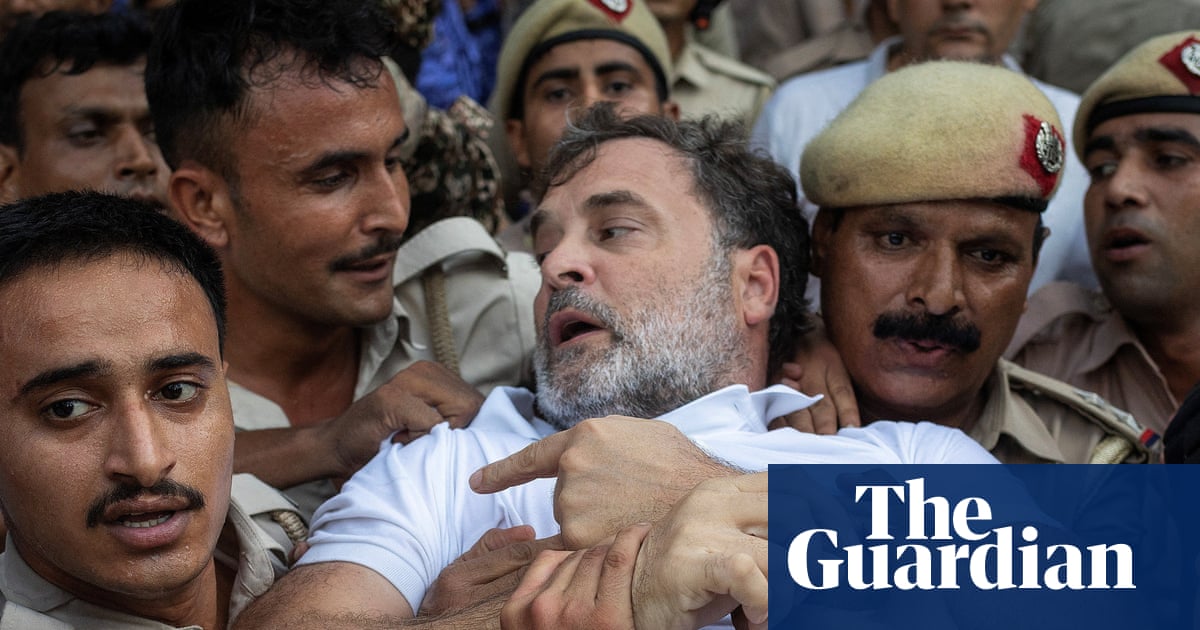
Rahul Gandhi, the leader of India's Congress party, was detained by police during spiralling youth-led protests in Delhi, after he called for prime minister Narendra Modi's resignation. The protests, led by the Cockroach Janta Party, have demanded changes to the country's education system and the resignation of the education minister.
A group of young people in India are protesting against the government's education system because they think it's unfair. They want the government to change the way students are tested and to fire the education minister. The government has tried to stop them, but the protesters are not giving up.
Analysis
A Youth-Led Revolution in India's Education System
The Cockroach Janta Party (CJP), a new youth-led political movement, has taken the streets of Delhi by storm, demanding changes to India's education system and the resignation of the education minister. The movement, which has won millions of followers on social media since its launch in May, has sparked a major challenge to the powerful Modi government.
The CJP's demands are centered around the repeated school examination scandals that have shaken confidence in India's testing system. The movement has vowed to press on with its demands, despite the government's attempts to silence it. The rapidly expanding CJP has become a powerful force in Indian politics, with its leader, Abhijeet Dipke, urging protesters not to lose hope.
The Government's Response to the Protests
The government has responded to the protests with force, with police firing teargas at protesters and charging with batons. The police have also arrested several protesters, including Rahul Gandhi, the leader of India's Congress party. The government has defended its actions, saying it has acted swiftly after the exam paper leaks by arresting several people.
The Implications of the Protests
The protests have significant implications for India's education system and the Modi government. The CJP's demands for changes to the education system and the resignation of the education minister have sparked a major challenge to the government's authority. The protests have also highlighted the need for greater accountability and transparency in India's education system.
The Road Ahead
The protests are likely to continue, with the CJP vowing to press on with its demands. The government will need to respond to the protests in a way that addresses the concerns of the protesters and restores public trust in the education system. The outcome of the protests will have significant implications for India's education system and the Modi government.
Key points
- The Cockroach Janta Party (CJP) is a new youth-led political movement that has taken the streets of Delhi by storm, demanding changes to India's education system and the resignation of the education minister.
- The CJP's demands are centered around the repeated school examination scandals that have shaken confidence in India's testing system.
- The government has responded to the protests with force, with police firing teargas at protesters and charging with batons.
- The government has defended its actions, saying it has acted swiftly after the exam paper leaks by arresting several people.
If the government listens to the protesters' demands and makes changes to the education system, it could lead to a more fair and transparent system that benefits all students. This could also lead to greater public trust in the government and a more stable political environment.
If the government continues to ignore the protesters' demands and uses force to silence them, it could lead to further unrest and instability in the country. This could also damage the government's reputation and lead to a loss of public trust.