International competition launched to design Minab school martyrs’ memorial
An international competition has been launched to design a memorial for the victims of a school bombing in Minab, Iran. The competition aims to create a lasting memorial space that honors the victims, preserves their stories, and conveys a message of peace and resistance.
Intelligence analysis by Llama
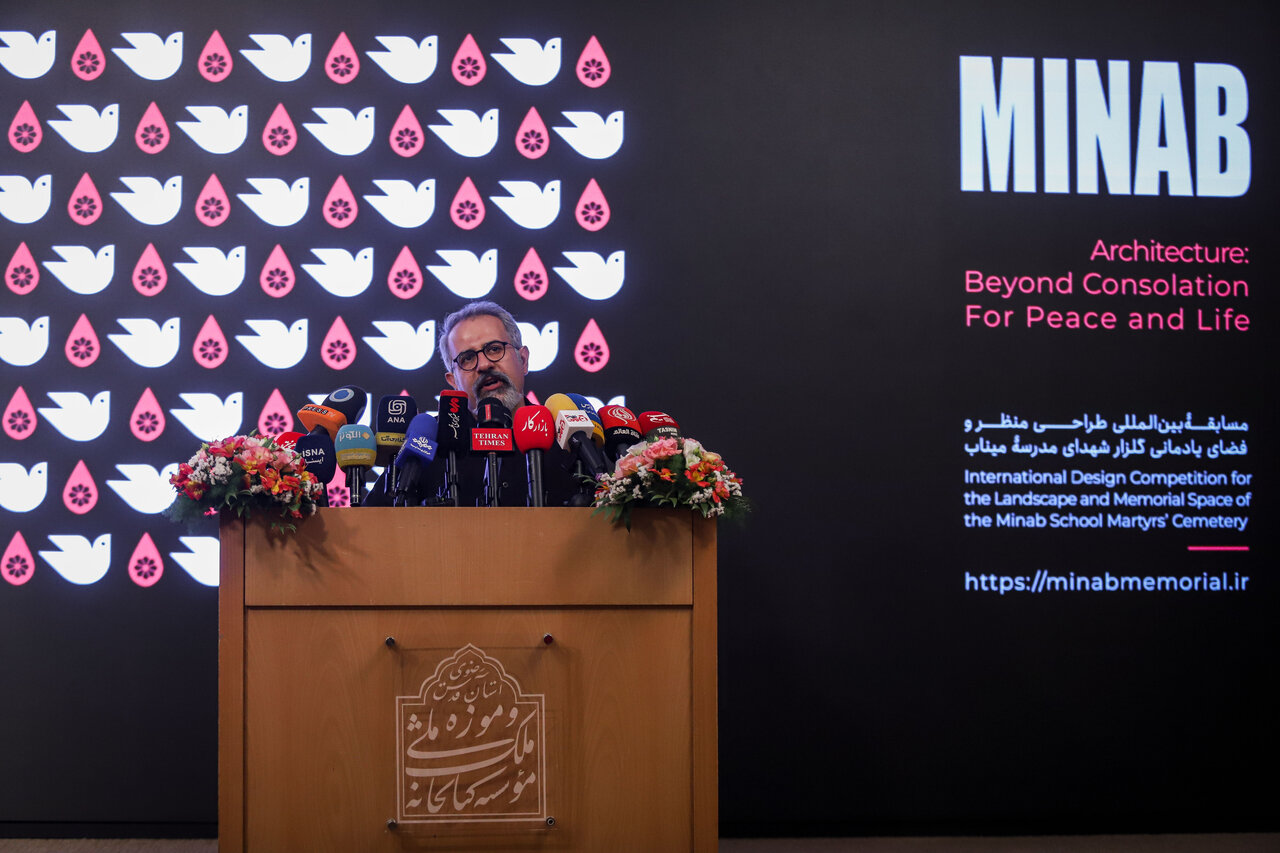
The competition, titled 'Architecture; Beyond Consolation — for Peace and Life,' seeks to create a memorial space that goes beyond consolation and addresses the future. The organizers want architects and designers to engage with the social and human dimensions of the event and develop a space that can convey its deeper meaning.
Imagine a special place where people can go to remember and honor the children who were hurt in a school bombing. The place should be designed to help people feel calm and peaceful, and to remember the children and their families. It's like a big hug for the community.
Analysis
The Tragic Event and Its Impact
The tragic event that occurred in Minab, Iran, has left a profound impact on families and the wider community. The school where the incident occurred is planned to be transformed into a museum, while the burial site constitutes another important part of what the organizers describe as a wider memorial chain. The overall concept includes four interconnected elements: the school that witnessed the tragedy, the burial site, other memorial manifestations of the victims, and a plan to establish eight schools across the country bearing the names of the children.
The Competition and Its Objectives
The International Landscape and Memorial Space Design Competition for the Minab School Martyrs’ Cemetery has been officially launched, seeking to create a lasting memorial space that honors the victims, preserves their stories, and conveys a message of peace and resistance. The competition, titled 'Architecture; Beyond Consolation — for Peace and Life,' was introduced during a press conference held at the Malek National Library and Museum on Monday, where organizers outlined the objectives, design approach, and procedures of the international call. According to Saeid Mehrpouya, director of the competition, the project follows a decision by the custodian of Astan Quds Razavi to address the site and ultimately construct the memorial. The initiative was also proposed within the legal and planning framework of Iran’s Supreme Council of Urbanism and Architecture.
The Design Process and Its Challenges
The organizers have defined the design process around several stages, beginning with the tragedy itself. They argue that although the catastrophe occurred in a single moment, its consequences continue in the lives of survivors, families, and the city. The second stage concerns the victims themselves and the task of creating a physical space for something that did not previously exist. The architects are expected to address not only the memorialization of the victims but also the transformation of an ordinary piece of land into a place that narrates their deaths, the suffering of their families, and the collective trauma of Minab and Iran. The organizers have also given the competition an international dimension. Mehrpouya said that memorials for victims of major tragedies are not exclusively national phenomena and that the issue of responsibility surrounding such events has attracted international attention. He stressed that the architectural response should go beyond consolation and address the future as well. The concept of peace adopted by the competition, he explained, does not signify surrender. Rather, it represents resistance to humiliation and violence.
Key points
- An international competition has been launched to design a memorial for the victims of a school bombing in Minab, Iran.
- The competition aims to create a lasting memorial space that honors the victims, preserves their stories, and conveys a message of peace and resistance.
- The organizers want architects and designers to engage with the social and human dimensions of the event and develop a space that can convey its deeper meaning.
- The competition has an international dimension, with organizers seeking to attract architects and designers from around the world.
The memorial will serve as a reminder of the importance of peace and the need to stand against tyranny and brutality. It will also provide a sense of calm and continuity for the survivors and families of the victims. The competition will bring together architects and designers from around the world to create a lasting memorial space that honors the victims and preserves their stories.
The memorial may not be able to fully capture the complexity and depth of the tragedy, and may not be able to provide a sense of closure for the survivors and families of the victims. Additionally, the competition may face challenges in terms of funding and logistics, which could impact the final outcome.