US has to take practical steps to implement MoU: Rezaei
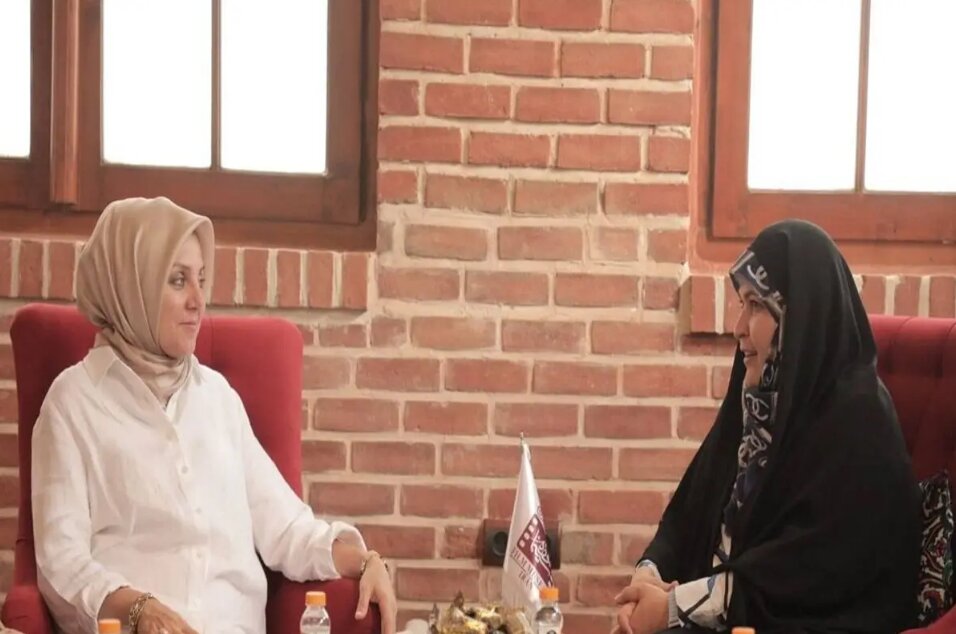
Pakistan Army Chief Asim Munir met Iran's SNSC secretary Mohsen Rezaei in Tehran, where Rezaei voiced distrust of the US and demanded Washington implement the Islamabad MoU.
Intelligence analysis by Llama

Iran's top security official used a meeting with Pakistan's army chief to press the US on the Islamabad MoU, reaffirm Iran's control of the Strait of Hormuz, and signal that bilateral border security remains a shared priority.
Two top security bosses, one from Iran and one from Pakistan, sat down in Tehran. The Iranian told the Pakistani that he doesn't trust America and wants the US to follow the rules it already agreed to. The Pakistani said the two countries are like brothers and they want to keep their shared border safe.
Analysis
The Islamabad Memorandum of Understanding as the Centerpiece
The Islamabad Memorandum of Understanding is the load-bearing phrase in this meeting, and Rezaei's choice to anchor his remarks around it is deliberate. By telling Munir that Washington must "change its behavior and take practical steps to implement" the MoU, the SNSC secretary is signaling that Iran no longer treats the document as a sealed deal — it is now a public benchmark against which US conduct will be measured. The MoU, signed in the Pakistani capital earlier this year as part of de-escalation efforts after a round of US-Iran strikes, has been a recurring reference point in Iranian state media coverage throughout August, and Rezaei's language matches a pattern in which Tehran uses bilateral audiences to internationalize its demands on Washington. The framing also conveniently shifts the onus onto the US: rather than negotiating new terms, Iran is demanding delivery on terms already agreed.
This positioning matters because it implies a sequencing problem. If Tehran is publicly insisting on implementation rather than renegotiation, it is reserving the right to judge compliance — and to retaliate against non-compliance — through a familiar lens of "practical steps." The Mehr dispatch makes no mention of specific deadlines, but the very existence of a public scorecard is itself a pressure tool, particularly as the MoU's provisions touch on nuclear constraints, sanctions relief pathways, and regional de-escalation that have historically been sticking points.
Strait of Hormuz and Rezaei's Hard Line
Rezaei's emphasis on "Iran's security control over the Strait of Hormuz" is the second substantive signal in the readout. This is not boilerplate Iranian rhetoric — the chokepoint through which roughly a fifth of global oil flows has been a recurring flashpoint in 2026, with Iranian parliament approving service charges for Hormuz transit and IRGC-linked statements about seizing or fining violating vessels appearing on the same Mehr news page as this article. By raising Hormuz control directly with a foreign army chief, Rezaei is performing two acts at once: reassuring a key neighbor that Iran intends to remain the security guarantor of the waterway, and reminding outside powers — implicitly the US Navy's Fifth Fleet — that any disruption calculus runs through Tehran.
The "security control" formulation is also a soft warning. It pre-emptively rejects any external security architecture for the strait that does not center Iran, and it provides political cover for the kind of selective enforcement that has periodically roiled tanker traffic in recent months. For Pakistan, which has its own energy import dependence on Gulf routes, the assurance has practical value even if both sides understand it is also a lever.
The Munir Channel and a Shared Border
Munir's contribution to the meeting was shorter but pointed: he "stressed the two countries' brotherly ties and Islamabad's efforts to strengthen security along their shared border." This is the diplomatic equivalent of a status report, and it is notable for what it does not contain — there is no mention of the Balochistan-based militant activity that has historically driven Iran-Pakistan friction, and no reference to recent cross-border incidents. That omission, in a state-media readout, is itself a message: the bilateral channel is currently being used to project stability rather than to manage an active crisis.
The fact that Munir is the visitor and the host is the SNSC secretary — not the foreign minister or the president — underscores that this is a security-track engagement rather than a trade or political one. It also positions Pakistan's army chief as a continuing interlocutor at a moment when Iran's security messaging has become unusually assertive across multiple fronts, from Hormuz to the IRGC's parallel statements on US sanctions.
Key points
- Pakistan Army Chief Asim Munir met SNSC Secretary Mohsen Rezaei in Tehran on Monday
- Rezaei publicly voiced distrust of the US and demanded Washington implement the Islamabad MoU
- Rezaei stressed Iran's security control over the Strait of Hormuz during the talks
- Munir highlighted brotherly ties and efforts to strengthen security along the Iran-Pakistan border
- The readout frames the engagement as a security-track dialogue rather than a political or trade one
If Washington reads the MoU push as a genuine off-ramp rather than rhetoric, there is room for a de-escalation cycle in which sanctions relief and Hormuz quiet coexist. Pakistan's willingness to host and witness the demand gives Tehran a credible channel for verifying compliance, lowering the temperature on the bilateral track while broader diplomacy plays out.
If the US reads the same remarks as preconditions rather than flexibility, the meeting could harden positions on both sides and accelerate the kind of selective Hormuz enforcement that has already spooked tanker traffic. The MoU framework also carries the risk of being treated as a tactical talking point rather than a binding document, leaving Iran-Pakistan coordination unable to insulate either capital from a wider US-Iran slide.
Market signals
- OIL Rezaei's reaffirmation of Iran's security control over the Strait of Hormuz raises the risk premium on Gulf shipping routes, a recurring signal in 2026 Mehr coverage.
AI-generated analysis of potential market relevance. Not financial advice.